There is natural logic in the unholy marriage between heavy metal and Mongolian throat singing. The Hu are not to be confused with The Who – although John Entwistle’s vocals on “Boris the Spider” were an early manifestation of the "death growl" in death metal, but perhaps not a major source of inspiration for this new band from the East. “Hu” in Mongolian signifies the human realm or race, as opposed to the world of animals and their spirits. The Ulan Bator band have taken the world by storm, as the armies of Ghengis Khan, their distant ancestors, before them, with over 30 million views on YouTube – and mounting.
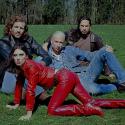
If the much-maligned genre of "folk rock" needed to be re-vitalised or re-invented, it would be with a band like The Hu, who bring together the drone-based ballads of the steppes, the technique of khoomei or throat-singing with the relentless energy of heavy metal. The eight musicians play a mixture of Western and Mongolian instruments, the latter amplified almost beyond recognition, with an exotic sound that blends well with the histrionics of rock guitar. There are two heavily amplified morin khuur (horsehead two-string fiddles, considered the national instrument of Mongolia), a battery of large bass drums alongside a conventional drum kit, jew’s harps plus lead and bass guitars.
There is a more than subtle difference between the "death growl" of death metal vocalists and the highly sophisticated vocal distortion that Mongolians learn through a system of apprenticeship – although to an uninformed listener, they may, on first listening, appear quite closely related. With death metal, there is a kind of no-holds-barred reaching for the shadow-voice of the devil within, wilfully avoiding any trace of aesthetic beauty, as a gesture of defiance and rebellion. The art of khoomei, and other Mongolian vocal techniques involves a great deal of control and discipline, whether to produce a gravelly or deep bass or else the eerie whistling sound known as sygyt. All of them involve harmonics – what is often known as "overtone chanting", where the voice conspires to produce more than one note at a time.
The Hu use all of the techniques in this treasure chest of voice-bending techniques. Traditionally this form of singing has been an essential tool for animist rituals. While Western musicologists tend to explain Mongolian throat singing as an almost child-like attempt to copy the sounds of birds or the wind, this is so much more than mimicry: for nomads of the steppes, nature is alive with spirits, with which humanity must make peace, and from which it derives much of its power as well as healing force.
Rock has always been about more than just entertainment, and metal is no different in serving as a vehicle for collective ritual. The communality of the mosh pit, the head-banging and frenetic head-swinging fuel the ceremony. Lead vocalist Galbadrakh Tsendbaatar aka "Gala", has learned the tricks of the trade, galvanising the audience, at times a little too generically, into increased levels of frenzy – but it works. The eeriness of the throat singing, and the drone-based bowing of the horsehead fiddles (at time reminiscent of John Cale’s dirge-like bowing of the violin in The Velvet Underground), combined with the fury of the bass drum – a modern version of the sacred frame drums used to summon the spirits, and the flash of the electric lead guitar: all of these make for a dizzying mix.
The assault on the senses – with massed throat-singers and the repeated slow climaxes characteristic of the best metal – works fine, but it’s a relief when the pace slows down and the atmosphere of doom lightens, as with the beautiful song “Shireg Shireg” where Gala’s wooden flute combines with the ghost-like shimmer of the jew’s harp and gives way to more delicate throat-singing. This, as with so much music of the steppes, is addressed to an animal, in this case a skewbald sorrel foal. Magic.