Charles Hazlewood's 2018 two-parter for BBC Four, Tones, Drones and Arpeggios: The Magic of Minimalism explored work by some of the great composers of the genre Hazlewood dubs as “last big idea in classical music”, which emerged from the experiments of John Cage in the 1950s, with offshoots spearheaded by the likes of La Monte Young and Terry Riley, and later Steve Reich and Philip Glass.
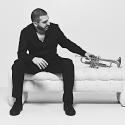
Now the British conductor’s passion for the last revolution in 20th century classical music, one that seeped through to other genres via the likes of Mike Oldfield and Brian Eno, comes to the stage of the Royal Festival Hall as Minimalism Changed My Life: Tones, Drones and Arpeggios. With him he brings his Army of Generals orchestra and the British Paraorchestra, the world’s only large-scale ensemble for professional disabled musicians, plus guests including Portishead's Adrian Utley and Alex Vann of Spiro, a band whose approach to folk tunes is deeply influenced by the tenets of minimalism.
During Hazlewood's detailed introductions to each piece, video artist John Minton provides a range of visual film narratives to put minimalism into its historical, political and cultural contexts – the era of the Cold War and the 1960s liberation movements as they mutated into the 1970s and beyond. The bill encompasses Terry Riley’s 1969 album, A Rainbow in Curved Air, the drone music of Pauline Oliveros, pioneer at the influential San Francisco Tape Music Center, sandwiched by minimalist "mainstream" big-hitters Philip Glass and Steve Reich, and a return to the Queen Elizabeth Hall for Mike Oldfield’s Tubular Bells, 15 million copies sold and counting, and which had its live premiere here in 1973, with Steve Hillage and Mick Taylor among the ensemble.
As a soundtrack to emolliate the pains and discordant chaos of life, the two hours spent among these tones, drones and arpeggios is a powerful tonic at a time when the country – nay the world – is all mouth and no ears, shouting to the point of deafness, hearing nothing back. The subtle transformative inner politics of minimalism and what it does with time and motion in the form of music seep right through like musical aromatherapy. Riley’s Rainbow rises first, to a deeply hypnotic set of video projections from Minton which act as a powerful extra instrument, albeit a visual one. Rainbow feels more like a habitat than a composition, more organic than the more structured formations of Reich and Glass. As Hazlewood explains, Riley's solo multitracked layering for Rainbow was a big influence on the teenage Mike Oldfield's own bedroom multitracking that gave birth to Tubular Bells. They play Side A, and it's a magnificent account, with guitarists Vann, Utley and Denny Ilett deftly handling its shifting dynamics. With its riffs and tunes derived from pop as much as the avant-garde, it's a more emotive experience than Rainbow, but it's illuminating to hear it in the context of Riley's work; its debt shows through like veins in the skin.
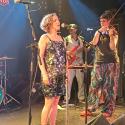
The second half of the concert gathers both orchestras and guest players and singers together, all dressed in white stage clothes. By introduction, Hazlewood reminds us that Glass and Reich ran a removals business together (I can't help thinking of Laurel and Hardy's The Music Box) and goes on to underline minimalism's close connections to New York's architecture, art scene and traffic flow. Glass's Music in a Similar Motion feels lush despite its gridlike constructions of small, repeated phrases gradually triggering some faulty mutation as it builds to a finish. Rather than any emotional connection, or linear one, it's about shifting focus and perception, so us listeners – the receivers – are also instruments. The exact proportions of the music are precise enough for you to drift freely among them.
Two pieces by San Francisco's Pauline Oliveros – realised by British composer Charlotte Harding – prove to be the deepest sound experiences of the evening. A Woman Sees How the World Goes with No Ears and The Last Time both possess a sense of the drawn-out, magnified and ominous, not compositions so much as phenomena taking on bodily forms – just not the bodies you see in this world. She once played the note A for a year and wrote a book called Sonic Meditations, its subject healing and expanded consciousness. Useful knowledge to have.
The closing Reich piece, Music For a Large Ensemble, is set to a videography of Manhattan after dark, skyscraper lights in an abstract dance, Op-Art choreographies moving into the Dreamachine territory of Brion Gysin. The surge and release of the music, with its slow accretions and layers shifting towards and away from the listener's attention, is a testament to the sense of inner liberation it gives, via concentration. There's a second concert on 2 October at Manchester's Bridgewater Hall. It's worth going to discover if those tones, drones and arpeggios change your life, too.