Initially, it doesn’t sound so unusual. The collection’s first song is titled “Never Understand.” Sung in English, it’s poppy reggae with a light feel, twinkling keyboard lines and a lengthy, rock-oriented guitar solo. The singer appears to be a fan of Bob Marley. Originally, it was the last track on Side One of Hesnawi and Peace, the 1980, Italy-recorded debut album by Ibrahim Hesnawi.
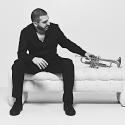
Next up, “Tendme.” While cut from the same cloth musically, the voice is different – keening, less smooth. This time, the language is unfamiliar. The lyrics are in Libyan Arabic. Ibrahim Hesnawi (Ibrahim al-Hasnawi: إبراهيم الحسناوي) was born in Libya in 1954 and is, as the title of this new compilation puts it, The Father of Libyan Reggae.
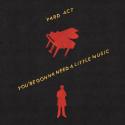
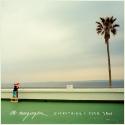
 Hesnawi and Peace (pictured below left) became his only vinyl release. After this, a string of cassette albums were issued: at least 14 (one of which was recorded in Hungary). The Father of Libyan Reggae features nine tracks from this hefty catalogue. “Never Understand,” “Tendme” and the third track “Kesati” are drawn from 1980's Hesnawi and Peace. Two tracks, “Never Understand” and “Only World” are sung in English (rather than Hesnawi, the latter has a lead vocal by an unidentified female singer), while the remainder are in Libyan Arabic. Apart from the trio from Hesnawi and Peace, it is not possible to determine which tracks are from when and which album they are from. There is no annotation noting this. Hesnawi, who is interviewed for the booklet, appears to have been issuing music until at least 2011.
Hesnawi first heard Bob Marley in 1975. In the booklet, he recalls he “had a friend who worked at an electronics shop and he used to make me listen to records with him, among which was a record by Bob Marley. I found out that he was from Jamaica. We would continuously listen to his music – ‘No Woman no Cry,’ ‘Get up Stand up,’ ‘I Shot the Sheriff.’ I really liked this music. It had a strong influence on me. Both its lyrics and its melody. And I decided that I wanted to incorporate it into my own music.”
He also says the government, in the era of rule by Colonel Muammar Gaddafi, was “welcoming of my music. I didn’t receive any backlash for any of my recordings or performances. In fact, they welcomed the ideas I focused on in my music and they respected my lyrics. And things remain positive today. I didn’t experience anything negative from any political entity during my career.”
 For the – relatively – casual purchaser, the title The Father of Libyan Reggae will immediately attract attention. Until now, an article by the Libyan academic and writer Farrah Fray in issue three of the Australian magazine Lindsay was the most direct route into learning about Libyan reggae. It is quoted in the booklet: “Libyan folk music known as ‘zimzamet’ and the rhythmic repetition of a voice or vocal sound in a stanza form the base of many reggae songs. Libyan reggae is usually accompanied by a steady marching tempo, which is the most significant hallmark of wedding chants.”
There also is a little bit of further context for The Father of Libyan Reggae. Libyan band The Free Music have also been reissued by the label compiling Hesnawi. They dealt in disco, soul and some reggae. But with his wholesale adoption of reggae it seems Hesnawi was, at least initially, on his own in Libya.
The booklet also somewhat loosely says “To this day you will find countless bands playing variations of the [reggae] genre [in Libya] and Facebook groups with predominantly Libyan members sharing old and new songs with tens of thousands of members. No matter who you ask, chances are high that the genre’s popularity will be largely attributed to one man: Ibrahim Hesnawi.” Taking it at face value, the title of The Father of Libyan Reggae is no understatement. Ibrahim Hesnawi was a pioneer.
- Next week: Serge Gainsbourg’s L'homme à tête de chou reappears – with a twist
- More reissue reviews on theartsdesk
- Kieron Tyler’s website