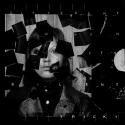
“Soul Scene,” by Echoes Limited, is built from elements of the James Brown sound. But it’s put together in such a way that the result is unfamiliar. The angular drum groove edges towards a 5/8 shuffle. The circularity of the guitar suggests Congolese rumba. Funk, but outside recognised templates.
Then there’s “Anoshereketa” by Oliver & The Black Spirits. The swirling township structure is recognisable but the drums and the nature of the guitar playing – clipped and spindly, respectively – give an edge. This music is hard to place aesthetically and geographically.
 Add in the loping, reggae-influenced “The Towering Inferno” by The Green Arrows, with its piercing lead guitar lines and Hendrix-like ending, and it’s apparent what’s collected on the 25-track set Roots Rocking Zimbabwe - The Modern Sound of Harare' Townships 1975-1980 has been chosen for its individuality rather than whether it conforms to any stylistic template.
The Green Arrows are emblematic here. Until 2004, their releases were limited to labels operating from their home country of Zimbabwe (or, as it was pre-independence, Rhodesia) or neighbouring South Africa. Members of the band had been playing since 1966 and, as The Green Arrows, they first toured the then Rhodesia in 1969. The first of at least 37 singles arrived in 1974. A debut album was issued by South Africa’s Gallo label in 1975. Some records – and live shows too – were as a backing band. Green Arrows were popular, and integral to a thriving music scene
The first Green Arrows release outside Africa was 2004’s 4-Track Recording Session, which collected 20 tracks recorded over 1974 to 1979: the whole of that debut album, Chipo Chirorwa, was set alongside a selection of other representative cuts.
4-Track Recording Session was the first release on Analog Africa label which now, full circle, has returned to Zimbabwe for the multi-artist set Roots Rocking Zimbabwe. Naturally, The Green Arrows are here. As are Thomas Mapfumo (with Blacks Unlimited and Thomas Mapfumo & The Acid Band) and Zambian transplants Witch (who moved to Zimbabwe in 1980). This is a very wide-screen take on Zimbabwe’s music: with its slight Free feel, Baked Beans’ “Introduction” draws from white rock; with electric gear, New Tutenkhamen’s soul rock overtly sought to mimic the sound of traditional instruments; Gypsy Caravan had roots in rock.
Influences from music outside the musicians’ home continent were at play. It was inevitable. As the exhaustive text in the accompanying, amply illustrated, booklet explains, during the period up to independence the RBC (Rhodesia Broadcasting Corporation) aired rock. Bands looking to perform at white-owned clubs or hotels played this music as well as soul to secure bookings.
Of course there were bands which didn’t bother with rock or soul, and independence brought increased musical self-determination. And in the reading presented by Roots Rocking Zimbabwe there was a long-standing blurring of genre and stylistic boundaries, one which appears to have been ever malleable. Were it heard without an idea of its milieu, with its use of the “Louie Louie” riff, Echoes Ltd’s “Engelina” could pass for East LA Chicano soul. “Chistiuiti,” by Gypsy Caravan even has a Sixties garage-rock vibe. Balance these against Melody & Bybit’s “Kwakaenda Imbwa” which lacks outside musical influences.
Nothing is cut and dried. This is amplified by the very in-depth text in the booklet: both in the introductory essay and the entries on each compilee. Everything is gone into: the arrival of recording studios, the nature of the live circuit, the formation of labels. Everything, the story of how Zimbabwe grew its music business. Without the effort taken to provide this context Roots Rocking Zimbabwe would still be a great compilation. But with it, it becomes, in effect, a guide to how and why Zimbabwe’s music evolved.
- Next week: Chapterhouse - White House Demos. Archetypal shoegazers first studio session is unearthed
- More reissue reviews on theartsdesk
- Kieron Tyler’s website