The opening track – “Ālibek’agnimi” (“አልበቃኝም” in its original title) – is a cool, close-to six-minute soul instrumental on which the organ suggests an at-least passing familiarity with Booker T. Jones. The tempo is slow, the moodiness enhanced by a smoky, wandering saxophone.
Next, the similarly lengthy “Ānichī keto gidi yeleshimi” (“አንቺ ከቶ ግድ የለሺም”). Slightly less leisurely, its clipped guitar follows a reggae pattern. Again, despite a section of keyboard vamping and stabbing brass, the saxophone is what stands out. Wandering up and down the scale it then settles, fusing cascading notes into a series of sharp phrases.
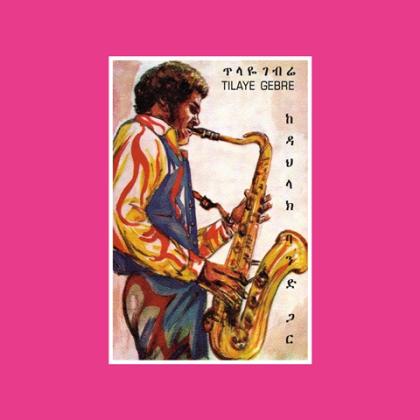
On the music alone, it is hard to place any of the nine tracks on Tilaye's Saxophone With The Dahlak Band. But, as the Amharic script attests, the album is North African – Ethiopian. Alto and tenor saxophonist Tilaye Gebre was a mainstay of the local music scene. This album is his first showcase. He was a founder member of The Equators Band, who first recorded in 1975 and were renamed The Dahlak Band in 1976. Gebre went on to join The Walias Band and on one of their tours of the States decided to stay there. It is where he still lives.
Gebre’s known solo discography is slim though – there were at least nine Dahlak Band albums over 1976 to 1982. Tilaye's Saxophone… was recorded after hours at Addis Ababa’s Ghion Hotel. Now out as double album, it was originally issued on a C60 cassette tape by the city’s Electra Music Shop. Pinpointing when it came out is difficult – the late 1970s is as precise as it gets.
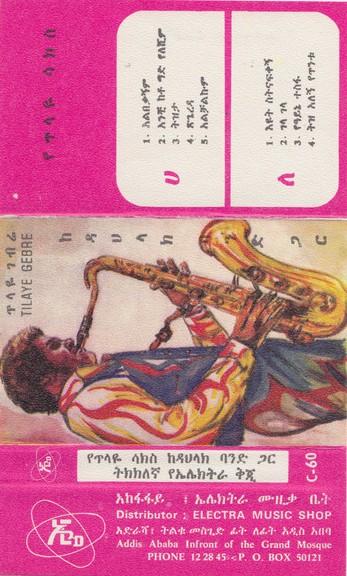
The background on how musicians could and could not pursue their craft in Seventies and Eighties Ethiopia was noted in this column’s review of The Ibex Band’s Stereo Instrumental Music last April. In short, the repressive, restrictive Derg regime made life difficult. A low profile was necessary. Gebre and his compatriots had to watch their backs. (pictured left, the card insert from the original cassette release of Tilaye's Saxophone With The Dahlak Band)
Despite this, Tilaye Gebre was primed for music. Before the Derg takeover, he was a pupil at Addis Ababa’s Haile Selassie First Theatre (the country’s national theatre). He first plumped for guitar, but when he was given a saxophone whilst there his subsequent course was charted. After membership of a school band, he was integral to forming The Equators Band/The Dahlak Band. As The Dahlak Band, the outfit had a residency at the Ghion Hotel. They were versatile: their repertoire included James Brown and Wilson Pickett songs, disco, funk, rhythm and blues and soul.
What became Tilaye's Saxophone With The Dahlak Band was recorded with one microphone as the band played in real time – effectively, it captures a live performance of an aspect of what audiences at the Ghion Hotel heard . Obviously the album does not fully represent the scope of Tilaye Gebre and The Dahlak Band, but it’s evident anyone at their live shows would have been exposed to this form of reflective jazz-inflected soul. Despite the presence of the relatively brisk, walking-speed, blues-based “Feqresh yemench weha” (“ገላ ገላ”) and the clipped, mid-pace album closer “Tizi ālegni yet’initu” (“ትዝ አለኝ የጥንቱ”), there is no letting rip. Nothing is up-tempo. The groove adhered to is resolutely measured, unhurried. The definition of late-night music.
It is also extraordinary. Otherworldly, even. This quality is not to do with any aural shortcomings – the sound is fine, just a little flat – but because of a sense of distance, as if the music is performed upon a cloud. Spellbinding stuff.
- Next week: 15th-anniversary edition of Jane Weaver’s The Fallen By Watch Bird
- More reissue reviews on theartsdesk
- Kieron Tyler’s website