Bridget St. John: Dandelion Albums & BBC Collection
Pigeonholing Bridget St. John is gratifyingly difficult. Although generally categorised as folk, her early albums actually posited her as a singer-songwriter following her own path. Like her similarly restrained contemporary Nick Drake, she did not have a background in folk clubs. And also like him, her voice was huskily intimate. Her intonation was very English, yet there was a hint of Nico’s Teutonic drama.
There was no traditional material in St. John’s repertoire, but she did cover Donovan. Buddy Holly too. She also interpreted John Martyn. But the bulk of what she recorded was self-composed. Her guitar playing on, and the relentless forward motion, of “Song for the Laird of Connaught Hall - Part 2” from her 1971 second album Songs for the Gentle Man are both echoed – heavily – by the title track of Kevin Ayers’s 1974 album The Confessions of Dr. Dream and Other Stories. St. John’s net was cast wide.
The link between St. John and Ayers is made concrete by this box set and posits her as a fellow traveller through bohemia. The fourth disc includes a BBC In Concert recorded on 31 January 1972 (incorrectly credited to 31 January 1969) where she performs “Song for the Laird of Connaught Hall - Part 2” just before duetting with Ayers. If St. John was folk, then she burst its boundaries. Nonetheless, labels and comparisons dogged her. Another essential live concert collected here, from Montreux on 28 April 1972, is introduced by an MC who namechecks John Baez, Joni Mitchell and Melanie.
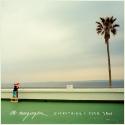
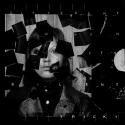
 Dandelion Albums & BBC Collection is a four-disc clamshell package collecting all that St. John released from 1969 to 1972, supplementing it with the two live concerts and BBC radio sessions. The core covers the three albums she made for John Peel’s Dandelion label: 1969’s Ask me no Questions (bonus tracks from two 1972 and 1973 singles sit very uneasily with the album, appearing here in its original sleeve rather than the confabulation used for previous reissues), 1971’s Songs for the Gentle Man and 1972’s Thank you for… Each of the albums is configured as it was for their previous, individual reissues in 2005. Overall, the set more than makes the case for St. John as an individualist.
John Peel was her great champion. While interviewing her on his Night Ride show on 28 August 1968 (heard on Disc Four), he asks if there is any prospect of her songs being recorded. In the following year, it was he who released her debut record. Being signed to Peel’s independent imprint had good and bad sides. She could record what she wanted, but Dandelion always had distribution problems so its releases fell between the cracks.
Of her three Dandelion albums, Songs for the Gentle Man is the classic. The atmosphere is reflective yet intense, shimmering like ice cracking on a lake surface during a winter thaw. Its songs are instantly memorable. St. John’s voice is spectral. Her guitar playing is filigree-light yet extraordinarily complex. Ron Geesin’s subtle, often-baroque, arrangements serve the songs and St. John without swamping anything. It is a very beautiful album.
At around £17, Dandelion Albums & BBC Collection is a wallet-friendly way to enter St. John’s world. It is, though, a frill-free package. The single-pocket sleeves do not reproduce the original album’s gatefolds. The perfunctory essay in the booklet offers no insight into what inspired her to make this affecting music. Her aesthetic is unexamined. There is too much on Dandelion, Peel, her musical contemporaries and not enough on St. John. She is described as folk. That sells her short. The unique – and still-performing – Bridget St. John is nothing less than one of Britain’s great singer-songwriters.