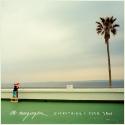
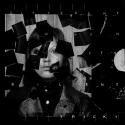
“During 1975, 1976 and the first half of 1977 punk was the future but, after the highpoint of ‘God Save the Queen’, London punk already seemed spent. By the time that the Sex Pistols ‘Pretty Vacant’ was tumbling out of the charts in early September, there had been two huge hits that changed the way I heard music. Donna Summer’s ‘I Feel Love’ and ‘Magic Fly’ by Space made it clear: electronics were the future. And it didn’t matter whether it was post-punk or the despised disco.”
So begins the titular writer’s essay accompanying Do You Have The Force? (Jon Savage’s Alternate History Of Electronica 1978–82) a double-album or CD taking a fresh look at how pop music was evolving as punk became – depending on points of view – either a developmental dead end or a series of tropes for adopting by whoever fancied having a fresh go-round at what had been done already.
 In his writing at the time, Savage tracked a personal yen for pushing beyond what was becoming increasingly entrenched. Three weeks after reviewing Never Mind The Bollocks, Here's The Sex Pistols, he was writing about The Residents. In February 1978 he considered Pere Ubu and Suicide’s debut albums. In April, Cabaret Voltaire were interviewed and Kraftwerk’s The Man Machine reviewed (as was a vintage album by LA psych-punks The Seeds). A December 1978 live review of Red Crayola, Cabaret Voltaire, Scritti Politti and pragVEC began “In the collapse of trends, movements…” Punk had run its course.
And now, by intermingling a contemporaneous viewpoint and hindsight, Do You Have The Force arrives. Cabaret Voltaire are here. So are Suicide. However, the title comes from a record which had not bubbled up from an underground or was made by outsiders. “Do You Have the Force Pt 1” by Droids was released in Britain in February 1978. A Star Wars cash-in, it had already come out in America in May 1977. Savage says the George Lucas film “had a huge effect on popular culture: in critic Frank DeCaro’s words, littered with a galaxy of space junk in its wake. [The Droids single was] poised somewhere between Meco’s theme tune and Sarah Brightman’s ‘I Lost my Heart to a Starship Trooper’, this wonderful piece of knock-off Euro-Disco hits all the right moves: spooky synth tones, R2D2 noises, a relentless two note pulse, and spoken word guff about welcoming you on spaceship 505.”
 Droids were a French creation. Others on Do You Have The Force are from continental Europe: Rayon Laser and Trans Volta are Belgian; Harry Thumann is German; Monoton is Austrian. Throughout, a sense prevails that geographic designations are meaningless. Slick and the proto-techno A Number of Names are American. “Homenage @ Patrick Cowley Pt 1” is a Mexican mix paying tribute to US disco magus Cowley. BGM are Japanese. The Sea of Wires are from Coventry.
Beyond crossing borders, Do You Have The Force operates in a continuum where it was not just those operating on or outside the margins who were pushing forward and adopting new technologies. Including Droids, about a third of this collection draws from the mainstream pop market. Viz: Sylvia Love’s 1979 single “Extraterrestrial Lover” which was created by producer Trevor Vallis, who went on to work with Hazell Dean and Sinitta, and songwriters Mike Brayn and Steve Coe, who also wrote for Cliff Richard. The correspondances in what's compiled between the overtly pop and the unorthodox are akin to the 1967 Dave Dee, Dozy, Beaky, Mick and Tich B-side “The Sun Goes Down” being as properly psychedelic as Pink Floyd’s “Scream Thy Last Scream”.
Irrespective of what these 15 tracks say overall, this is a fun listen. As it progresses, Do You Have The Force moves away from perkiness and the unclouded into darker, figurative territory and ends up on the dance floor.
 After opening with Droids, the excursion through this take on electronica initially seems to be a Euro-Disco affair with Sylvia Love’s “Extraterrestrial Lover”, Transvolta’s “Disco Computer”, Rayon Laser’s “Funky Meteor” and “Underwater”, Side Two’s opener from Harry Thumann. All upbeat evocations of otherness, other worlds. Then, Slick’s “Space Bass” brings movers from Fat Larry’s Band and The Salsoul Orchestra into the disco funhouse of an imagined future.
Following this, Suicide’s “Mr Ray” and The Flying Lizards’s “Steam Away” – both outsiders embracing the machine pulse. Shadows are cast. The Sea Of Wires’s “Seascape” is a 12-minute, Krautrock-influenced dive into and out of abstraction which was originally issued on a cassette. The Orb are prefigured. It all culminates with the extraordinary mega-mix "Homenage @ Patrick Cowley Pt 1". Cowley died in 1982. This, says Savage, “defies time and mortality in a rousing spurt of pure High Energy – the next wave of electronic disco that, along with classic early Electro, would soon sweep the charts in 1983 and 1984.”
Musically, Do You Have The Force? (Jon Savage’s Alternate History Of Electronica 1978–82) describes an arc. One which flows and thereby makes connections. Thematically, this rewarding collection joins dots which may previously have seemed distinct, or even unrelated. Now, they are as one.