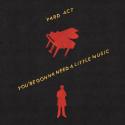
Jon Hassell / Brian Eno: Fourth World Vol. 1 - Possible Musics
Its opening is exotic. The music shimmers like heat haze and incorporates a sing-song instrument which might be a treated trumpet, or a high-register bass guitar reverberating like water on distant rocks and pattering percussion. “Chemistry”, the opening track on Jon Hassell and Brian Eno’s 1980 album Fourth World Vol. 1 - Possible Musics, melded the ambient to serialism and what became both electronica and world music.
Possible Musics is a stunningly beautiful album. Its reissue on album and CD brings an opportunity to contextualise it while assessing the relationship of the two musicians it was credited to.
Jon Hassell is and was a questing American trumpet player who had interacted and played with Stockhausen, Terry Riley and LaMonte Young. During the early Seventies he became fascinated with the music of India and began applying treatments to his trumpet to mimic vocal styles he had heard. He evolved the term “fourth world music” for his seamless synthesis of west, east and the avant-garde.
This was an album where Eno moved into a new type of music
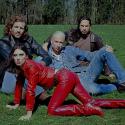
In 1980, Brian Eno was the ex-member of Roxy Music on a solo path seemingly meeting everything that was boundary pushing (and breaking) and questing. There was nothing new about him collaborating – as well as his contributions as a producer to albums by John Cale, Devo, Ultravox! and others, he had also been co-credited on an album as a performer with Robert Fripp, Germany’s Cluster (both as Cluster and Eno, and as Eno, Moebius, Roedelius). And, of course, there was David Bowie too. But Possible Musics was something else.
This was an album where Eno moved into a new type of music – for him, that is. In New York in 1978, he had bought Hassell’s Vernal Equinox album. As he says in the booklet with this reissue – in a reprint of a short piece he wrote for The Guardian under the heading “The Debt I Owe to Jon Hassell” – “This record fascinated me. It was a dreamy, strange, meditative music that was inflected by Indian, African and South American music. It was a music I felt I’d been waiting for.”
Hassell’s became a music overtly co-opted into Eno’s sonic palette. He had already done this with German musicians, including those he would collaborate with. Musik Von Harmonia, the debut album from Harmonia (who included Moebius and Roedelius) directly informed his 1975 solo album Another Green World; “Silver Cloud”, from the debut album by Harmonia associates La Düsseldorf, cast a shadow over Bowie’s “Heroes”, which was co-written by Eno. When Possible Musics came out, Hassell was discomfited to discover – as he says in the liner notes here – that Eno was co-credited as artist rather than solely as producer.
It is doubtful Japan could have made 'Tin Drum' without having absorbed 'Possible Musics'
There were more surprises to come. While Hassell and Eno were recording, David Byrne of the Eno-produced Talking Heads was a visitor to the studio. Then, after the album was completed, Eno and Byrne went off to make My Life in the Bush of Ghosts. It was an album over which Possible Musics cast a shadow as much as “Silver Cloud” had over “Heroes”. Indeed, as Hassell says in the liner notes, it was originally conceived as a tripartite Byrne, Eno, Hassell collaboration. One third of the equation was left by the roadside on route to the studio. Talking Heads’ next album, the Eno-produced Remain in Light, similarly echoed Hassell’s work. As Hassell says here, “David Byrne had decided that the Talking Heads group at that time were not where he wanted to continue to go and so he sort of jumped off the trail and picked up on this thing.” Hassell was no longer central to the equation he had formulated.
Fourth World Vol. 1 - Possible Musics is a fantastic album. An important album, it changed the course of music. As well as its effect on Talking Heads, it is doubtful Japan could have made 1981’s Tin Drum without having absorbed it. Hassell would co-write tracks with Japan’s David Sylvian for his debut solo album Brilliant Trees. Peter Gabriel – who booked Hassell for the first WOMAD Festival – was obviously well aware of Possible Musics. Nothing had sounded like it.
But it is a pity that what came in its wake had its messy aspects. Thankfully though, after reading what he says here, it appears Jon Hassell has made peace with the period and his brush with Brian Eno.