They say you don’t know what you’ve got until it’s gone, and despite its sometimes erratic quality control, the loss of The South Bank Show (ITV1) is going to be like having a leg sawn off TV's arts coverage.
The final season got off to a thunderous start last week with Tony Palmer’s film about the Wagner family. Wives, children and grandchildren elbowed each other aside in their eagerness to accuse each other of barbaric behaviour or rabid anti-Semitism. When Richard Wagner composed Parsifal, apparently he was creating nothing less than the complete blueprint for the Third Reich. Who knew? His grandson Wieland was even involved in running a concentration camp near the Wagnerian Valhalla-on-earth of Bayreuth. It was terrifying stuff, though with just a whiff of Mel Brooks about it.
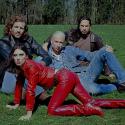
By comparison, life as a member of Coldplay as revealed in last night’s South Bank film seemed strangely placid. Perhaps music just doesn’t have the power to cause empires to crumble and oceans to rise the way it used to. Not Coldplay’s music, anyway. Considering they’re among the most enormous acts on the planet (“you’re just coming to the end of a 163-date tour,” Lord Bragg reminded them, in case this gargantuan effort had stupefied the quartet into collective amnesia), Coldplay remain quite staggeringly anonymous.
Oh, they tried to convey the drama and excitement of mega-fame and playing to a stadium full of people every night, but their hearts weren’t in it. “Hyper-real! Full on! It just doesn’t get any better!” said drummer Will Champion, as if he were reading a list of ingredients off the back of a jar of mayonnaise. “It was life-changing,” added guitarist Jonny Buckland, as though trying to remember where he’d left his car keys. Even their pal Bono, the Grand Hyperbolist Emeritus, struggled to find his usual deluge of adulatory adjectives, settling for the ironic “they are one of our biggest influences… they upped the ante.” If you want rock’n’roll frenzy and wanton behaviour, you’d better try Jerry Lee Lewis.
Celebrities are understandably but frustratingly reluctant to let documentary crews prise the lids off their private lives or trawl through their bank statements, and guess what – so are Coldplay. But as the film progressed, the group’s self-effacingness began to exert a subtle fascination. The film-makers gently pushed the notion to ludicrous extremes, shooting members of the multi-Grammy-winning unit pottering around Sainsbury’s or taking the bus down to their studio in Camden Town. The public, presumably anaesthetised by camera-phones, webcams and CCTV, didn’t even notice the film-crew, let alone Coldplay.
The exception is vocalist Chris Martin, the band’s sole recognisable public face (even if it is quite easy to get him mixed up with F1 driver Jenson Button). Denizens of the music industry often seem to regard Martin as a total prat, though maybe they’re just jealous because he’s married to Gwyneth Paltrow, but he blossomed under Uncle Melvyn’s benign interrogation. “If you’re going to marry an actress and you’re going to be a frontman, you’ve got to take what comes with it,” he soliloquised.
When Melv raised the spectre of Coldplay’s heinous middle-class origins, as opposed to the mandatory working-class heroism demanded of rock bands, the group ‘fessed up cheerfully. “I don’t think we ever will feel like a cool band,” admitted bassist Guy Berryman, with the untroubled air of a multi-millionaire who could retreat to some palm-fringed hideaway if the going ever got really tough. Chris Martin is so unproletarian that his father is a – I wince as I type the word – banker, and there were expectations that Chris might follow suit. He recalled an occasion when his father was explaining to an acquaintance that one of his sons was a banker and the other an international rock star. His interlocutor retorted, “Really? Which bank?” But hats off to young Chris for picking a career where the bonuses are even bigger.