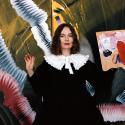
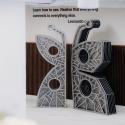
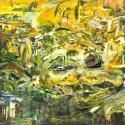
Last year critics were pleasantly surprised that the Turner Prize shortlist included works that could actually be admired for traditional notions of beauty. This year they might be surprised at its sheer variety. The four nominees not only include a painter, but an artist who crushes, bends and rips her canvases, a sound artist who sings and places her recorded voice in unusual and tucked-away places, and a duo who make futuristic films in which humans have evolved in “microgravity”.
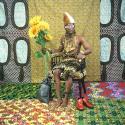
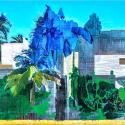
With subjects ranging from the suicide of Kurt Cobain to the death of members of the Baader-Meinhof Gang, Dexter Dalwood paints what might be described as “modern history
paintings”. With themes ranging from death, political extremism and the world of
celebrity, locations for the paintings are largely products of Dalwood’s imagination. A
recent survey of his work at Tate St Ives included a painting imagining the moon-lit
scene of the death of weapons expert David Kelly.
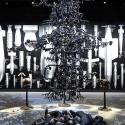
Angela de la Cruz not only paints canvases, in her spare, minimalist style, but bends and crushes them, too. Evolving from one-dimensional painting to 3D sculptural object, these works are juxtaposed in a way that suggest narrative. A survey of her work can currently
be seen at the Camden Arts Centre.
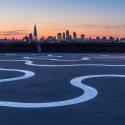
Susan Philipsz was nominated in part for her work at the International Glasgow Festival
for the Visual Arts: for this she recorded three different versions of a Scottish ballad,
Lowlands, a song about a drowned lover who returns to find his lost love. Speakers were
aptly placed on the three bridges of the River Clyde.
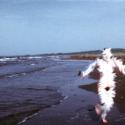
Named after the part of the inner ear that senses gravity and orientation, The Otolith Group is made up of London-based duo Kodwo Eshun and Anjalkia Sagar. Using newsreel and
archive footage, their films are set in a dystopian future that sees an evolved human
species living under conditions of extreme gravity.
paintings”. With themes ranging from death, political extremism and the world of
celebrity, locations for the paintings are largely products of Dalwood’s imagination. A
recent survey of his work at Tate St Ives included a painting imagining the moon-lit
scene of the death of weapons expert David Kelly.
Angela de la Cruz not only paints canvases, in her spare, minimalist style, but bends and crushes them, too. Evolving from one-dimensional painting to 3D sculptural object, these works are juxtaposed in a way that suggest narrative. A survey of her work can currently
be seen at the Camden Arts Centre.
Susan Philipsz was nominated in part for her work at the International Glasgow Festival
for the Visual Arts: for this she recorded three different versions of a Scottish ballad,
Lowlands, a song about a drowned lover who returns to find his lost love. Speakers were
aptly placed on the three bridges of the River Clyde.
Named after the part of the inner ear that senses gravity and orientation, The Otolith Group is made up of London-based duo Kodwo Eshun and Anjalkia Sagar. Using newsreel and
archive footage, their films are set in a dystopian future that sees an evolved human
species living under conditions of extreme gravity.