Love and loneliness, broken homes and broken hearts, child abuse and communities clinging on through war... This adaptation of Michelle Magorian's children's book treats the darkest and most difficult of themes with a firm but tender touch, breathing life into the friendship at the heart of her World War Two story. Oliver Ford Davies leads the cast as Tom Oakley, the elderly recluse looking after an evacuee, with a calm confidence. He exudes an almost palpable warmth. Tom's community might think him a miserable widower, but he responds with enveloping kindness to the vulnerability of nine-year-old William Beech.
It is to the credit of David Wood, an experienced adapter of children's books (including works by Philippa Pearce, Philip Pullman and Roald Dahl), that he has remained faithful to Magorian's novel. He grapples head on with Tom's grief and William's troubled childhood in London. Each harrowing episode (a death, or William returning home to his brutal, ill mother) is quickly followed by a mood-elevating upswing, such as more evidence of Tom's affection, or characters singing Gracie Fields's Wish Me Luck As You Wave Me Goodbye. Angus Jackson's swift direction demands concentration from adults who allow their minds to wander, but the fast pace is sure to grip children.
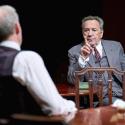
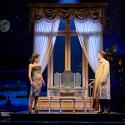
 The design by Robert Innes Hopkins (responsible for the wonderfully inventive Swallows and Amazons at the Bristol Old Vic in 2010) captures the rural feel of Tom's home and the urban griminess of London. The backdrop is simple: a painted scene of a church for Tom's village in Little Weirwold, Dorset, and one of Tower Bridge for William's home in London (Tom and William, pictured above). The magic is in the details: the posters on the wall, "Eat Less Bread" and "Air Raid Wardens"; a visible caking of dust as Tom shows William into a room once used by his late wife; and a lively use of puppets as props. In the countryside, William meets fluttering birds and leaping squirrels (operated by rods).
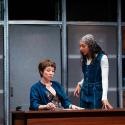
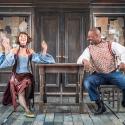
The second half features the dingiest of dungeons (William's London home), where the entire floor is lifted up by chains. With its great rumbles and clunks, this is truly frightening. Three children are taking it in turns to play William and his best friend, the spirited and just slightly pretentious Zach, during the run. Ewan Harris as William delivers his lines with clarity, and conveys his character's awkwardness and desire to please effectively. William Price, as Zach, is pure joy to watch. In his rainbow-coloured jumper (pictured below), he dances around the stage, comically misquoting Shakespeare ("To be or not to be/ that's indigestion") and dropping in period slang like "right-o" and "wizard" with ease. He's a burgeoning talent.
 The chemistry between Ford Davies and Harris has yet to develop, but there are many weeks left. Harris could do with a little more expression in his voice. It is Sammy, a puppet-collie made by Toby Olie (the hind legs of Joey in War Horse) who steals most of the scenes between them. Elisa de Grey, the puppeteer, has Sammy nuzzling his furry head against a sorrowful William, barking when he senses trouble, and whining and tilting his head when he is left behind.
This adaptation was staged at the Chichester Festival Theatre last year, before a national tour, coinciding with the book's thirtieth anniversary. For anyone with children, aged eight upwards, this revival is warmly recommended.
- Goodnight Mister Tom is at the Phoenix Theatre until 26 January, before touring regionally until 13 April