LFF 2013: The Past

Asghar Farhadi follows 'A Separation' with another riveting tale of family strife

share this article

Marriage-go-round: Tahar Rahim, Bérénice Bejo and Ali Mosaffa in 'The Past'
Carole Bethuel

Asghar Farhadi’s Oscar-winning A Separation was a marriage of drama, melodrama and social observation that was beyond compare; it’s expecting too much of his new film to equal it. That said, The Past confirms that few can match the Iranian's attention to the psychological minutiae of family relationships. It's riveting.

An Iranian, Ahmad (Ali Mosaffa) returns to Paris to sign divorce papers with his French wife Marie (Bérénice Bejo), four years after their separation. The couple have an easy rapport, with no evident rancour, and Ahmad gets on well with Marie’s daughters from an earlier marriage, especially the eldest, Lucie. The divorce seems a formality.

Nevertheless, Ahmad walks into a domestic storm that has nothing to do with him, as a distraught Lucie refuses to accept her mother’s new, live-in lover, Samir (Tahar Rahim). Marie begs her ex to intervene.

What’s most pleasurable in the early stages of the film is Mosaffa's beautiful performance as Ahmad, a gentle, sensitive man, brilliant with children, who adeptly navigates the awkward situation in which he finds himself, while dealing heroically with his own feelings of regret. Then, as Ahmad’s presence reveals a series of secrets, the film’s temperature rises.

This shares A Separation’s only fault, namely a tad too much contrivance. But it also shares the admirable attention to behavioural detail – the nuance of speech and intimacy, the domino effect of lies and misunderstandings. As the title suggests, here Farhadi particularly raises questions about our relationship with the past, the extent to which one should, or can forget past love, and past pain, in order to move on. As one friend urges Ahmad, “cut… cut.” If only it were that easy.
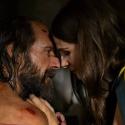
Few can match the Iranian's attention to the psychological minutiae of family relationships

rating

4

share this article

Support the future of arts journalism

Subscribe to theartsdesk.com

Thanks so much for choosing genuinely independent arts journalism theartsdesk’s mission has never been more important – in an age of relentless algorithmic recommendation, sponsored content and unreliable AI, the expertise and discernment of individual critics deeply embedded in their specialist areas is absolutely vital.

If you want more of that in your life, why not subscribe now?

If you do this before the 31st August, you’ll be able to keep at this “founders rate” for life: your subs will never increase! You can choose to subscribe annually for just £40 simply click here
or monthly for £5 per month simply click here.

Not ready to subscribe?

If you want to support with a little extra or aren’t ready to subscribe just yet, there’s also the option to give direct to our crowdfunder to support our imminent redesign and exciting expansion with new features and collaborations Simply contribute here: https://gofund.me/c3f6033d.

However you choose to be involved, you can proudly say that you are picking the right side in the battle for truth and humanity in the modern information landscape. And we will be very glad to have you on board!

more film

Dip your toes into these Homeric movies before Christopher Nolan’s 'The Odyssey' ties us to its mast
A Bellocchio classic is retooled as a stifllng rich-brats' revenge story
A potential camera in every hand: SMart celebrates smartphone directors
Hitchcockian black comedy from Luis Buñuel’s Mexican period
Olivia Wilde's snappy comedy on the perennial subject of reviving a failing marriage
Kiss kiss, bang bang in a moving Middle East documentary
David Vann's acclaimed novella transposed to the screen with mixed results
The most important 'how-to video' you are ever likely to see
Satyajit Ray's poignant, thoughtful drama, set in 1960s Calcutta
Superman's party girl cousin earns her stripes underwhelmingly
Convoluted drama takes on Fab Four delusions, brotherly trauma and ultraviolence
Sophy Romvari's atmospheric first feature looks back at a tortured family dynamic