We know how the story ends, but then so did Euripides' first audience in Athens in 431 BC. Medea was already a familiar character of myth, a sorceress whose ungovernable passion for Jason led her to commit horrible murders when he abandoned her for another woman. Now, as in the Golden Age of Greek drama, the chief interest is in the way the tale is told. And the National Theatre has assembled quite a team for the purpose.
Ben Power, writer of this version, and Carrie Cracknell, director, have both dealt with the classics in innovative ways before. Power's A Tender Thing retold Romeo and Juliet with much older actors in the lead roles and Cracknell's A Doll's House, with a vital young couple at its heart, reinvigorated Ibsen in an award-winning production that went from the Young Vic to the West End and New York. These two are joined by experimental choreographer Lucy Guerin, with Will Gregory and Alison Goldfrapp in charge of the music. But this galaxy of talent would be nothing without a Medea able to carry the extraordinary burden of the tragedy and Helen McCrory is simply stunning in the title role.
She has sacrificed much for a man who now prefers another
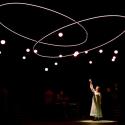
A tiny, feminine figure with a deep, resonant voice and a commanding presence, McCrory explores every nuance of a character famous for committing the most unforgivable crime in literature: the murder of her own children. She is down-to-earth (she enters cleaning her teeth) but powerful, manipulative, broken-hearted, loving and relentless. She wants to take control of her life - Euripides sympathised with the limited role of women - and she has sacrificed much for a man who now prefers another.
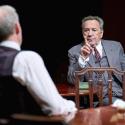
Before the play begins, Medea has already killed her brother while escaping Colchis with Jason (Danny Sapani, pictured with McCrory) after employing her magic powers to help him gain the Golden Fleece. They have been settled in Corinth for some years and have two sons when Jason decides to improve his status by abandoning Medea for the king's young daughter. Medea's jealous fury overwhelms her reason and she murders first her rival and the king with a poisoned garment, and then those whom Jason loves most.
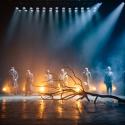
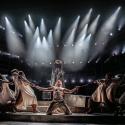
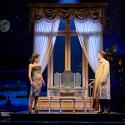
 Tom Scutt's dual level set for the Olivier reveals Medea's shabby household with nature on its doorstep in the shape of sturdy tree trunks, while a more glamorous court disports itself above, almost out of sight. The design fits the Power/Cracknell decision to modernise the language and explore the characters' psychology intensely, while at the same time retaining the sense of magic, of strangeness. Often when the Greeks are updated, references to the gods stick out as odd: if human beings have no power over their destiny, how can we hold them responsible? The question doesn't arise here in this world, half way between suburbia (where the kids play computer games and Jason gets out his mobile for a keepsake shot of himself with his sons) and untamed nature, between a now of visceral emotion and a cooler, mythical then. The Chorus, women of Corinth in floral dresses, twitch and shudder in Guerin's choreography, expressing Medea's pain and confusion as much as their own horror, to music which goes from gently atmospheric to operatic to almost ecclesiastical as the mood requires.
At the end, this Medea does not escape in a chariot drawn by dragons provided by her grandfather, the sun god, Helios, but drags away the children's bodies in their bloody sleeping bags. And, in McCrory's performance, clearly mad with grief rather than merely delighting in Jason's pain, she achieves at least the right to an understanding of what his behaviour has brought her to.
Michaela Coel as the Nurse addresses the audience simply, directly, involving us as witnesses and Danny Sapani's self-deluding Jason suffers agony at the loss of his sons. Beyond the control of either, McCrory is heart-rending, unforgettable.