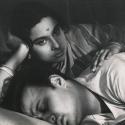
Calcutta director Satyajit Ray was a colossus of cinema whose work often bridged the gap between his native Indian – specifically, Bengali – culture and that of Europe. He wrote that his 1964 film Charulata (alternatively titled in English “The Lonely Wife”) was his favourite, saying “it was the one film I would make the same way if I had to do it again”. Ray’s script is based on a novella, “The Broken Nest”, by one of the most profound cultural influences on the director, Bengali writer Rabindranath Tagore.
Charulata is a film of intimate concentration, as well as an immaculate recreation of a historical past: it’s set in Ray’s native Calcutta at the end of the 1870s, with heavy Victorian interior spaces that play off against rare excursions outside. Its allegiances broach an ambivalent culture related, though not explicitly here, to Empire – the Bengal intelligentsia of that time appear more English than the English themselves – that is doubled by a distinction between seriousness and play. It’s a linguistic doubling, too: intellect in the film seems to express itself in English, emotion in Bengali.
Mitra's luminous black and white camera texture is glorious in this BFI restoration
Ray reveals himself as one of those rare male directors who articulate completely the interior worlds of their heroines. In this case, it’s the eponymous Charulata (immaculately played by Madhabi Mukherjee, main picture), living inside her prosperous Calcutta home, existing in a world of longueur loneliness and protracted interior afternoons, while her intellectual husband Bhupati (Shailen Mukherjee) toils away in another corner of their spacious house on his political newspaper The Sentinel (headline motto, “Truth Survives”). Bhupati, though his affection for his wife is clear (the background nuance that Ray never touches on is that their marriage remains childless), is caught up in his world of thought, and important issues like whether the Tories or the Liberals will win the forthcoming elections in England. On one occasion (pictured below right), caught up in a book, he walks along a corridor and fails even to notice his wife standing to one side.
 Yet he’s aware of her isolation, and more than eager to assuage it by bringing Charu’s unsuccessful lawyer brother and his wife into the family home, the former as his putative business partner (which leads to a last act denouement), the latter as indolent female company. But it’s the arrival in this family circle of Bhupati’s literary and musical cousin Amal (Soumitra Chatterjee), fresh from his studies, that gears up the film’s emotional development. Bhupati’s best intentions in asking his cousin to help develop his wife’s literary gifts are fated to go awry: as Charulata’s emotional horizons reveal themselves they become intricately connected to the man who is helping her discover them.
Ray and his art director Bansi Chandragupta suddenly take us outside, into a faded but fecund garden that we had no idea could even exist around a dwelling defined so far exclusively by its interiors (Amal and Charulata together, pictured below). As he coaxes her towards revealing her talents, in this enchanted, somehow timeless atmosphere, cinematographer Subrata Mitra catches a wonderful scene where she is on a swing as he sits on the ground below, intercutting between the two (Mitra's luminous black and white camera texture is glorious in this BFI restoration). Stronger feelings blossom, coming to a head at exactly the time when external circumstances close in.
 It’s a quietly shattering final revelation, all the more so for the slow – Charulata moves at a distinct, stately pace, not afraid of its own longueurs – understatement which Ray has brought to the emotional interactions so far. The film’s final scenes are no less emotionally powerful: with a visual reference to Michelangelo, Ray’s script expresses hope for reconciliation after discord, deeper knowledge to be achieved through disappointment. EM Forster’s “Only connect!” remains the recurring human imperative.
The theme of a woman caught between two different directions, different influences, was clearly a close one for Ray: twenty years after Charulata, he returned to another Tagore story for The Home and the World, also starring Soumitra Chatterjee in a film whose title expresses that choice more explicitly. (Ray had actually considered that project much earlier, back in the 1940s, a decade before he started his film career with the Apu trilogy which established his reputation). Ray’s score for Charulata is characteristic, mixing melodies from East and West, the sitar and the flute, and it’s tempting to transfer the choice of directions faced by his heroines onto the director’s own world. But such theories seems somehow alien with Ray, a director who manages to convey an exquisite sense of the here-and-now, of physical and emotional being in the moment, never more impressively than in Charulata.