Even the most begrudging acquaintance with thematic foghorn Downton Abbey will have affirmed that the Edwardian era heralded momentous social change. Provocatively embedding this revolution in his work was largely forgotten “New Drama” exponent St John Hankin, whose suicide Shaw described as “a public calamity”; Granville-Barker dedicated his first volume of plays to him.
The Orange Tree rescued Hankin from obscurity with multiple revivals, and now Jermyn Street attempts to demonstrate why this unfamiliar name was once held in such reverence. Debuting director Joshua Stamp-Simon has selected a persuasive piece: 1908 feminist satire The Last of the De Mullins, performed privately in order to escape the censor.
No wonder – this is incendiary material. Prodigal daughter Janet (Charlotte Powell), who fled home pregnant and unmarried and became a successful London shopkeeper, returns to Dorset with her illegitimate son (Jenk Oz and Rufus King-Dabbs) when her father (Stuart Organ) falls ill. De Mullin, desperate to perpetuate the family name, will forgive her indiscretions in return for raising his heir, but proud single mother Janet, who refuses to marry simply to satisfy convention, defends her alternative lifestyle: the inert aristocracy is irrelevant, while she is of “some use” to the world. Hankin, shockingly, endorses her radical opinion.
 But this 90-minute play suffers from tonal schizophrenia, beginning as Wildean drawing-room comedy and ending as impassioned didactic drama, evoking Shaw, Galsworthy and Ibsen in its upending of stifling moral codes and insular snobbery. Hankin’s somewhat laboured execution cannot boast the depth and rigorous intellect of more polished contemporaries – expository exchanges drag, and familiar New Drama figures (authoritarian father, rebellious child, conventional sibling, interfering dowager) are not particularly refreshed by his treatment.
Yet his boldly expressed ideas are still pertinent 100 years on – Noughties TV series Gilmore Girls used essentially the same premise to likewise address changing female roles, generational conflict and the challenges of self-determinism. Hankin’s Janet, vigorously embodied by Powell, is a thoroughly modern heroine: self-sufficient, proactive and refreshingly candid. She’s no saint, however. There’s canny cynicism in her deceit and commercialism, and, like a razor-tongued version of Lizzy Bennet, her forthright observations lacerate.
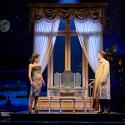
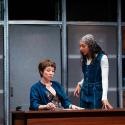
One victim is pious sister Hester (Maya Wasowicz), whose virtue has yet to reap rewards. Wasowicz excels when the mask slips to reveal her thwarted passions. Organ’s De Mullin is an ardent mouthpiece for the patriarchy, believing the only female “independence” is dependence on a husband, while Roberta Taylor (pictured above with Harriet Thorpe) is touching as his conflicted wife and Thorpe enjoyable as imperious Aunt Harriet, one disapproving eyebrow a waggle away from full-on Lady Bracknell. There’s good support from Benjamin Fisher’s nice-but-dim ex, Alexandra Dowling’s perky fiancée and Matilda Thorpe’s gossipy neighbour.
Stamp-Simon’s straightforward staging and Victoria Johnstone’s "faded grandeur" set are on the tentative side, but in its best moments, The Last of the De Mullins is a compelling part of our theatrical heritage.