Life, the universe and everything… in 70 minutes. You certainly can’t fault Nick Payne’s ambition, nor help but admire the dazzling inventiveness of his theoretical physics romcom with a side helping of artisanal beekeeping.
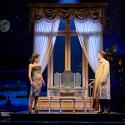
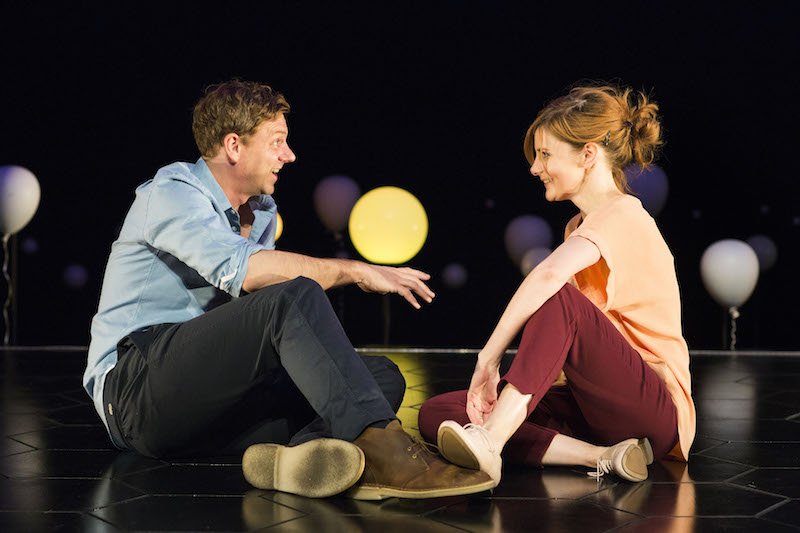
This 2012 Royal Court hit, which has since travelled across the pond, lends dramatic form to quantum multiverse theory: every event and every decision has numerous outcomes, coexisting in parallel universes. The human dimension for the science comes through the romance of cosmologist Marianne (Louise Brealey, pictured below with Joe Armstrong) and apiarist Roland (Armstrong), whose relationship landmarks – first meeting, first date, arguments, declarations, separations and reunions – are repeated with noticeable deviations, creating a kaleidoscope of possibilities.
 The shifts range from subtle to substantial, but even in radically different versions of events, there are ghostly echoes. Some act as astute observations on shared patterns of behaviour, like our tendency towards belligerence when wracked with guilt; others contribute to the free will versus predestination debate. Being able to control her fate matters greatly to Marianne, a stance that gains significant depth when she and Roland face the devastating fact that sometimes choice is an illusion in a pitiless universe.
The non-linear storytelling can limit engagement, with the consequences of specific decisions challenging to discern, and emotional through-lines all but impossible to track. This is no Sliding Doors or If/Then – multiverse means countless fragments, rather than easily comparable either/or. It’s fascinating philosophically, problematic dramatically. If there’s a world in which this argument never took place, how much should we invest in it? Does one break-up carry more weight than another? Repeated scenes can function like sitcom resets, undoing the work of previous iterations or lessening their impact, though at its best, the play is suffused with elegiac – and wholly accessible – “What if?” and “What might have been?”.
The bare platform gives the actors a blank slate on which to create
Brealey and Armstrong rise to the challenge of this quick-change act, providing a grounded centre for its intellectual maelstrom, though Armstrong could offer more variation on his amiable bloke. Their courtship is characterised by hilariously awkward fumbles, from jittery Brealey’s fervent responses – “I fucking love honey!” – to leaden-footed dancing and the excruciating navigation of whether or not Joe will spend the night, and what it might mean. It may not be significant in the grander multiverse scheme of things, but it matters to them, right now, and that has its own power. Payne beautifully communicates how love can seem as awe-inspiring as the greatest scientific discovery, and its loss just as monumental.
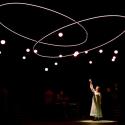
Michael Longhurst’s pacy production effectively employs flashbulb pops to herald scene transitions, and Tom Scutt’s set is a striking visual metaphor. The bare platform gives the actors a blank slate on which to create, while the clustered white balloons – creatively lit by Lee Curran – are, appropriately, open to multiple interpretations: they could be stars, atoms, firing synapses, romantic sparks, memories, dreams, grief. An imperfect experiment, but moments of sheer wonder.