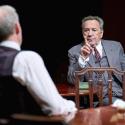
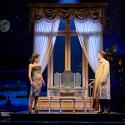
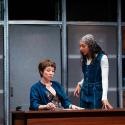
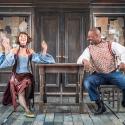
Satire may famously be what on Broadway closes Saturday night, but last night's concert performance of the Gershwin brothers' Of Thee I Sing found many patrons fleeing the Festival Hall at the interval. The culprit lay in sound issues that took the aural equivalent of a pneumatic drill to a featherweight piece that needs tender treatment if it is to flourish as the original did against the odds. Rarely performed today (New York did a concert version of its own in 2006), this was in fact the first musical to win the Pulitzer Prize.
Last night's concert staging improved marginally after the half but by that point the damage was done: this latest in an ongoing series of Broadway musicals in concert form (Sweet Charity comes up next in a few weeks at Cadogan Hall) was, alas, nothing to sing about, notwithstanding a largely winning cast who made you want to see them delivering the same material in almost any other context: at, for instance, the Cadogan Hall.
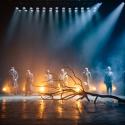
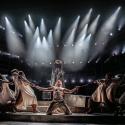
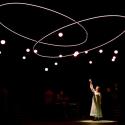
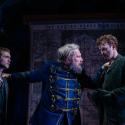
 Not that the indices were especially, um, bright, even at the outset. Before a single note had been played, the Royal Philharmonic Concert Orchestra all but groped their way on to the stage – quite why they weren't allowed to enter with the lights up is anyone's guess. And the minute the singing began, it was earplugs time, the amplification not only deadening the more lilting songs from the Gershwins' fabled 1931 score but souring the performers' best efforts – the two leading women, Hannah Waddingham (pictured above) and Louise Dearman, especially.
George Kaufman and Morrie Ryskind's book pokes sustained fun at the American political process: a vice president (a fey Tom Edden), for instance, called Throttlebottom who has problems with his own name and thinks the senate is a reference to the baseball team of old. Corn muffins would appear to be the most emotive topic of the day, and we're casually informed during the second act that Nebraska has for some reason declared martial law.
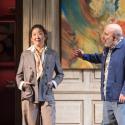
The humour tends toward "the whole tooth and nothing but the tooth" brand of malapropism, which you will either find endearing or wearying, and Shaun Kerrison's staging prompted both responses throughout a comparatively short night that seemed much longer than it was. ("Posterity is just around the corner" is a further example of the linguistic japery.) The piece's abiding reason for being, though, is the Gershwins' celebrated score that folds American standards (listen out for snatches of Stephen Foster and John Philip Sousa) into an original and varied songscape of which the best-known melodies remain the title song and "Love is Sweeping the Country" – the latter all but decimated by a level of amplification that turned some possibly fine singing into something impossibly metallic and shrill. (The Gershwins pictured below)
 In context, it's difficult, therefore, to know what to say about the individual performers beyond extending sympathies their way and pointing out that Hadley Fraser certainly has it in him to be an expert John P Wintergreen, the president in search of an issue he can make his passion. Among the rest, Gavin Alex perked up every passage in which he appeared, and it was good yet again to hear Peter Polycarpou back in fine voice, albeit of the Gallic variety in keeping with his role as French ambassador. And yet I doubt I was the only one who winced slightly when Fraser's ever-smiling politico voiced a self-satisfied, "Did you hear that F-sharp I gave them?" early in act two: a question to which one could on this occasion only reply, "Yes, you couldn't help but hear it – all the way to the White House."