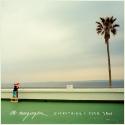
Faces: You Can Make Me Dance, Sing or Anything… 1970–1975
Faces were always about more than just the music. From the moment they were formed by ex-members of The Jeff Beck Group and Small Faces in June 1969, tension was integral. Their front man and singer Rod Stewart ran a parallel solo career throughout the band’s life and the public image as boozy, cheeky lads was useful for papering over any cracks. The story is worth telling, but it is not one told by this collection of their studio albums and singles – more on that in a few paragraphs.
Sometimes, the tension surfaced. Talking to Rolling Stone in June 1973, Rod Stewart engaged in some half-hearted damage limitation. Caught while touring the US with Faces, he said: “We went through a bad stage about a week ago after I was interviewed by Melody Maker and I put down the group's album. I said Ooh La La was a stinking rotten album. Actually, I'll take that back. That's what was in the paper. What I actually said was I think the band is capable of doing a better album than what they've done. I just don't think we've found the right studio or the right formulas. The misquote really pissed the band off.”
Whether Stewart actually described Ooh La La as “stinking rotten” is moot. That is what was printed and must have, at least, reflected his opinions about the album and his band. Faces were about to begin falling apart. Bassist Ronnie Lane soon left. Stewart himself had already, in 1971 and 1972, topped the US charts with solo albums Every Picture Tells a Story and Never a Dull Moment. That Faces limped on to the end of 1975 is astonishing – from the moment Stewart hit big as a solo act, their in-built shelf life was confirmed. The only surprise was how long they kept it going.
 You Can Make Me Dance, Sing or Anything… 1970–1975 collects their full studio works, from their eponymous 1970 debut album through its three successors (the 1974 live album Coast to Coast: Overture and Beginners is not included), to the non-album single “You Can Make Me Dance, Sing or Anything (Even Take the Dog For a Walk, Mend a Fuse, Fold Away the Ironing Board, or any Other Domestic Short Comings)” – which was issued in the UK in November 1974 and the US in January 1975. The not-quite accurate use of 1975 in the title is in keeping with the band’s slap-dash persona and, it transpires, the lack of care taken with this release.
This five-disc clamshell box is overshadowed by the 2004 set Five Guys Walk into a Bar..., which supplemented the previously released material with outtakes, BBC recordings and live tracks. You Can Make Me… adds 15 otherwise unissued bonus tracks to the four albums, drawn from further BBC sessions, rehearsals and live shows. The fifth and final disc collects nine single-only tracks, including the NME flexi-disc “Dishevelment Blues”. Of the 64 tracks overall, the 15 album bonuses include a handful of otherwise unreleased songs such as the 1970 recording “Behind the Sun” and an inessential 1973 live version of John Lennon’s “Jealous Guy”. The need for You Can Make Me… will be driven by how the familiar material sounds.
 Thankfully, it sounds great. Though the accompanying vinyl edition was not supplied for review, so no like-for-like comparison with original pressings could be made, the CD version is terrific. Faces records often sounded compressed and muddy, as though focused on the rhythm section at the expense of showcasing the whole band. Now, it is possible hear the interplay between each member, especially Ronnie Wood’s guitar and Ronnie Lane’s bass. It can also finally be understood how Ian McLagan's organ – when not soloing – was about much more than filling the sound out. It was as crucial to the band’s forward thrust as Kenney Jones’s complex yet driving drumming and Rod Stewart’s vocals.
Unfortunately, the care taken with both the hunt through the archives and mastering is not reflected in the package itself. This no-frills set has no booklet with an essay on the band and its albums – beyond the CDs, the only other item the box is a perfunctory fold-out with the track listings. For the 1970 debut album and 1971’s Long Player, the US sleeves are used for the card wallets – particularly poor with the first album, as it was credited to Small Faces in the US. Where originally used, gatefold sleeves are not reproduced. How Faces presented themselves has not been borne in mind.
A band of this status needs treating properly. The packaging of You Can Make Me Dance, Sing or Anything… 1970–1975 means Faces have not been. Still, there is the music.