

The “femmepersonators” of Harvey Fierstein’s 1962-set drama would be flabbergasted by today’s level of trans visibility, from Grayson Perry and Caitlyn Jenner to Transparent and Eddie Redmayne’s new film The Danish Girl. Yet it’s the still pertinent issue of private experience versus public profile that sparks a schism in this idyllic community of closeted cross-dressers, along with thorny questions of how gender fluidity might correlate with a more flexible approach to identity and sexuality.
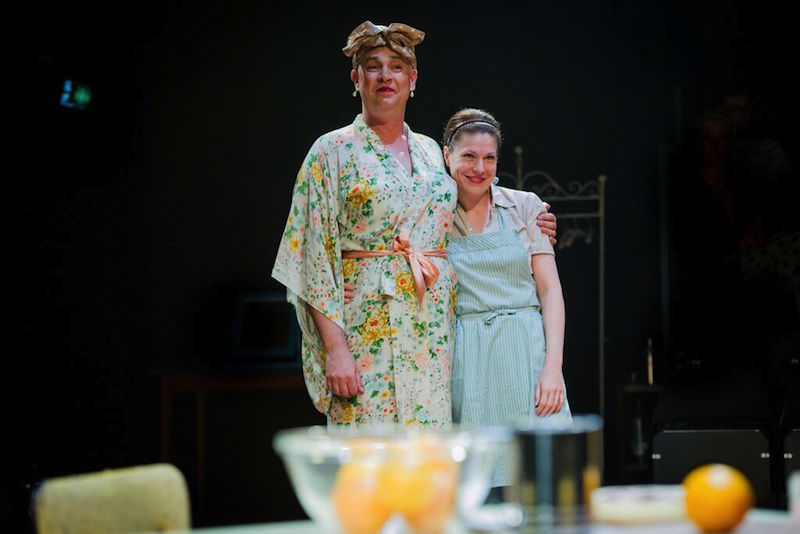
Open-minded Rita (Tamsin Carroll, pictured below with Matthew Rixon) runs an escapist Catskills resort with husband George (Edward Wolstenholme) and his alter ego, the winsome Valentina. Guests include regulars Albert/Bessie (Rixon), The Judge/Amy (Robert Morgan) and Michael/Gloria (Ashley Robinson), plus two newcomers: Jonathan (Ben Deery), making a nervous debut as Miranda, and magazine editor Isadore/Charlotte (Gareth Snook), who brings grand plans for out and proud activism.
 Fierstein’s play, which premiered on Broadway last year, succumbs to the comic temptations of burly men squeezed into frocks exchanging bitchy barbs, but moves beyond camp transvestite cabaret. There’s a wistful quality to this portrait of lost souls, seeking to match their external appearance to how they feel inside. They share coming out (or, rather, putting on) stories: Jonathan donning his wife’s wedding dress; The Judge transfixed by a gown in a shop window; Michael less interested in the coeds he bedded than the clothes they’d shed. The emphasis is not on glamour, but freedom.
A languorous opening act lets us enjoy their diverse company. The ensemble’s playful intimacy demonstrates long history and the cherished bonds of sisterhood, and the transformation of Miranda from gawky ugly duckling to giddy girl via group makeover is extremely touching. But Fierstein fatally overloads his play, necessitating a jarring gearshift from show to soapbox tell. We’re plunged into an educational debating chamber when ambitious Charlotte demands everyone sign an oath swearing they’re not homosexual in order to smooth the path to social acceptance.
It’s an intriguing complication of the “Be true to yourself” philosophy espoused by Fierstein’s Kinky Boots, whose oppressed groups find cosy solidarity, and speaks to the fragmentation and internal prejudices of insurgent minorities (encapsulated by Monty Python’s Life of Brian). But the idea has to compete with a melodramatic blackmail plot, legal and financial challenges, an exhausting slew of sassy one-liners, and the effect of these dual roles upon the men’s families. George, Rita and Valentina’s layered love triangle deserves far more exploration, as does the dissection of strictly delineated post-war gender roles.
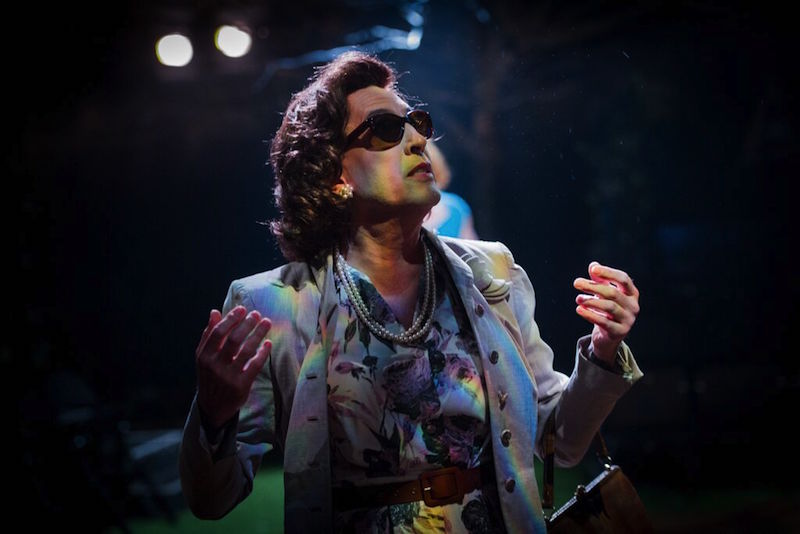 Snook’s arch, purse-clutching Charlotte (pictured left) is a chillingly persuasive zealot – Maggie meets McCarthy – while Robinson’s smouldering redhead channels Rita Hayworth, Morgan supplies gravitas, there’s endearing work from Rixon and Deery, and Wolstenholme and Carroll poignantly demonstrate the cracks appearing in their perfect marriage. Andrew Riley’s period costumes and Harry Blake’s evocative Sixties soundscape contribute to a heartfelt Luke Sheppard production that captures the compassion of this well-meaning but flawed play.











