There’s much more to Brendan J Byrne’s engrossing, even-handed documentary Bobby Sands: 66 Days than its title might at first suggest. The timeline that led up to the death on 5 May 1981 of the IRA prisoner provides the immediate context – an increasingly dramatic one as the countdown of Sands’s hunger strike nears its inexorable conclusion. But the film’s interest is broader, not least in examining his role as a symbolic figure, both in the immediate context of the conflict in Northern Ireland, and across a much wider historical perspective.
The drama of Sands’ life and death has already given rise to a host of documentaries, as well as feature treatments, the best known of which remains Steve McQueen’s 2008 Hunger with Michael Fassbender. For anyone who felt that work was rather elliptical in its treatment of the story, Byrne’s film fills in the full details around Sands’s life with a comprehensiveness that is going to be hard to beat, the only absence being that of surviving members of Sands’s immediate family.
Even at 105 minutes, the film sometimes feels crowded
The most powerful dramatic device employed is the voiceover narration of Sands’ prison diary, starting with its unflinching first line: “I am standing on the threshold of another trembling world. May God have mercy on my soul.” It’s a remarkable document in itself, and the excerpts chosen by Byrne, and the reading by Belfast actor Martin McCann, place Sands’s voice right at the heart of the story. Intertitles chart on an almost day-by-day basis the progress of his hunger strike, with stark details of his declining weight and physical state presented laconically on screen; we learn from professionals, too, about the process of how the body breaks down in such circumstances, how the mind dips in and out of lucidity as the days pass.
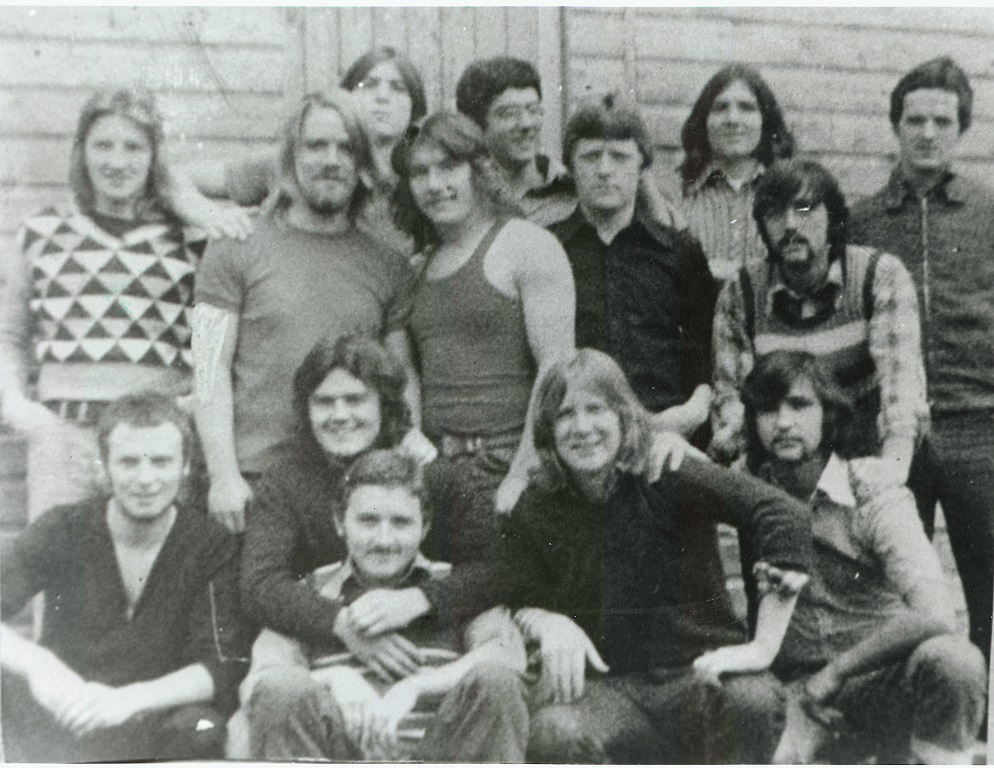
The archive news material assembled here is remarkable, catching both events directly related to the political process in which Sands was involved, and the wider visual texture of his time, the sectarian tension of life in Belfast particularly. Byrne even includes a couple of moments of animation to widen the perspective, and he’s well-served by his talking-head interviews with figures involved in Sands’s struggle, notably comrades from his earlier prison experience (pictured below right), the three and a half years of his first stretch that started in autumn 1972, when their special category prisoner status, for which Sands would ultimately die, allowed a remarkable degree of self-regulation in confinement, as well as time to explore the wider meaning of the struggle intellectually. From the “other” side, Byrne has testimony from one of the H Block prison officers, as well as Norman Tebbit and, rather more incisively, Charles Moore, Margaret Thatcher's biographer, giving perspective on the response from Westminster: the two worlds overlapped most notably when Sands, already on hunger strike, was elected an MP.
 But 66 Days goes considerably further than the immediate context of Sands’s struggle, presenting him in a much wider one, both that of Irish history and of non-violent resistance, with Irish Times journalist Finton O’Toole insightful on the way in which “myth” is created. Hunger strikes had played a powerful role in the post-1916 Irish independence movement that was so close to the context of protest in which Sands was involved. O’Toole notes how the final victory came to “those who could suffer the most, not those who could inflict the most suffering”, with Sands’ death playing a significant role in the preamble to the eventual Good Friday agreement.
66 Days presents both the man and the myth, making it clear that Sands was resolute in his decisions, reinforced by a strong intellectual grounding, rather than in any sense a pawn of the IRA. It’s an impressive package, with credit due to Paul Devlin’s editing for putting a wealth of material – even at 105 minutes, the film sometimes feels crowded – into order, and a score from Edith Progue which has its own sense of dramatic direction.
Overleaf: watch the trailer for Bobby Sands: 66 Days