It’s fair to say that vocal jazz ranks modestly in British awareness of Danish culture, certainly below the instrumental music and the phenomenon of the moment, the cable-knit-sporting detective Sarah Lund. Which is a shame, because this second event in Pizza Express’ week-long festival illustrated the variety and strength of that country’s scene very effectively. Sinne Eeg is a multiple award-winning performer broadly in the American tradition, while Cathrine Legardh exemplifies a Scandinavian, folkloric style.
Eeg performed a tasteful and eclectic selection of favourite standards and treasures from off the beaten track. “Summertime” became a bracing sketch done in vocal acrobatics, the impressionistic nature reinvigorating a piece that can, in less skilful hands, become something of a warhorse. “Willow Weep For Me” saw Eeg demonstrate awesome bursts of power in a reading that bristled with angry defiance.
Her less obvious choices offered both novelty and technical bravado. Joni MItchell’s “Dry Cleaner from Des Moines” was given an acrobatic re-working, while she opened with a gorgeously lilting Enrico Pieranunzi tune that made her velvet tone gleam.
Eeg was accompanied only by Danish virtuoso bassist Thomas Fonnesbaek, a daring arrangement (only mastered by very few such as Sheila Jordan), that leaves both players exposed, and demands the utmost control of pitch and rhythm. While the percussive attack of the acoustic bass can derail a singer’s rhythm (the pair very occasionally wrestled with the beat), the space it allowed to their individual brilliance more than compensated.
Fonnesbaek was effortlessly superb, and the arrangements gave him ample space to improvise solos, though it was, perhaps, a shame “You Don’t Know What Love Is” was his only use of an electric instrument. The electronic sustain enabled him to relax his attack, and the result was a mesmerising hum and softer-shifting harmonies that perfectly evoked the song’s melancholy.
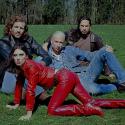
 Like Eeg, Legardh (pictured right) included an interesting choice of standards. In particular, “Beautiful Love/Gorgeous Creature” had an energetic, driving charisma. Very few singers could match Eeg’s combination of poise and power, yet Legardh’s appeal lies elsewhere, in a novel (for British audience) blend of American and Scandinavian music, which has yielded a fascinating genre of its own, as styles and performers have exchanged ideas across the Atlantic.
In some respects Legardh’s musical identity reflects that of Swedish singer Monica Zetterlund, many of whose songs she performs in a tribute programme. As an aspiring jazz singer in 1960s New York, Zetterlund was allegedly dismissed by Ella Fitzgerald for falsely assuming an American identity in songs, and instructed to tell her own story. Which she then did - and Legardh’s own performance of Zetterlund echoes this experience in some respects, establishing her own musical profile to some extent in contrast to the sophisticated American song tradition in which Eeg works.
Legardh’s tone is less lustrous than Eeg’s, but this suits the folkloric aesthetic of her repertoire. She sings in English as well as Danish and Swedish (Zetterlund’s native language), though her phrasing in English lacked the idiomatic fluidity of her Swedish. She is also a fine composer and lyricist, and her setting of the Danish poem “Lykke” (“Happiness”) was elegant and touching, while her lyric “Little Red Devil”, about disastrous love, had an attractively self-deprecating humour, a quality well-suited to her more vernacular style. She was accompanied by distinguished Scottish pianist Brian Kellock, who added delicacy and lyrical sparkle.
Denmark has long had a more actively cosmopolitan music scene than many fans here realise, from the swing era onwards, via the arrival in Copenhagen of many American musicians in the 1960s, continuing until today. As representatives of the international scope of Danish music, fans will more likely know of British jazz pianist and composer Django Bates, who taught in Copenhagen; or Danish bassist Jasper Høiby, whose band Phronesis also play this festival, than they will either Eeg or Legardh. Yesterday’s sophisticated programme of song offered a jewel-like microcosm of a scene that spans Sweden to Des Moines.
- Sounds of Denmark continues at Pizza Express until Thursday 22 September