

If it all comes across as vividly as this on screen, imagine what it would have been like to witness in person. Which quite a few of us very nearly did, until we had to be disinvited owing to changed government guidelines. Hopefully the move back to reopening of concert halls will admit us in limited numbers to the Wigmore Hall in September, and what a feast it is from this pioneering set-up: 100 events planned up to 22 December, all to be livestreamed (the qualification being that they really ought to charge a small amount for viewing; everything for free makes it hard on smaller outfits which need to make some money to pay the players).
At any rate, following the filmed series which brought concert live back into our homes back in July, the Wigmore couldn’t have chosen a more deserving team for this 1 August spectacular, led by violinist Elena Urioste and pianist Tom Poster whose home concerts, special requests and all, were a consistent highlight of lockdown. Poster’s fearless exuberance as well as his subtlety guide an absolute masterpiece from light to darkness and back again. Dvořák’s Second Piano Quartet is in the heroic key of E flat major, which unusually for this composer means some fierce combat: it’s more closely related to the turbulent Seventh Symphony than the genial Eighth, which came just after it. All four players get to shine, but there’s refreshing spotlight on the viola part, so poetically taken by Rosalind Ventris, while cellist Laura van der Heijden lullabies us deceptively in the Lento. After its first tempest, the sun flooded the platform – this was a morning concert – before a return to sweet dreams. The visionary surprises of the first movement coda and the grand shock at the very end are both peerlessly handled. 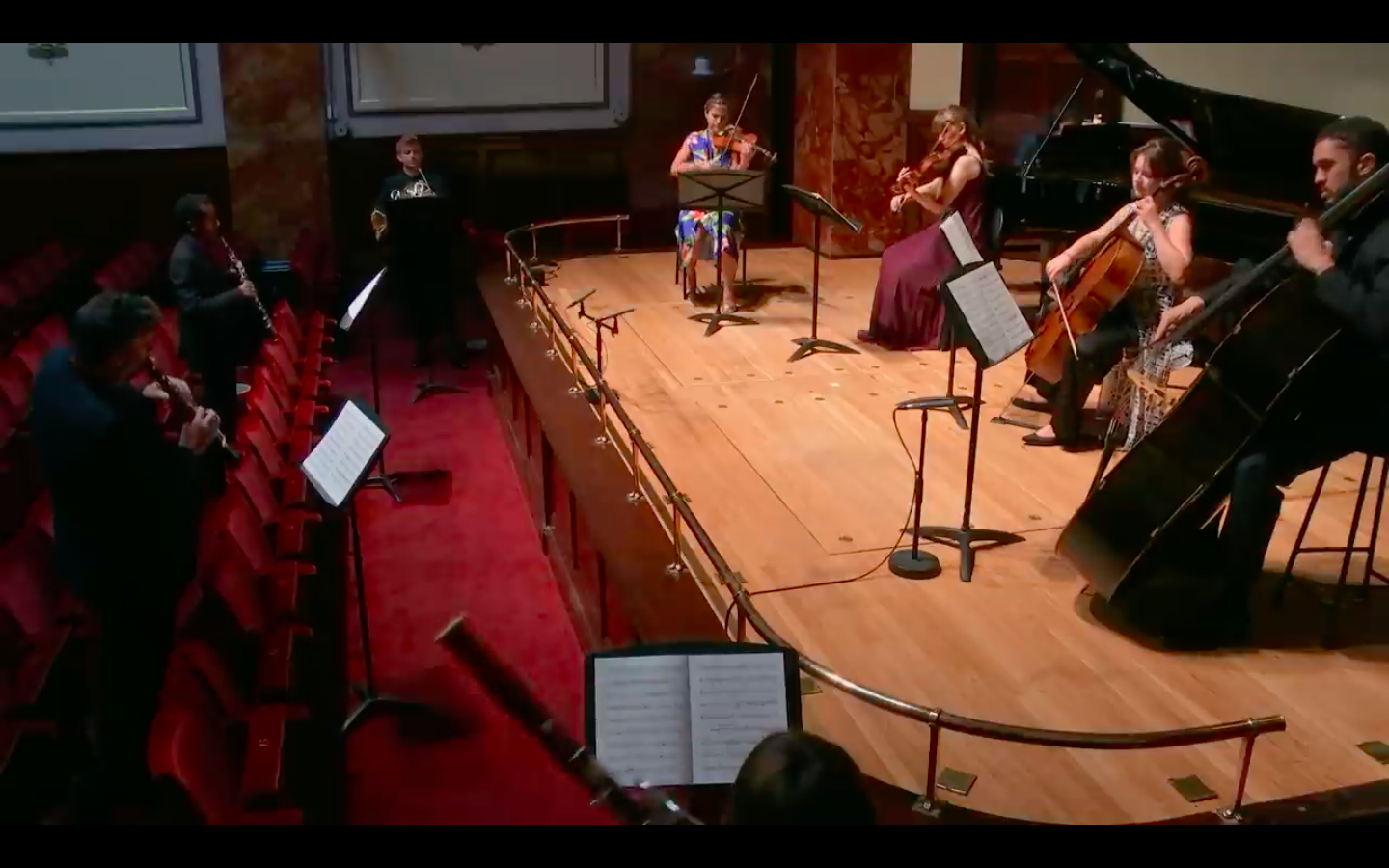 Despite the upping of players from four to nine, in an ideal programme Samuel Coleridge-Taylor’s Nonet would have come first. Which is not to deny its place as a work of shining personality, generous melody and a fearlessness in bringing in an off-the-street feeling to take us out of the tasteful salon. No wonder A J Jaeger, the “Nimrod” of Elgar’s "Enigma" Variations, told his friend the young man was a genius. Fascinating to see how well he was accepted by the establishment as a mixed-race composer (born in 1875 out of wedlock to an English mother and a father from Sierra Leone, who returned to Africe before he knew of the pregnancy).
The Nonet kicks off with a romantic clarinet tune, taken by the brilliant Matthew Hunt, but the second theme is typically robust, and the finale quickly dispels its opening seriousness with a parade of personable good humour. It’s not a work of great sophistication, with plenty of line doublings, but none the worse for that. And again, what a team; it matters, given the composer's heritage, that Kaleidoscope included two players of colour, oboist Armand Djikoloum and double-bassist Adam Wynter. Not a good start for first-rate horn player Ben Goldenscheider, but he settled, and how welcome to see the wonderful bassoonist Amy Harman just before her retreat to give birth. The encore, an arrangement by Poster more elaborate than his usual violin-and-piano treats, was of Gershwin’s “They Can’t Take That Away From Me”, where the light-of-touch effervescence persuaded you that these performers have been familiar with this not-so-different style all their lives.
Watch the concert on YouTube











