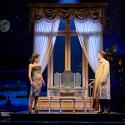
There is a promising production struggling to get out of this muddled concept. Creation Theatre (here partnered with Watford Palace) is well known for innovative, site-specific pieces, one of which –The Tempest – was adapted for the screen, including interactive elements, last year. I missed this, but reviews suggest it worked well.
That is not the case here. This may be because of the nature of the play: is it really possible to subvert the tragedy and bring about a happy ending? Or make any meaningful contribution to it? Promised a choose-your-own-adventure, I did make some decisions, but this element of the experience was – perhaps inevitably – rather disappointing. For whatever reason, there does not seem to be sufficient commitment to the idea so that choices are few and sometimes simply timewasting. The only one (for Capulets) in the first half is deciding whether to have a beer or a cocktail with the Nurse.
 Audience members must choose to be Montague or Capulet, with a promise of affecting the storyline. I opted to be a Capulet but, thankfully, I didn't miss anything crucial happening to Romeo. In fact the text is surprisingly full (the performance runs to over two hours). Cuts are not particularly a problem; additions are, however, sometimes annoying. Occasional modern inventions by an actor, stray lines from The Tempest and a whole speech from Macbeth are simply unnecessary. The latter comes at the end of the scene in which Capulet agrees to Juliet's marriage to Paris and Lady Capulet launches into "Tomorrow and tomorrow and tomorrow..." which merely holds up the action.
Other productions of this play have found ways around pandemic constraints. In this case, having everyone speaking to camera – to the spectators – is counterproductive. Romantic scenes and fights, the crucial plot points here, are a challenge when touching is not allowed, but this is no solution. If we are meant to feel we are part of the action, the effect is instead oddly distancing; it seems odd, for instance, that Romeo and Juliet's sonnet on meeting is addressed to us, not to each other. It doesn't help that images are fuzzy and pastel-tinted characters' faces are often superimposed, one upon the other.
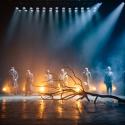
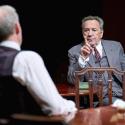
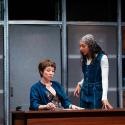
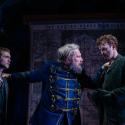
On the plus side – there is one! – there is some very good acting, albeit within the straitjacket of the format. Kofi Dennis (pictured below with Clare Humphrey as a well-meaning Sister Lauren, rather than Friar Laurence) and Annabelle Terry as the lovers are earnest, passionate, full of youthful innocence, brave but fearful victims of their elders' decisions (rather than ours). There is a clarity in their speeches in contrast to sometimes blurry visual effects. It would be interesting to see them in a more conventional production, possibly even directed by a freer Natasha Rickman. Shakespearean stalwart Katy Stephens is always worth watching, but is rather wasted as a none-too-bright Nurse. Dharmesh Patel, as Mercutio (pictured above left), gives the Queen Mab speech real emotional depth.

The first half is on Zoom, so audience members can, if they wish, wave or sport masks for the camera. When the second part of the action, rushing towards tragedy, begins, we are directed to a website and there are more choices to be made. Asked to decide whether to wait or watch with Juliet, I went for "wait", but would I have missed a moving "Gallop apace, you fiery-footed steeds..." if I had chosen "watch"? After Lady Capulet's foray into Macbeth, I was offered "Go to see Juliet" or "Put on lipstick". I can only assume that no-one feels like adjusting make-up at this point, but – who knows? – perhaps it is possible to miss the parting of the lovers by making the wrong choice.
Sadly, the conclusion must be that the medium of gaming is simply not suited to Shakespearean tragedy. Not in this case, anyway.