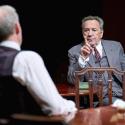
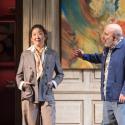
The Death and Life of All of Us, Summerhall ★★★★
Victor Esses was 16 when he first discovered his grandmother had a sister – someone the family had never discussed. It was just a year after his own first illicit visit to a gay sauna.
Esses’s deceptively slight show – just him, a couple of microphones, some clips of video interviews and characterful musical contributions from guitarist Enrico Aurigemma – might begin as something of a whodunnit mystery tale, as Esses tracks down the mysterious elderly woman to a golf club outside Rome. But it quickly moves on to profounder – and, frankly, more interesting – questions of family and identity, shame and tolerance, what we are and what we present, and who gets to choose.
Esse’s amplified delivery might not always be entirely clear amid the hard walls of Summerhall’s Demonstration Room, but that only adds to the show’s deliberate sense of obfuscation. By the time it reaches its surprisingly hedonistic ending, The Death and Life of All of Us (main picture) has poked and prodded effectively but somewhat uncomfortably at the secrets all of us keep.
 Anything That We Wanted to Be, Summerhall ★★★
Adam Lenson got partway through a medical degree before swerving sideways into theatre directing. But when a painful mole on his back leads to a belated cancer diagnosis, he begins to reflect on the choices he’s made, the paths he’s taken, and those he’s left unexplored – and, of course, whether sticking to his original career choice might have led to a greater health awareness and earlier treatment. Or, on a flight of greater fancy, whether an alternative Adam in a parallel universe might never have developed cancer at all.
The unspoken comparison lurking in the shadows of Lenson’s gentle, autobiographical show, of course, is between a proper, professional career in medicine, and precarious, badly paid work in theatre. He’s clearly an adept theatre maker, however: Anything That We Wanted To Be neatly weaves together cosmic theories of infinite realities with intimately personal issues of medical treatment and family reactions, Lenson’s looping musical numbers effectively symbolising the multiple strands of existence unfolding at once. Libby Todd’s nicely cluttered set of TVs and intertwining cables is put to good use in Lenson’s restlessly time-jumping, reality-switching narrative, and director Hannah Moss ensures there’s time and space for reflection amid the show’s big issues. All the same, Anything That We Wanted To Be feels unavoidably slight, and Lenson’s ultimate conclusions seem a little too self-evident to warrant the hour of theatrical investigation that he devotes to them.
 Chicken, Summerhall ★★★
When the performer’s entrance is the show’s biggest coup de théâtre, it’s hard to describe without spoiling the fun. Suffice it to say that Irish company Sunday’s Child tells an hour-long shaggy dog story about a Kerry-born chicken and his adventures in Hollywood, his hopes and his loves, his failures and his disappointments. Chicken flirts teasingly with satire – certainly of a venal, self-serving movie industry into which its poultry protagonist fits like a glove. But the show swerves equally teasingly sideways into outright absurdity, delivered with a straight face but a twinkle in the eye in Eva O’Connor’s wonderfully supple, fluid performance. It’s an improbable tale wrung for all its outrageous humour – but it might feel a little over-stretched for an hour’s worth of theatre.