An all-female production of Bram Stoker’s Dracula – well, kind of – that transplants the novel’s more local action to the northeast of Scotland, and finds a bloody new calling for one of its less ostentatious characters? Elgin-born writer Morna Pearson is asking a lot from Stoker purists in her bold reimagining of the iconic, endlessly retold tale for the National Theatre of Scotland.
For some, truth be told, Dracula: Mina’s Reckoning might push their patience and credulity a bit too far. But ultimately, this is an ambitious, highly effective and gleefully provocative rethink of the classic gothic yarn, and one whose very audacity somehow makes it entirely convincing.
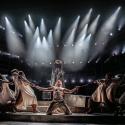
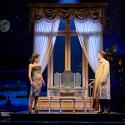
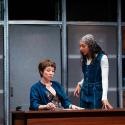
And what’s striking, in fact, is just how closely Pearson sticks to Stoker’s original. We get a potted version of the visit by naive Jonathan Harker (a nicely no-nonsense Catriona Faint, pictured below) to the mysterious Transylvanian castle, and his early encounters with its imposing, mysterious owner (a gliding, androgynous Liz Kettle, throbbing with seductive threat). We get a pitiful Renfield (a childlike Ros Watt) offering overawed devotion from his cell in the asylum run by Dr Seward, played with strutting pomposity by Maggie Bain. We get a swaggering, loudmouth Van Helsing courtesy of a wonderfully exuberant Natalie Arle-Toyne, stentorian in his/her heavily accented delivery and never more than dismissive of the women’s concerns. And we get the perhaps more than friendship between innocent Lucy (Ailsa Davidson) and increasingly perceptive Mina (Danielle Jam), soon to be spun together with the sinister projects of the new arrival from overseas.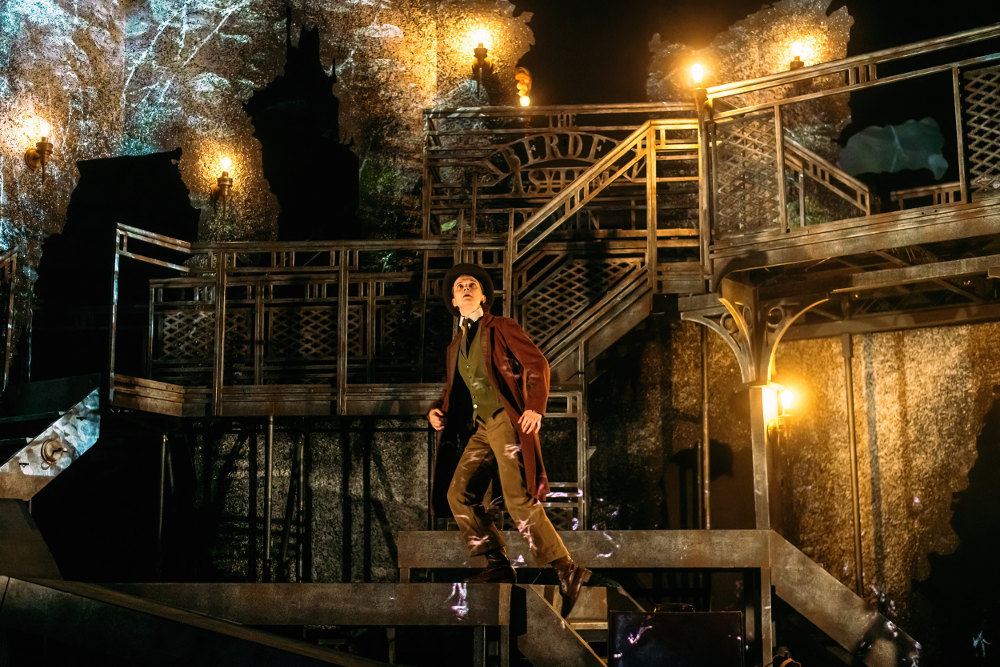 But despite the relative fidelity to Stoker’s text, what Pearson brings to her version is bracing, sometimes barbed feminist critical insight – perhaps a little over-signposted at times, though she mines plenty of dark humour in some of Dr Seward’s more outrageous pronouncements on the dangers of women reading or – horror of horrors – sporting trousers rather than skirts. It’s all quite jolly, though, and elicits plenty of knowing cackles from the audience. Pearson’s real achievement, though, is in blurring the boundaries between oppressor and victim, good and evil, and asking us how far we’re comfortable to go in allowing these female characters the respect and equality they deserve.
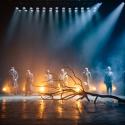
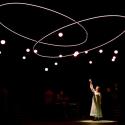
There are plenty of weighty philosophical questions raised by Pearson’s sombre but inspiring conclusion, and it’s to her credit, in fact, that she stops short of offering pat answers to them. Her journey to get there, however, is never less than entertaining, stimulating and visually captivating. Kenneth MacLeod’s set – all angular walkways and precipitous drops – serves brilliantly as a twisty asylum and a sepulchral castle, aided by Lewis den Hertog’s magically effective video design, which glitters and sparkles across the set’s surface textures in blood-red or ocean-blue. Composer Benji Bower’s sound – which sometimes threatens to drown out the dialogue – is queasily powerful, and there’s plenty of joy in the blunt inflections of the Doric and Scots delivery, spat out crisply in director Sally Cookson’s swiftly moving staging.
In some ways, it’s disappointing that Pearson’s rethink doesn’t dare to go further from the start. But in setting up its targets, then taking evident delight in shooting them all down, Dracula: Mina’s Reckoning proves at once a celebration of Stoker’s original and a critique of it (or at least of some of its values and assumption), and a gloriously dark celebration of women’s power and pride.