From its opening shot – of a flock of sheep backlit by the sun’s rays – The Settlers is visually stunning. But the beauty ends there; as the narrative unfolds, it becomes clear that everything else about this episode in Chile’s history is cruel and ugly.
The year is 1901, the location a sheep farm in Tierra del Fuego, a wind-swept island at the southern tip of South America. Don José Menéndez (Alfredo Castro), who owns large swathes of land in Argentina and Chile, is erecting a fence to prevent the indigenous people from killing his livestock.
A scream rends the air; the fencing cable has snapped and severed a man’s arm. The overseer, an ex-army Scot named Alexander MacLennan (Mark Stanley) rides up to assess the situation. “I’m alright,” whimpers the injured man, “it’s only an arm”; but MacLennan thinks otherwise and shoots him dead. This powerful opening scene welcomes you to the mores of South America’s wild west where the gun rules and no-one is accountable.
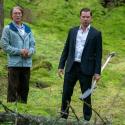
Menéndez orders MacLennan to set off in search of a safe route to the sea for his livestock and to kill any Indians encountered en route. Riding with him are the sharp-shooting Segundo (Camilo Arancibia) who is half Indian, half Spanish and Bill (Benjamin Westfall), a mouthy Texan racist who enjoys stirring up trouble. It’s a trio from hell.
Bill distrusts the mestizo, because “you never know who they’re gonna shoot” and resents taking orders from the “crazy fucking Brit’ whom he accuses of “doing everything wrong”. MacLennan despises Bill, whom he calls a redneck, and treats Segundo like a menial. Much of the film revolves around the growing tensions between the two white men which holds the narrative together, but soon gets tiresome since they are such one-dimensional characters.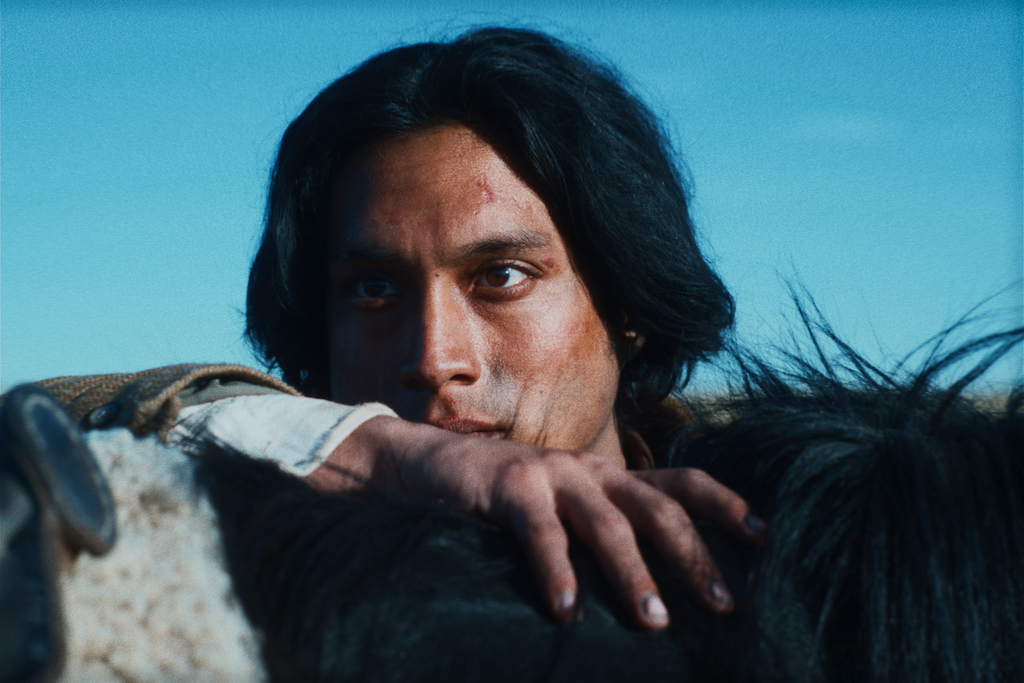 Segundo (pictured above) is far more interesting. He watches, witnesses and keeps his distance. But then comes a dawn raid on an Indian camp and, instead of killing the natives, Segundo takes aim at Bill, but then loses his nerve and shoots into the air. When MacLennan orders him to rape the only woman surviving the massacre, he strangles her instead. It may be a mercy killing, but it’s the beginning of a slippery slope into genocide down which the blood-thirsty MacLennan will drag him.
Had the director Felipe Gálvez followed the narrative through to MacLennan’s death a few years later, the film might have worked both as a brutal Western and as history, since Menéndez and MacLennan are based on actual characters. But a desire to explore how the state covered up the slaughter of the Selk’nam people led him to abruptly switch genres – from western to period drama – and to adopt the clichés.
Fast forward seven years, and we are in the mansion of Don José Menéndez in Punta Arenas. Vicuna, a government rep, has come to confront Menéndez over the atrocities committed on his behalf – not to bring justice, but from concern over “the optics”. Mass murder is not good for PR. But his solution – to film Segundo and his Selk’nam wife Kiepja dressed in fashionable attire and sipping tea, as if they’ve been happily assimilated – is just a subtler form of genocide.
For Chileans, this exploration of a hidden episode in their past may come as a shocking revelation, but for an outside audience with no vested interest, the film has to work dramatically. The final shot, of Kiepja refusing to play ball, is an attempt to end with an iconic image of resistance; sadly, though, as a finale it isn’t powerful enough and the film fizzles out into anticlimax.