It’s interesting to discover that sound wasn’t the norm in Japanese cinema until the mid-1930s: the huge cost of investing in pricey new studio technology and equipping scores of rural cinemas with amplification proving prohibitive.
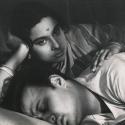
Yasujirō Ozu began his directorial career began in 1927 but didn’t make a sound film until 1937, and 1932’s I Was Born, But… is notable for the paucity of surtitles, Ozu telling an emotionally complex story brilliantly using mostly visuals alone. What initially looks like a light comedy about squabbling children becomes something much weightier: in Ozu’s words, “I started to make a film about children and ended up with a film about grown-ups.” The children are Ryoichi (Hideo Sugawara) and Keiji (Kozo Tokkan), 10 and eight years old respectively; they’ve just moved into a new suburb notable for its emptiness, the picket fences overlooking dusty dirt tracks, telegraph poles and railway lines. The boys have to deal with local bullies and adjust to a strict new school, while their father Yoshii (Tatsuo Saito) settles into corporate life, his boss being the father of one of the local children.
Ozu draws superb performances from his young actors, their scenes unfolding as if improvised. Sparrows’ eggs are consumed for strength, a two-fingered gesture denotes power over others and the most heated discussions revolve around who’s got the best dad. Ryoichi and Keiji glimpse home movie footage of their father clowning around for the boss’s amusement and feel humiliated, Riochi throwing a huge tantrum back home. Yoshii’s restrained, thoughtful response isn’t enough to prevent his sons from going on hunger strike in protest, their mother’s rice balls soon proving too tempting to resist.
 The BFI’s restored print is pin-sharp, and one reason to watch I Was Born, But... is for the window it opens onto life in interwar Japan, a sequence showing Yoshii tearing off his three-piece suit when he gets home from work and donning a kimono at odds with the shiny cars and electric trains outside. Ed Hughes’ new score is effective: pungent and plangent by turns.
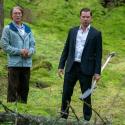
There Was a Father was released in 1942 and also centres on paternal bonds. With its low-level camerawork and an absence of close-ups, this looks like mature Ozu and stars one of his favourite actors, Chishū Ryū (look out for him as the home movie projectionist in the earlier film). He plays Shuhei Horikawa, a widowed maths teacher who resigns after a child drowns on a school trip he is leading, after which he enrols his young son in a provincial boarding school and takes up a mundane office job in Tokyo to pay the fees. Shuhei’s core decency is never in doubt (we learn that he makes a yearly pilgrimage to the dead boy’s grave), and there’s something very English about his emotional reserve. Son Ryohei (Shuji Sano) becomes a teacher against his father’s wishes, and the film’s central act shows Ryohei’s 10-day visit to stay with his father. We’re desperate to see the pair share a hug, but they do go as far as sharing a bath. Shuhei turns down Ryohei’s request to move in with him and hints that he should enlist, a sentiment which endeared the film to the wartime Japanese government. A reunion between Shuhei and a group of former pupils is sweet, and the ending is predictable but deeply affecting, the ailing Shuhei urging Ryohei to “strive to give your all, in everything”. Ryohei later tells his young wife that the time he spent with his father was the best week of his life, dark skies implying that the couple’s happiness may be short-lived. Trying to unpick quite how such an unshowy, restrained film should pack such a huge punch is an impossible task. Production values are predictably high: image and sound are excellent in both films, and the booklet contains useful essays from Bryony Dixon and Tony Rayns.