Judging by a Sunday Times interview last weekend, Daniel Craig now enjoys wearing brilliantly-coloured sweaters and extraordinary trousers, very much like a man running as fast as possible in the opposite direction to James Bond. He has goodbye-Bond-esque quotes to go with it.
Regarding his leading role in Luca Guadagnino’s film of William Burroughs’ Queer, he observes that “male vulnerability is really interesting because, as tough as men appear to be, they’re all vulnerable.” Has M been informed of this?
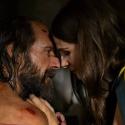
Burroughs’ book was nearly filmed by Steve Buscemi in 2011, starring Stanley Tucci and Ben Foster among others, but it didn’t happen. Guadagnino’s realisation of it bombards the viewer from a variety of angles and leaves plenty of treacherous crevasses to plunge into, but is driven by Craig’s central performance as William Lee, an expatriate American of invisible means living a life of self-exile in Mexico in the early 1950s.
Craig’s 15 year run as 007 tends to blot out the impressive variety of his career, from Our Friends in the North to Layer Cake, Munich, Knives Out etc, and if Queer looks more like a loosely-assembled collection of drug-addled nightmares than a coherent narrative, Craig manages to dominate the screen throughout. Lee, who’s possibly trying to be a writer judging by the typewriter on his desk amid a scatter of typed pages, is living a life of nihilistic self-indulgence in a Mexico where, it seems, anything goes.
 He spends his days shuttling between bars, gossiping with the local American gay diaspora (including Joe, a barely recognisable Jason Schwartzmann), and cranking himself up on tequila and morphine. He’s in a permanent state of tension and sexual frustration, eyeing up almost any passing male with the sort of predatory lasciviousness that would get him arrested north of the border. It nearly gets him beaten up here.
His eye is caught by a tall, lean newcomer, who turns out to be Eugene Allerton (Drew Starkey). He’s a former serviceman and he has regular meetings with an enigmatic red-headed woman, but he regards Lee with a sort of quizzical impassiveness. It’s not even clear that he’s really gay (in one fever-dream sequence, he announces that he isn’t), but merely goes along for the ride with an air of mild detachment. They end up exchanging fluids in a squalid hotel room, but Allerton is emotionless. When Lee invites him to tour South America, all expenses paid as long as Allerton is “nice to him” a few times a week, he kind of shrugs and says OK.
It turns into a mind-bending trip, as Lee tries to track down a mysterious drug called ayahuasca, which someone has told him makes users telepathic. Allegedly the Russians have been experimenting with it, but maybe that’s just routine Cold War paranoia. The journey proves gruelling, complicated by Lee’s debilitating addiction to opiates. There’s an odd little moment when our intrepid travellers take to the skies in a rickety model-shot of a DC3 aircraft, which looks like something Gerry Anderson might have cooked up. As our addled explorers trek into the South American heart of darkness, the bonus is that we get a drastically transformed Lesley Manville as wacky scientist Dr Cotter (pictured above), who’s gone native in the jungle and keeps a huge yellow viper at her door where other people might have a Dobermann or a corgi. Cackling manically, she proves to be the gatekeeper of the mind-bending substance, which “rewards” the travellers with a ghastly body-horror experience which scares them shitless. Dr Cotter exhorts them to do it again, since they ain’t seen nothing yet, but our heroes are not persuaded.
Set to an intriguingly ahistorical soundtrack featuring Nirvana, Prince, New Order and more, Queer is kind of what you make it – a quest for identity, a psychedelic nightmare, the kind of travelogue you’d pay good money to avoid, Dr Thompson’s “journey to the dark heart of the American dream”… you could almost see it as a distant cousin of Easy Rider, with no motorbikes.