

When Vladimir Jurowski returns to what used to be “his” London Philharmonic Orchestra, you’d better jump. I would have done on Wednesday had I been able to get to his heady mix of Russian and Ukrainian rarities; luckily I could on Saturday night, because an outwardly standard programme of early 19th century works proved perfect, raising Schumann’s much-denigrated Violin Concerto to the level of Beethoven’s Coriolan Overture and Schubert’s “Great” C major Symphony.
Vilde Frang (pictured below) was the ideal match for Jurowski and the LPO here. Her double-stopping entry, startlingly resonant, equalled what Jurowski had projected from his players in the cutting intent of the unison opening, explosions and pauses of the first few Coriolan bars. While those met with glowing flexibility in Beethoven’s plangent counter-subject until more electric silences intervened, Schumann’s power is mitigated by his lovely second subject, introduced by first flautist Juliette Bausor doubling first violins until she and the rest of the woodwind took a back seat for Frang to make chamber music with the strings alone. 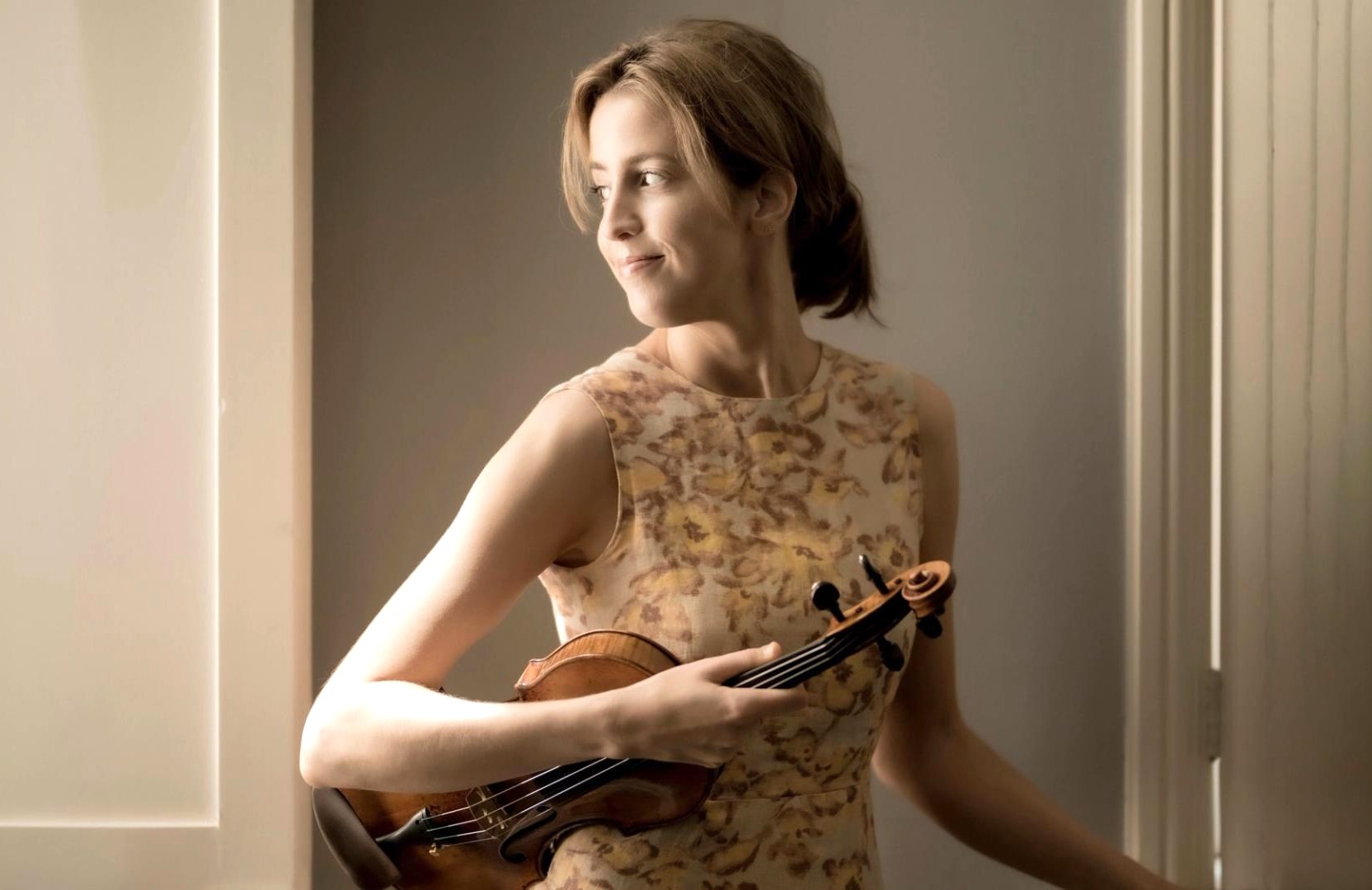 It's a mystery how the great violinist Joseph Joachim and Clara Schumann could have had doubts about this personal fragment of melody, or its equally sincere counterpart introduced by cellos in the slow movement, which morphs so winningly into the finale. Never is this a show-offy work for the soloist – there are no cadenzas – but if allowed to sing and speak on its own terms, it’s as lovely as any 19th century concerto. And given the profound musicianship of Jurowski and Frang, that’s exactly how it came across here.
It was good to see a vivid response at all times from co-leader Alice Ivy-Pemberton, a face new to me, and how well young newcomer Annemarie Federle took her exposed chance with fellow horn principal John Ryan in the opening of Schubert's mostly genial epic. Jurowski (pictured below by Marc Gascoigne in Wednesday evening's concert) made this a special case: a horn-call to be played with maximum freedom before the moderate Andante tempo kicked in with other members of the orchestra (Mackerras used to argue that the opening had to be fast-ish because of the natural horn's "weak" notes, not a consideration that needed to be taken into account here, though Jurowski did call upon valveless trumpets). 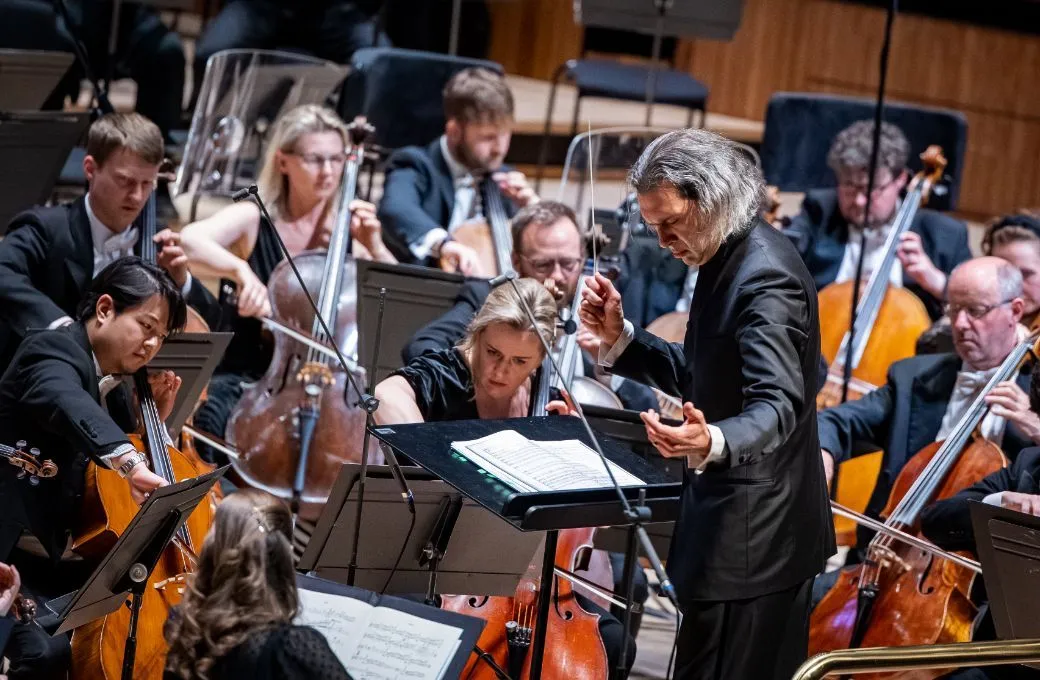 The ensuing Allegro can be rushed; it was perfectly articulated here, arguably allowing Jurowski to dispense with the exposition repeat, though he favoured the one in the finale. Ever striking was the unforced emphasis on Schubert's kaleidoscopic orchestration, so very different from Berlioz's in the more obviously experimental world of the Symphonie fantastique five years later; the night-watch of the Andante hardly ever repeats itself exactly, and we were reminded how it had such an influence on future symphonists (Mahler, of course, but also Tchaikovsky in the explosion of his Fifth Symphony's Andante cantabile).
Having seen an elegant dance-master in the making the previous week when Lio Kuokman urged the strings of Ireland's National Symphony Orchestra to follow his graciousness at the ball of the Symphonie fantastique, it was good to witness the best conducting technique of them all lilting Schubert's scherzo, capping its dream-plateau trio with the similar wind-band bliss in the finale. However you like your "Great" C major, you couldn't deny what here was perfection on its own terms.











