From its opening scene, Le Quai des Brumes (Port of Shadows,1938) feels like a reverie, a period of sustained waiting, during which the characters stand at a threshold knowing that a tragedy will occur if they cross it.
As mist settles over a highway at dawn, a deserter (Jean Gabin) from the French colonial army gets a lift from a lorry driver heading to Le Havre. As they pull into the city, the driver notes the heavy fog. The soldier says he knows all about fog – the fog in his brain. He’s weary and burdened by trauma and an unspoken sense of disillusionment.
Marcel Carné’s film is a calculatedly hazy cinematic experience. It presents the medium itself as a haunted and haunting atmosphere that mirrors the mood of an entire era. Brume, brouillard, mist, fog – inescapable natural phenomena and distinct metaphors for the pre-war climate that loomed over late-1930s Europe and the omnipresent fear of another global conflict.
Le Quai des Brumes was one of the defining expressions of the French cinema’s poetic realism movement, the artistic reverberation of that cosmic unease. It fused visual lyricism with tonal despair, imbuing downbeat working-class tales and passionate but fleeting encounters with fatalism.
Though it is less frequently cited than 1920s German expressionism and 1940s American film noir, poetic realism served as a crucial bridge between them, its doom-laden sensibility resonating across borders and decades and influencing film language worldwide.
 The collaborations and cross-pollinations of its directors, writers, actors, and technicians produced cohesive works of lasting impact. The celebrated partnership of Carné and the screenwriter Jacques Prévert produced a series of world-weary classics, including Hôtel du Nord (1938), Le Jour se Lève (Daybreak, 1939) and Les Enfants du Paradis (Children of Paradise, 1945).
It was on Le Quai des Brumes, the duo’s third collaboration – based by Prévert on Pierre Mac Orlan’s 1927 novel – that they unleashed their tragic poetry. Gabin’s Jean was a new kind of popular antihero – tough but tender, down but never defeated, he could deliver a slap to a hoodlum (Pierre Brasseur) or caress his lover’s hair with equal intensity. Dignified and self-contained, he prefigured noir-era Humphrey Bogart as an icon of rebellion and romance, embodying both cynicism and yearning.
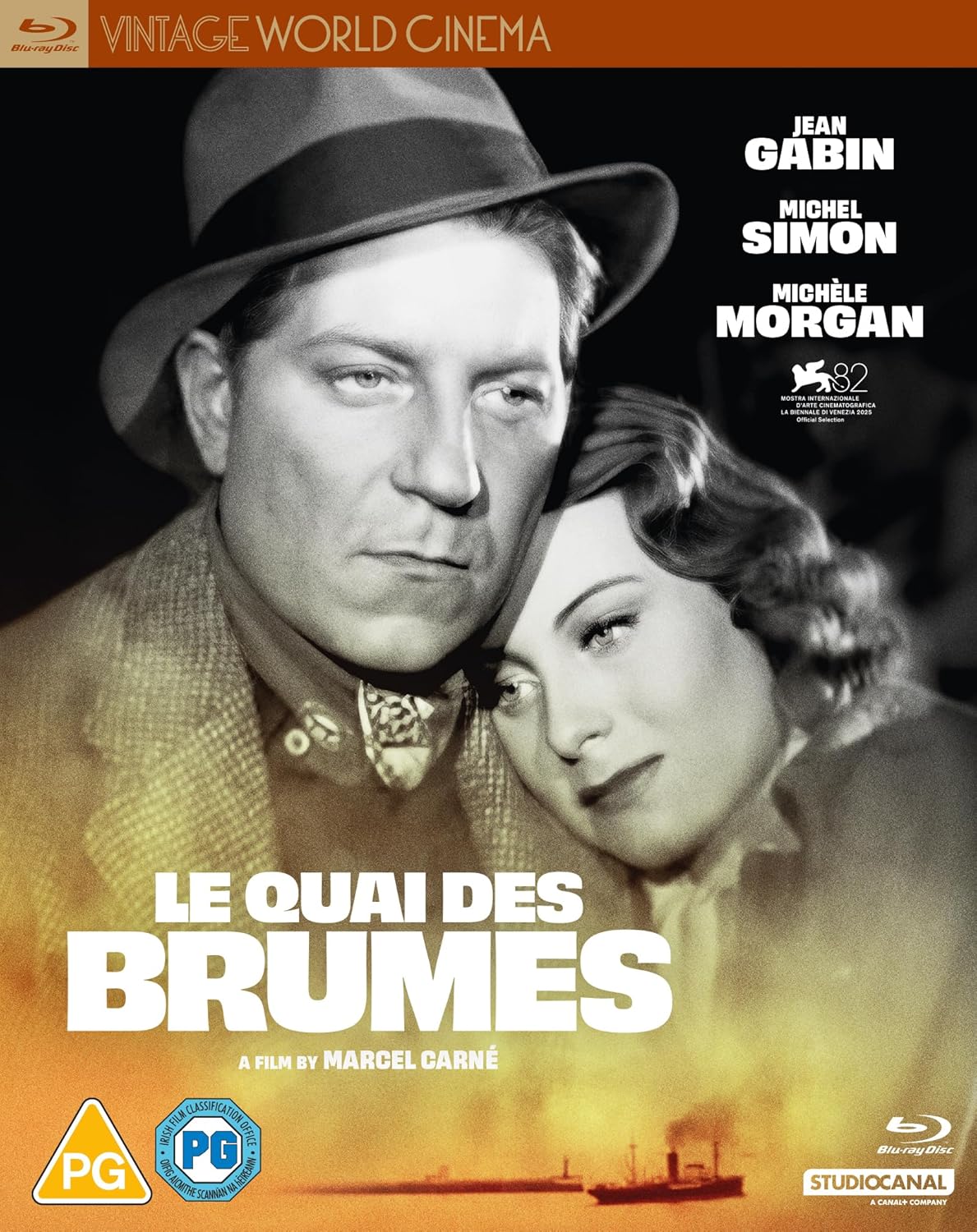
Gabin's pairing with 17-year-old Michèle Morgan was one for the ages. Dressed by Coco Chanel in a beret and transparent raincoat, Morgan’s character Nelly has run away from her possessive guardian (Michel Simon). She and Jean meet in a scullery at the back of a dockside bar, their offhandedness sure proof of mutual desire.
Carné framed their faces in melancholy close-ups, their eyes anchoring each moment. In a famous shot in which they stand side by side looking through a window (literally framed by the grilles), Morgan’s face catches the soft glow of the glass. The frequent shadowing of Gabin’s features captures his inner turmoil. Symbols abound, none more poignant than the dog that tails Jean until the end.
Le Quai des Brumes moves at an episodic rhythm, its continuity bound by Maurice Jaubert’s evocative score, whose ironic motif unites image and sound into a single pulse. Eugen Schüfftan’s cinematography and Alexandre Trauner’s sets have long been praised, but sound is equally important to the film’s lyricism. Chief sound engineer Antoine Archimbaud’s emblematic auditory landscape features foghorns, the noises of port activity, and even ecumenical music.
StudioCanal’s Blu-ray of this new 4K restoration includes some engaging extras.The documentary The Poetry of Misfortune (La Poésie du Malheur) gathers reflections from experts and insights from Trauner, Eugénie Bachelot-Prévert (Prévert’s granddaughter), and Mathias Moncorgé (Gabin’s son). The making-of featurette On the Dock (Sur le Quai) complements it with commentary and anecdotes from Morgan, Jean-Pierre Jeunet, Claude Lelouch, and the restoration team, providing a vivid testament to Le Quai des Brumes’ enduring legacy.