

To hear Kadiatu Kanneh-Mason speaking live is to hear a woman who very much recognises that her lifelong mission to challenge the perception of who should play classical music is ongoing. Though she has given birth to seven children who have gone on to be stand out classical musicians, she knows that there are still those who deny them the recognition they deserve because of the colour of their skin.
The complete failure of certain individuals to understand Sheku Kanneh-Mason’s statement last year that "Rule, Britannia!" at the Proms – with its references to slavery – might make people uncomfortable is just one example of the ignorance and insensitivity that remains in the debate about race and music. Yet characteristically she began her talk on a positive note, remembering the moment – a decade ago, on seeing the newly formed Chineke! orchestra – when she realised “just how powerful black music is”.
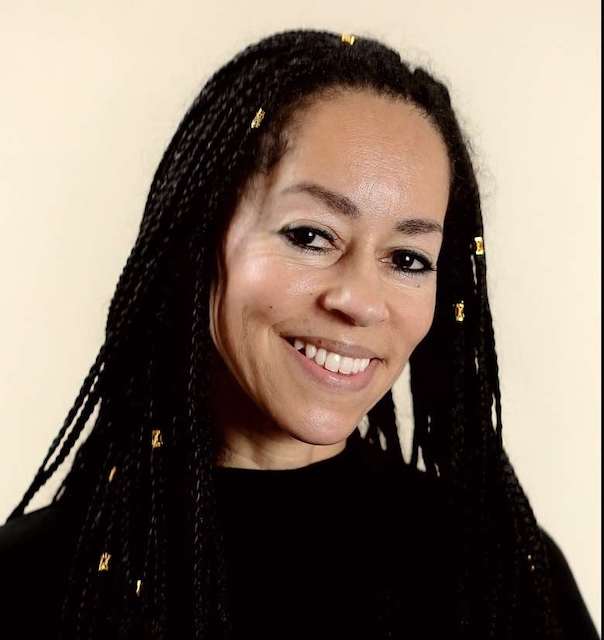
Kanneh-Mason (pictured below) was opening the afternoon session for the second year of the festival Classically Black, a lively celebration of the different ways in which non-white, or “global majority” individuals are expanding the classical repertoire. In a talk covering everything from Beyoncé to Beethoven, she gave examples of how the prejudice went both ways, remarking on a black US comedian who commented that when Sheku played at Meghan and Harry’s wedding it wasn’t progress because the cello wasn’t for black people. “Today is a celebration of how much has changed in classical music,” she said, before urging those in the hall to “storm the borders of music and keep being heard”.
 The musical element of the event began with the Sabi Ensemble, a period instrument group for performers of all ethnicities that was set up last year by double bassist Carina Cosgrave to revive the music of composers whose work has been “unjustly forgotten”. Certain members of the audience had possibly already heard their impressive performance of some of the repertoire on Radio 3's In Tune earlier in the week. A particular highlight was the fourth Novelette for strings (Allegro molto) by Samuel Coleridge-Taylor (whose 150th anniversary is marked this year) in which the dynamic agitation of the opening semiquaver passages was interchanged with moments of sublime, quasi-Mozartian elegance.
For something completely different, we were then introduced to Simmy Singh, a violinist, composer and Earth activist of Indian, English and Welsh descent, and co-founder of the Manchester Collective. Here she appeared as a soloist performing from her album No-One is Too Small To Make A Difference, which is inspired by the words and actions of environmental activists including Greta Thunberg and the late American activist Joanna Macy. Singh has a performance technique that’s simultaneously impressive and hypnotic, she draws you in so that the act of listening feels entirely collaborative – in this case partly helped by the fact that she invited gentle audience participation, which included us singing a drone. Her own performance ranged from passages of ravishing lyricism to haunting arpeggiated sequences on the violin – heightening the sense of music best experienced round a campfire with the notes soaring up to the stars.
The final section of this enjoyably diverse event took us behind the scenes of a kitchen inspection with The Jollof House Party Opera, co-produced by Music Theatre Wales and Festival of International Opera. This was a spikily dynamic exploration of what opera could be, a mixture of hip hop, jazz, garage, and opera written by Tumi Williams (aka compere Skunkadelic) and directed by Sita Thomas. Based in part on Williams’ own experiences running a street food business called Jollof House Party during lockdown, it contrasted the aspirations of young Nigerian vegan chef Adeola (who’s a new father) with the personal dreams and losses of the female health and safety inspector who came to visit him. As the inspector, opera singer April Koyejo-Audiger was suitably empathetic, and the production as a whole – ranging from the percussion on kitchen equipment to the hilarious moment of crisis when human breastmilk was discovered in the fridge – was brilliantly observed.
If there was a criticism of the event overall, it was that the behind-the-scenes organisation – enabling the transition from one very different act to another – at times felt discombobulated. There were too many moments when, as an audience, we were sitting around wondering what was going to happen next. It was also a shame that there wasn’t a full programme explaining the background of each of the wonderful artists who contributed (at one point, as she discussed her album, an audience member felt impelled to call out to Singh "Who are you?") There were many exciting and fascinating elements to celebrate here – just a few organisational tweaks would have transformed it from an event that was intriguing to one that was as exhilarating as it was important.











