It took me a long time to "get" the English Middle Class, though I don’t think I completely understand them even now. Sure drowning in accents and assumed privilege in a Russell Group university Law faculty was a helluva’n education (some of it even on the curriculum). But it was only up close and personal, in their natural habitat, that allowed me to start on deciphering their arcane codes.
Until then, as a kid does, I thought everybody just talked all the time, whether another person was speaking or not, said exactly what they thought and felt and that listening was optional (at best). If that sounds boorish, it wasn’t, because everyone understood the rules, interpreted the relentless chatter, not all, or even much of it, frivolous, and we all got on fine. The Royle Family was a docu-drama for me.
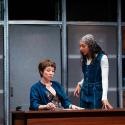
That memory of real-time conversational decoding flooded back pretty early on in John Morton’s wonderfully observed debut play, Eclipse. When salt of the earth carer, Karen (a marvellous Selina Cadell) asks anyone within earshot if they want a cup of tea, it's a straightforward enquiry about the desirability of a beverage. When one of the fracturing frightened family whose dying father owns this old Devon rectory utters the same words, it can be anything from a mere punctuation mark to a passive-aggressive portent of something much more vicious lurking just over the horizon. Karen sort of knows that, but she also knows that her blunt truth telling is a harder currency to hold in her line of work, and she’s just fine with that. She gets a payoff later.
The father, Edward, is upstairs and on his way out. A widower the last four years, he was once an alpha male, a wealthy author of children’s books that he did not respect and is always offstage and never seen, all the more potent for it, still wielding the power of a patriarch over his two middle-aged children.
His daughter, Sarah, is tight-lipped, feeling put upon, and needs a punchbag for the rage, continually fed by her disappointment with how her life has turned out, to escape. But she doesn’t say that (pace above) probably not even to herself - which only makes it worse. Cue her husband, the decent if not very bright Graham, on hand to be watched and critiqued on his behaviour from minute to minute.
Her brother, TV producer Jonathan, is equally ill at ease, but hides it rather better behind a bluff bonhomie so that the mask only slips during a protracted and very funny conversation about a strawberry yoghurt. I think we all know that it’s exactly that sort of thing that goes to 11 for people like him and, from the reaction of everyone in the kitchen, we assume it’s happened before. He’s not helped by his current partner, Emma, possibly going to Los Angeles having been (almost) cast in a Netflix show and his ex-partner, Nell, pitching up to see the old man one last time. Naturally, her presence revives messy unfinished business.
Not much happens, but in the same way that not much happens in Ayckbourn or even Chekhov. The considerable skill in the writing is in its invitation for us to parse its repetitions and hesitations, to hear as much what’s not said as what’s said and to catch meaning in a stray look, a momentary drop of the eyes, a very understated flounce into the garden.
That places quite the burden on the actors, and they rise to the challenge with superb skill. Sarah Parish has the hardest job, as Sarah presents initially as a narcissist, her monosyllabic borderline rudeness to the nurses, breezily dismissed by Lizzie Hopley, channelling Julie Walters as Lancastrian Linda, but it makes her hard to like. Nevertheless, Parish builds a more complex woman, with whom we slowly sympathise. Character is constructed with remarkable patience by Morton almost teasingly, but on directing duties, he brings the show in at well under two hours including the interval. Bravo!
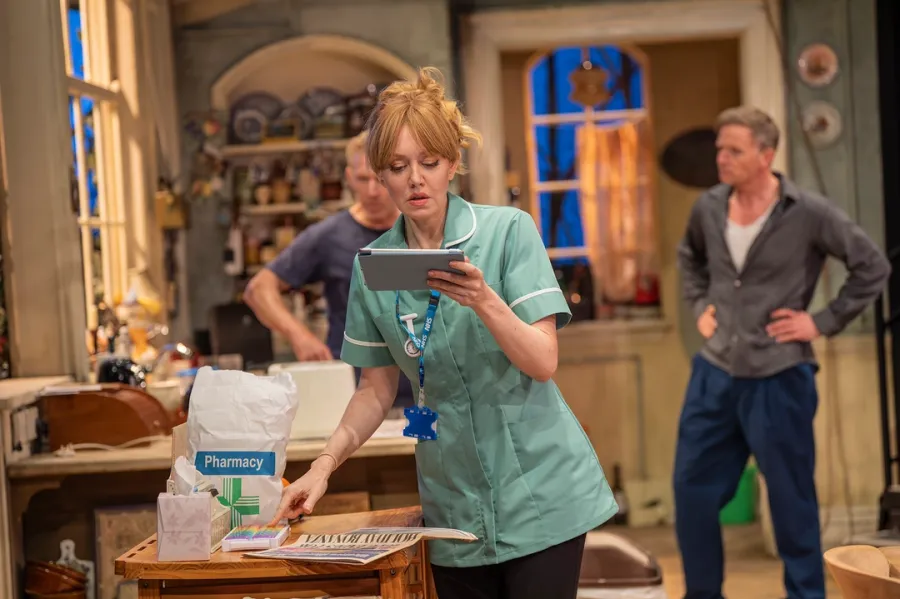
Paul Thornley has an easier job as Graham, who may have a bit of an eye for Katherine Bennett-Fox’s (pictured above) Nurse Julia (I blame his growing up watching Babs and co in the Carry-Ons) but he hardly deserves the bullying and continual undermining he gets from Sarah. He never really fights back, but he has a win of some kind come the end.
Rupert Penry-Jones and Mariam Haque as Jonathan and Nell also give us flawed characters, but, with typical aplomb, one throwaway line from one of the blunt working class workers tells us all we need to know about him and why she is justified in her standoffishness despite the pain she inflicted on him. This is an example of writing that tickles and tickles and tickles, until it pinches.
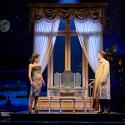
Roll in a wondrous set by Simon Higlett and miraculous lighting from Emma Chapman and what’s not to like? Actually, not much at all, but there’s no big finish, no Sonya and Vanya stuck in the house forever at the end. Indeed, though Morton’s first play is an accomplished one, he perhaps betrays his roots in television as the production has the air of a 1970s feature length pilot that launches a 13 part prestige series on BBC 2, Tuesdays at 9.25pm.
It’s not a bad fault to have though and it’s certainly a rare one. It’s not often that a critic cares so much about the characters that he actually wants more of them. Please.