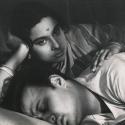
Calcutta plays an important supporting role in Satyajit Ray’s The Big City (Mahanagar), though we only catch glimpses of it until the film’s final seconds. Ray’s opening sequence follows Anil Chatterjee’s Subrata on his daily commute, the camera fixed on the tram’s sparking trolley pole rather than the bustling streets below. It’s disconcerting but obliquely reminds us that The Big City is at heart an intense and claustrophobic domestic drama, much of the action taking place in the apartment which Subrata shares with his wife, son, sister-in-law and elderly parents. The living conditions are pre-industrial, mirroring the entrenched attitudes on display.
Released in 1963, this was the first of Ray’s films to be produced and set in his home city. The director’s screenplay, based on a short story by Bengali writer Narendranath Mitra, offers a telling glimpse into post-war Indian urban life, the country emerging from British colonial rule and on the cusp of becoming a modern secular state. Subrata, exhausted after returning home from his clerical job at a city centre bank, is forced to take on tutoring jobs to make ends meet.
Madhabi Mukherjee plays his shy but smart young wife Arati, forced by convention to be a housewife. Her suggestion that she look for a job in order to support the family is rudely rebuffed at first, Subrata asserting that “a woman’s place is in the home”. Arati successfully applies for a post selling knitting machines door to door which proves to be the making of her, the sense of liberation intoxicating.
Ray draws a highly nuanced performance from a luminous Mukherjee, who seems to grow physically taller as she becomes more confident. Arati befriends an Anglo-Indian colleague, speaks more clearly and smiles more, none of which go down well domestically. Subrata tells his wife that she should quit because she’s got dark circles under her eyes and looks exhausted, and that familial harmony is more important than material gain. We wince as we see him give Arati the envelope containing the resignation letter which he has composed for her, before the collapse of the bank he works for makes her continued employment essential.
While Arati blossoms, Subrata retreats and mopes around at home, his retired teacher father reduced to begging from former pupils rather than accepting money from his daughter. There are some excruciating scenes, notably when Subrata eavesdrops on his wife talking to a male friend in a café, Arati lying about her spouse’s successful career. A handful of visual flourishes stand out, notably Ray’s use of lighting at the point when Arati’s boss shows his true colours, followed by a dizzying descent down a flight of stairs. The city centre office interiors are clean, white and uncluttered, in stark contrast to the family home, described by a contemporary Calcutta critic as “three wretched rooms stuffed with decaying furniture.”
Ray ensures that we understand and sympathise with his characters’ flaws, and the supporting cast includes the film debut of veteran actor-turned-politician Jaya Bachchan as Arati’s teenage sister Bani. Criterion’s restored print is pristine, bonus features including a short 1974 documentary about Ray, and a recent interview with the still charismatic Mukherjee. Historian Chandak Sengoopta provides a useful and informative booklet essay. An absorbing and humane film, beautifully presented.