Loneliness: in the age of the digital hook-up and the flaunting narcissism of social media, it’s become a strange sort of taboo – a secret shame, the unsexy side of singledom. So it’s good to see playwright David Eldridge putting it centre-stage in this tender, pleasingly unsentimental two-hander. Written with wry humour, warmth and compassion, and delicately threaded through with painful laughter and uncertainty, Beginning is like an emotional striptease, peeling away the defences of its pair of needy characters. In Polly Findlay’s assured, delicate production at the National Theatre, it’s beautifully acted and tremulously intimate. But it is also largely unsurprising and, for all its astute observation, a little insubstantial.
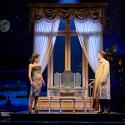
It’s 2015 – pre-Trump, pre-Brexit referendum – and we’re in the North London bijou urban village of Crouch End, a setting of rom-comish boho charm, where new resident Laura (Justine Mitchell) is throwing a house-warming party. The last guests have staggered out into the night or poured each other into minicabs – all except Danny (Sam Troughton), who lingers awkwardly in the half-formed hope of making good on the flirtation that’s been flickering between himself and his hostess all evening. Among the paint samples, unhung pictures and festive debris (designed with tatty authenticity by Fly Davis), they crack open another bottle, and Laura makes it clear she’s keen.
Yet rather than simply tearing each other’s clothes off, they begin a stumbling dance of wisecracks and confidences, of confessions and defensive feints, of fierce longing and crippling fear. As they both keep pointing out, they don’t know each other at all. When they do – if they ever do – how will it alter the way they feel? Is this the beginning of something life-changing, or just a regrettable one-night stand? Eldridge’s play is most engaging when it subverts expectation. Laura and Danny are not a couple of tentative, photogenic millennials – they’re flawed, middle-aged and experience-scarred. And though Danny looks at first glance like the swaggering, skirt-chasing Essex boy he probably habitually pretends to be, it is he who holds back, fearful of disappointing her and hurting himself, while Laura, Irish by birth and a lifelong Londoner, is poised and sexually forthright. The toe-curling banter and the hunger for connection that it fails to hide are winningly handled.
But while Danny is drawn with real texture, Laura is, despite Mitchell’s superb performance, a much thinner creation. As dawn approaches and booze is consumed, Danny reveals his vulnerabilities: still wounded by the loss of his dad, he has a dead-end job, a claustrophobic homelife with his mum and nan, and an ex-wife and a daughter whom, agonisingly, he never sees. Laura has unhappy family history, too; but there’s a whiff of cliché about her – the high-powered career woman who has plenty of money, but a life she describes as “a shell”. It’s a thumping disappointment when it turns out that what she really wants to fill that void is a baby – a hoary and reductive account of femininity that the play does too little to counter or question. And the moral issues behind her intentions – she won’t guarantee that she would allow Danny’s involvement in the child’s life if their relationship doesn’t work out – hang in the air, unresolved and under-explored.
For all that, though, there’s much here to touch and charm. As Danny and Laura’s conversation meanders, we repeatedly catch glimpses of everything that might bind them together and push them apart, from politics to their shared passion for Scotch eggs. And there’s a delicious sequence of appalling dance moves that segues elegantly into an unspoken and unintentionally cruel rejection. The play’s pleasures are quiet, ordinary, even a little unambitious. But anyone who has a heart will find in it something familiar, piercing and rueful, and – buried beneath the fumbling and stumbling, the ache and anxiety – little stabs of joy.