The cynical might think Pearl Cleage’s play had been expressly written to address the over-riding issues in today’s USA – abortion and contraception rights, gun control, homophobia, racism. But the cynical would be wrong, as Blues for an Alabama Sky was written in 1995. What is notable is its timely scheduling by the National Theatre.
Cleage has written a period play, set in the Harlem Renaissance during Prohibition, that works as a tribute to the major players of that movement. Their names are bandied about by the characters as their associates and colleagues – the poet Langston Hughes, the birth control pioneer Margaret Sanger, the cabaret star Josephine Baker. None appears in person, but they and their radical notions are in the air.
Baker, whose portrait in top hat and tails hangs on the wall of Guy Jacobs’ modest Harlem rooms, is a lodestar, not a mere idol: Guy – a mercurial turn from Giles Terera, all flounces and sass – is an aspiring gay costume designer whose dreams reach across to Paris, where Baker is the talk of the town. He hopes she will commission dresses from him. His fellow dreamer is his childhood friend Angel (Samara Wiley), a gutsy blues singer with terrible taste in beaus. She narrowly misses becoming a gangster’s moll when the dastardly Nick throws her out and gets her fired from the club she sings at. What she wants is a spot in a club downtown.
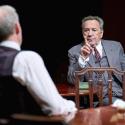
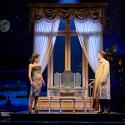
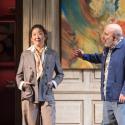
 On the opposite side of the hall lives Delia (Ronke Adekoluejo, pictured left with Giles Terera), a giggly churchgoer who has become involved with the Afro-American family planning movement, adores the sermons of the “young Reverend Powell" (Civil Rights activist Adam Clayton Powell Jnr) at the local Abyssinian Baptist Church and dreams of opening more clinics. Regularly visiting all three residents is Sam Thomas (Sule Rimi), a worldly-wise doctor who can fall asleep in a chair, exhausted by the long hours he puts in.
Around this core group an ensemble cast comes and goes, opening proceedings with a refrain that haunts the play, "Hold On To Your Dreams". This is not strictly a musical but a play with sporadic music, including a rousing blues number from Wiley and a beautifully phrased lyrical solo from Terera. In this it resembles August Wilson’s 1982 piece Ma Rainey’s Black Bottom. But the playwright I was most reminded of, oddly, was Anton Chekhov, a master of putting his characters’ dreams on display, and then shooting them down. He is also the man famous for saying you don’t write a gun into a play if it isn’t going to be used. Cleage agrees.
Into this tight knit group comes Leland Cunningham (Osy Ikhile, pictured below with Samara Wiley), a handsome man from Alabama who is visiting New York. He assists Guy in carrying a besozzled Angel home, when she drinks herself into a stupor after losing her lover and her job. This southern gentleman is a God-fearing man, but the kind that despises homosexuality, birth control, abortion and all the other freedoms the rest of the characters are struggling towards.
 Leland’s reactionary credo is almost too neatly packaged and signposted: the enemy of change, all in one man. This stereotyping is a flaw in the writing, which otherwise brims with a sparky vitality. It also seems incredible that Leland doesn’t realise Guy is gay until two thirds of the way through. But equally, Angel doesn’t realise Leland despises everything she and her friends want in life, and is determined to win him,. He’s “a rent cheque that won’t bounce”, she quips. If she fails, she sees her fate as becoming a “drunk old lady on 125th Street".
The superb cast and production, though, override these flaws. Wiley – whose illness last week delayed this review till her return – is the real deal: a little birdlike creature with a bracingly caustic line in repartee and putdowns and a heartfelt singing style. It’s worth the price of entry just to see her slapstick drunk act in the first scene.
Adekoluejo’s Delia, too, is perfectly judged, capturing both the virginal sweetness of this plain-Jane woman and the strong inner core she is developing. Her tentative wooing of the laidback Sam is charming; and Rimi (a standout in the Old Vic’s Jitney) balances her with his loose-limbed sagacity. With Terera injecting the piece with brio and fizzing wit to spare, this is a nigh-faultless ensemble.
Top marks, too, must go to director Lynette Linton, who once again, after the success of Sweat at the Donmar, proves she is a masterly choreographer of this kind of ensemble piece, where the dialogue requires a conversational tone and fluid scene changes are vital. She moves the action on with passages of incidental music (by Benjamin Kwasi Burrell), while the characters chatter almost inaudibly as they pass each other, like extras in a film.
Linton is aided in this naturalistic approach by an ideal set design from Frankie Bradshaw: a slice of a two-storey apartment building, with a stoop and fire escapes, that can swing from side to side to focus the action between Guy’s and Delia’s rooms. Bradshaw also designed the exemplary costumes – voluminous Oxford bags for Guy, shimmering flapper dresses for Angel, and a wonderfully drab pale-mustard skirt-suit for Delia. The footwear is a vintage shoe-lover’s paradise.
It’s an all-round treat – would that the National could have scheduled it for a longer run.