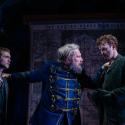
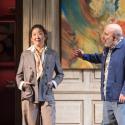
Imagine what would have happened if the young Charlie Chaplin and Stan Laurel were cabin-mates on a transatlantic liner. The Told by an Idiot company did just that, and the result is this show, a return visitor to the International Mime Festival, now bearing awards.
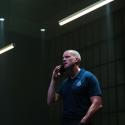
This trip actually took place, in 1910, when Chaplin was hoping to break through in North America and Laurel (then known as Stanley Jefferson) was his understudy. The promoter of their show was Fred Krona, and it is he (played by Nick Haverson) we encounter first, an older man chewing on a cigar, in braces and boots, hammering a drum kit.
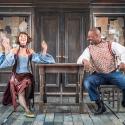
A soundtrack of drums, piano and whistles, played by various members of the ensemble and styled like the accompaniment of a silent movie, complements the action – except for a short section when the offstage pianist (Sara Alexander), doubling in a flashback as Charlie’s mum, abandons her piano stool and (silently) begs an audience member who took lessons at school to come help out while she is onstage. The night I went, one duly volunteered. Later a woman from the front row would gleefully join Chaplin in a dance. It’s that kind of show, leaving you with a silly grin on your face.
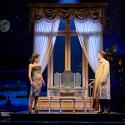
 The timing of the musical flourishes is impeccable: a pratfall comes with a drum-thump, a silly gesture with a triangle ting. This must be so much trickier than the company make it look. As are the pratfalls, executed with maximum gusto. Bowler hats off to Danielle Bird as Chaplin and Jerone Marsh-Reid as Stan. They not only capture the two men’s signature mannerisms – Charlie’s excessively toothy smiles, his capering with one leg at a right angle; Stan’s faintly raised eyebrows and emphatic head nods – but they also perform the men’s punishing acrobatics with great flair on the ramshackle wooden set, all uneven surfaces and precipitous steps (design by Ioana Curelea). At one point they threaten to fall off Wilton’s balconies.
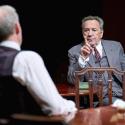
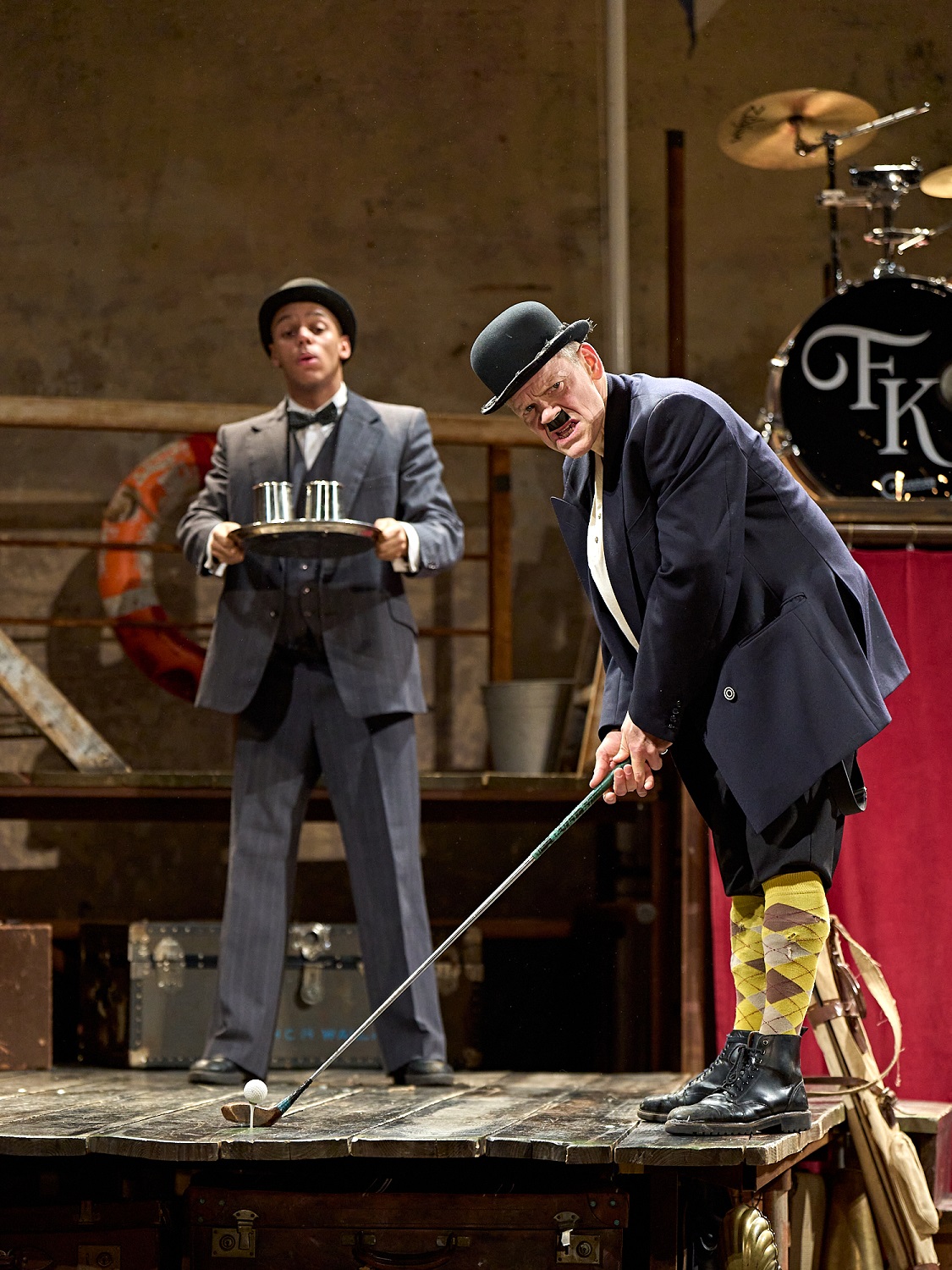
The red curtain drawn across their bunks serves as a screen for intertitles that announce, silent movie style, incidents from Charlie’s youth, such as the straitjacketing of his mother, as well as flashes forward to scenes like Stan’s auspicious meeting in 1927 with a grouchy larger man on a Californian golf course. We watch Haverson stuff a pillow under his vest, pull a jacket across his now-bulging stomach and roll his knee-high argyll socks up over his trousers; then a small piece of black tape is applied to his upper lip, he screws up his face — et voilà, it’s Oliver Hardy ready to tee off (pictured right). This scene evolves into the ultimate test of timing, where Stan grapples with the golf bag and Oliver repeatedly swings a club at him.
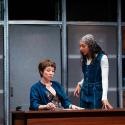
Behind the antics there is a poignant narrative (the writer-director is Paul Hunter). It’s that promoters are a mean and greedy lot, constantly hounding the acts to sign their lives away. But the performers can be mean and greedy too, jostling each other for the spotlight – there is, predictably, one that continuously shrinks as Stan and Oliver pose in it. Charlie dreams of throwing Stan overboard, and when Stan visits his mansion in 1961, Charlie pretends he’s not home. We are shown an alternative version of this event, in which the two do a jolly clog dance – Stan’s clogs are standard black Warringtons, Charlie’s arrive on a silver salver and are vibrant red. We realise we have been watching footage of the scene that Charlie is directing. An assistant then takes some scissors and literally cuts Stan out of the film.
The dance choreography (by Nuna Sandy for Zoonation) goes wittily hiphop at one point, but the core of the show is more music hall. There’s the inevitable man-puts-foot-in-bucket-and-keeps-walking gag, raucous seagulls on long poles overhead, fish thrown onto the stage and caught in pans. Haverson captures this flavour perfectly, walking like a dressage horse and singing drunken music-hall numbers incoherently that he urges the audience to join in with. Which we readily did.
By the end, Charlie is in a long mink coat, a cinematic icon. But the piece is also a celebration of a whole generation of performers, whose skills are being kept current by the fine company onstage.