I think it’s always a dangerous sport to try and consciously unravel where your ideas come from. Lest you break the spell and inadvertently silence yourself…
There’s always the superficial reasons, of course: the geography and the history of a play. My new play The Meeting, which opens at the Minerva Theatre in Chichester this month, came from my experience of attending a Friends’ Meeting House in Lewes. I didn’t go to a Quaker Meeting in order to research and write a play. I went because I was seeking something for myself, for my life. Silence, possibly. Meaning, certainly. My children were very young and I was craving some space for myself. I felt at a low ebb as a playwright – I had had my big hit (Humble Boy) and I was chasing another. I was starting to write for TV and radio – and I was enjoying the relative invisibility of those mediums compared to the raw exposure of a theatre press night. I had moved out of London and my focus was on my family life. I began to think that I would never write another theatre play.
I grew up in the Roman Catholic Church – the daughter of an Irish immigrant mother, I was educated at a convent by nuns from when I was four till I was 18. The Liturgy of the Word runs in my bloodstream. When I left school, I spectacularly turned my back on the Church. For I had found a new religion – the theatre. I remember talking about this with the director John Caird, whose father was a celebrated theologian. He said sitting in a dark theatre for days during the technical rehearsal, collectively willing the production to come together, can feel like a dark night of the soul. There is rite and ritual aplenty. And on some level we are all seeking transcendence. (Pictured below: Charlotte Jones in rehearsal for The Meeting with director Natalie Abrahami. Image by Helen Maybanks) Opposite the Roman Catholic Church I attended throughout my childhood there was a Quaker Meeting House. It had a beautiful garden. My mother told me it was a cult but I was still drawn to it. It took me 43 years to enter a Quaker Meeting House and, to my surprise, what I discovered there reawakened my love of theatre. Quakers worship in silence until they are moved “by the Spirit” to speak. You are encouraged to weigh your words carefully. “Discernment” is key. At one of my first Meetings an elderly man sitting next to me stood up and announced simply that he was dying but that he had no fear of death and he was grateful, in the absence of any living relatives, for the tender love and care he had found here in the Quaker Meeting. When he sat down, I noticed that the quality of the silence in the room changed utterly. It was like one of those great moments in theatre where an actor achieves a level of truth that the audience instinctively recognise. “You could hear a pin drop,” we tend to say in theatrical parlance. The Quakers call it a “gathered silence”.
And so out of the silence I started to find my voice again. I have written this play slowly. I have turned to it as a refuge from the rigours of dealing with noisy script executives in TV and film meetings. I have let it grow at its own pace and with no expectation of a production. During the play’s long distillation I had a spinal injury that caused painful neuropathy in my hands. It became difficult to type. I kept going for The Meeting. I found I had no choice but to do so. Like many of my female contemporaries, it has been my experience that it is harder for us to be produced and harder to be heard. All that has gone into the writing. And that’s where plays really come from, I think: from your scar tissue, from the deep, dark wounds that unconsciously drive you. And as hard as it sometimes is, it is still a privilege to make this my work. Quakers have a testimony to truth in the same way as artists do. And audiences. For ultimately the truth is what sets us all free.
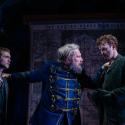
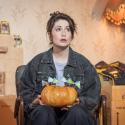
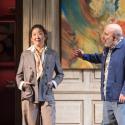
- The Meeting at Chichester Festival Theatre’s Minerva Theatre from 13 July to 11 August
- More First Person articles on theartsdesk