Five years ago this Kneehigh Theatre production caused a stir with its vibrant modern retelling of John Gay’s 18th century satirical classic, The Beggar’s Opera. It’s currently on tour again and it’s easy to see why a revival was greenlit. It’s a bawdy story of political corruption with no sweet ending, not, in fact, that far from popular boxset dramas such as The Wire or Broadwalk Empire, but with a whole lot more silliness and songs.
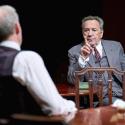
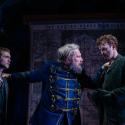
Set in a grimy, dream version of post-World War II austerity (there’s a running joke about the exoticism of bananas), the plot centres on super-criminal Macheath (Dominic Marsh), quiffed and clad in a drape jacket. He weaves a tangled web via an assassination he commits on behalf of bent businessman-politician Les Peachum (Martin Hyder), a vision in naff golf trousers and a wally jumper. This includes killing the dog of the title, and then the mayhem is amplified by Macheath’s promiscuous love life and marriages.
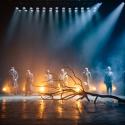
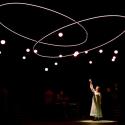
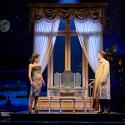
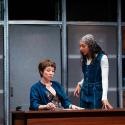
It’s about punching home scabrous humour and dynamic storytellingThe set is multi-layered, industrial-looking, backed by tarnished metal square spaces which suddenly reveal characters and tableaux. There’s always loads going on, with a slide and a fireman’s pole adding to the freneticism as the cast rush about, change into different costumes to play incidental characters, and pick up instruments to join in the band immersed within the scenery. Above it all is a noose.
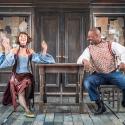
The songs - by writer/director Carl Grose and conductor/composer Charles Hazlewood - are in multiple styles, ranging from ska to Ian Dury-esque funk to raw heartfelt balladry. This isn’t about showy voices, though, it’s about punching home scabrous humour and dynamic storytelling. One of the biggest rounds of applause is raised for a dodgy black-kilted policeman, played by Giles King, who roars out a punk-bellowed piece while doing a frantic leg-kicking dance high on a platform..
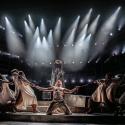
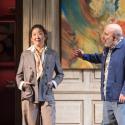
Perhaps the most striking character, however, is Peacham’s wife Gloria. Played by Rina Fatania, she is a monstrous, manipulative new money tack-fest clad in a leopard-print pyjama suit and wedge-heeled sandals, and boasting a bizarre spiked quiff. She is brilliantly foul-mouthed, her long tongue slavering when roused, encapsulating the grasping nastiness at the play’s heart. Georgia Frost is also especially worthy of mention as a couple of weak male characters, singing passionately and performing some great comic mime as a none-too-clever gaoler.
Dead Dog starts at a pelt and I don’t find it to be immediately engaging. It’s almost too busy, requiring a sudden forced participation that’s beyond me. I was also not convinced by the constant presence of a Punch’n’Judy show acting as a kind of Greek chorus, although the sequence where a puppet grim reaper appears and builds a gallows is great. However, by the second half of this two-and-a-half-hours-with-interval show, the sheer barrage had me onside, from the smart puppetry of the title character to the many ridiculous asides (there’s a gangster henchman called Barry the Cod!), to the wit of the music (“A killer hanging from a rope/Instils a sense of hope”), to the grotesques inhabiting the sleazy Slamerkin brothel/nightclub and their high comedy babies.
Best of all though is the end, which I shall not spoil but which suddenly amps the play’s themes to an almost Pink Floyd level of show, while at the same time emphasising that the world of power politics is truly rotten, fouling everything it touches, perhaps even putting a noose around all our necks.