Adapted by Linnie Reedman and with music by Joe Evans, Oscar Wilde’s only novel – the more scandalous original version serialised in 1890, which Wilde himself later expurgated – finds a new lease of life narrated by one of its minor characters: theatre impresario and Sibyl Vane’s manager Mr Isaacs. In this production he may not be “fat” but, scraping and bowing at every turn with “pompous humility”, he is certainly played, uncomfortably at times, as stereotypically Jewish, albeit in not quite so heightened a manner as most Victorian portrayals.
Yet the anti-Semitism clearly signposted in the book has been almost entirely expunged in this retelling, including the revulsion with which Isaacs is regarded by both Sibyl, who is tied to him by financial bondage, and Dorian. Indeed, the story has been so elided and telescoped that I’m not sure it’s entirely clear just how Dorian meets his unfortunate end. I feel you may already have to be familiar with the plot to fully grasp the supernatural turn of events.
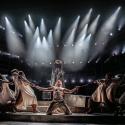
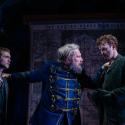
The drama unfolds with dizzying rapidity throughout this production, but especially in the second half. However, under Reedman’s direction, developments are, on the whole, imaginatively handled with highly entertaining musical interludes to propel the story forward and to outline Dorian’s moral corruption under the devilish guidance of Lord Henry (a convincing Joe Wredden as the charming roué). Therefore, it’s largely tell rather than show, but with the ensemble songs and variety turns providing an effective bridge between dramatic episodes.
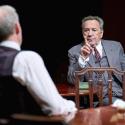
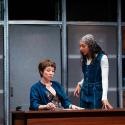
The production’s anchor Fenton Gray, gives a compelling performance as Isaacs. Notwithstanding the Uriah Heep-ish demeanour, Gray brings plenty of charm to a role more noted for its vulgarity.
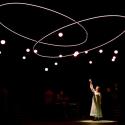
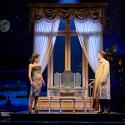
 But though much has been made of the theatrical debuts of its two leads, Jack Fox as Dorian and Daisy Bevan (pictured right) as Sibyl, owing solely to the fact that they happen to be progenies of famous theatrical clans (Fox, son of James, nephew to Edward; Bevan, granddaughter of Vanessa Redgrave, daughter to Joely Richardson – and looking uncannily like her mother), it’s clear that Fox is still finding his acting feet. One senses that his slightly wooden demeanour cannot be entirely in the service of portraying Dorian’s empty-headedness.
However, Bevan shines in the role of the wronged innocent held briefly in Dorian’s affections. One feels she possesses a natural stage presence. Here she portrays the giggling and dizzying head-rush of young love with beguiling conviction. Meanwhile Antony Jardine’s Basil Hallward, the earnest and besotted artist who paints the portrait of his beloved muse, provides a convincing foil to the conniving Henry. And it’s certainly a clever move to present Dorian’s portrait as an empty frame, the better to convey the horrifying moral vacuum of its benighted subject. Besides, a degenerating portrait would probably invite unwelcome sniggers from the audience, proving more of a distraction than an illumination.
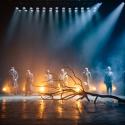
Finally, Katharine Heath’s set and costume design (making use of masks in two nicely choreographed ensemble scenes to suggest secrets and duplicity) and Cat Webb’s lighting, do much to suggest the shadowy corners and dark recesses of the human heart and mind. All told, and despite the uneven acting and pacing, this is an entertaining and imaginative production.