

In the framing device, a professor (Jonathan Guy Lewis) stands at a lectern and asks if anyone has had a supernatural experience. Somewhat to my suprise, up went my hand. In the cold winter of 1981/82, I lived in a house in Finchley. One morning, it had snowed overnight (I had barely seen a fall stick properly before) and, looking out of the French doors of the living room, I could see fresh human footprints leading from the tree at the bottom of the garden all the way up to those doors. There they stopped. Abruptly.
The doors were locked off, ingress to the house impossible. So, too, were two rooms upstairs where, we were told by neighbours, two aged men had lived – until they died. Had the spirit of one been hiding in the tree and returned, passing through the glass, gliding up the stairs and returning to his bed? Well, I was due to sign on for my benefits, so I had to get on with it and the evidence was all melted away by the time I got back.
That we all have (or know someone who has) a story like that, underpins the enduring appeal of Jeremy Dyson and Andy Nyman’s Ghost Stories, back in the West End some 15 years on from its first spooky staging. The script has been updated a little, though you might need a copy of an old Radio Times for one or two references, and on that I can say no more! It’s a tried and tested production in a genre that maintains a strong fanbase and it’s as slick as one would expect from a team with Derren Brown shows on their CVs.
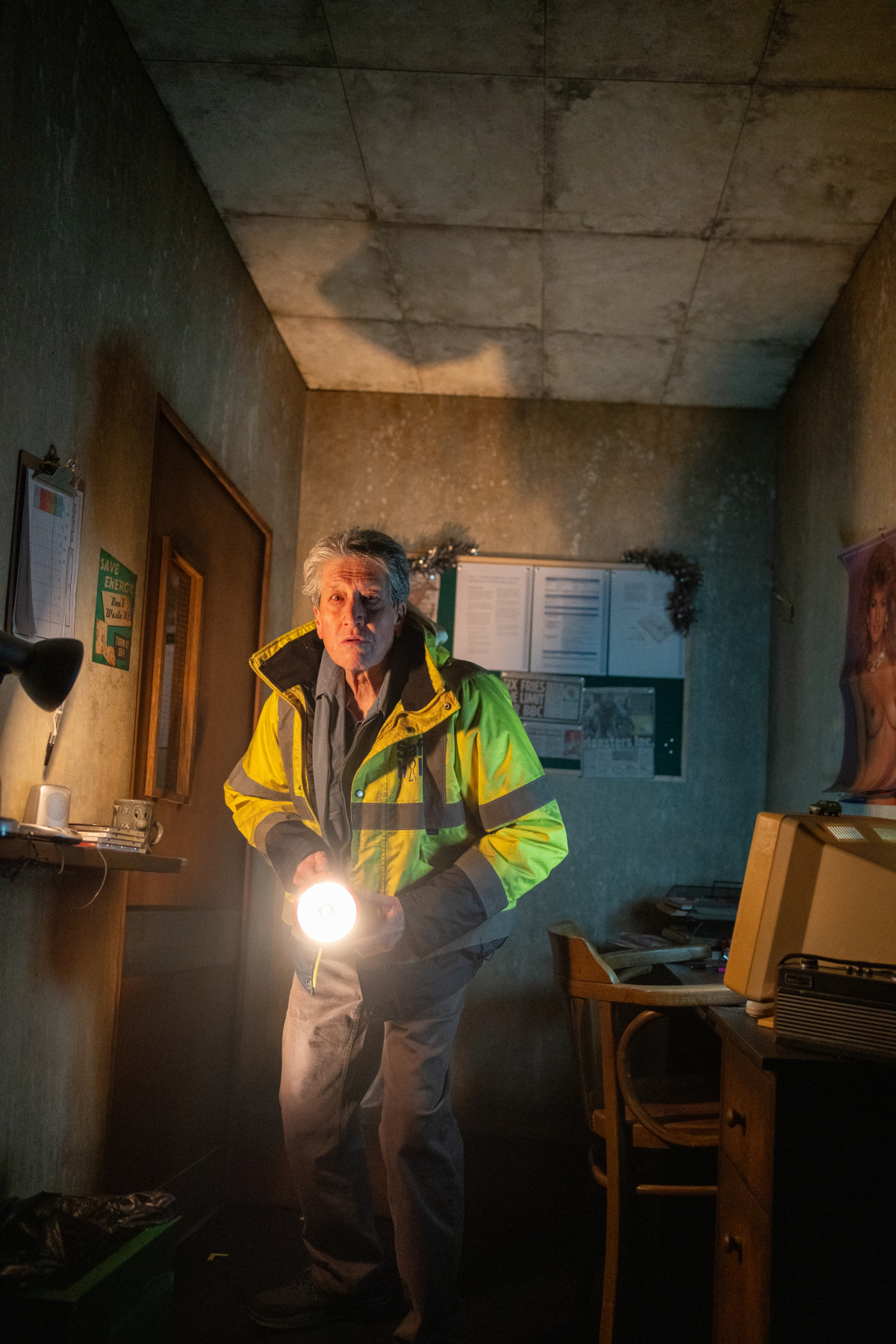 There’s a nostalgic vibe running through the 85 minutes. I was reminded of early Eighties portmanteau horror movies like George A Romero and Stephen King’s Creepshow or ITV’s Roald Dahl’s Tales of the Unexpected. And Scooby Doo. Sworn to secrecy as I am, I can’t even tell you if it was or was not Colonel Mustard in the billiard room with the candelabra.
Led by Jon Basour’s clever sets, James Farncombe’s eerie lighting and Nick Manning’s enveloping sound design, the staging is the star of the show. That said, the acting is smart too, just avoiding the ever-present danger of the tongue sliding irretrievably into the cheek, with David Cardy (pictured right) and Clive Mantle both very good. Despite all that technical excellence, the show never shivered for me.
I wondered whether that failure to connect was the result of seeing so many Seventies and Eighties horror films in the cinema, often all but alone in the dark. Or from reading so much Stephen King, with intrusive thoughts like “This is a bit like IT” bubbling up uninvited. Or that the real horrors, the terrifying ghouls and nightmarish apparitions of today, are on the news and sitting in our seats of government and the pretend ones can’t compete any more. I mean, have you seen Stephen Miller?
But maybe it’s something much simpler. Horror is intimate, a visceral tension that balls in the stomach, refusing to quieten even in the silence, an individual terror. Enjoying that deliciously devilish delight – the thrill of transgression is a potent mood enhancer – is great fun, but the alchemy just can’t establish itself in as big a house as the Peacock Theatre. Over and over again during the three stories that provide the heart of the show, I felt the terror float anyway, lost somewhere at the back of the stalls or up in the gods, spirits having flown.
Ultimately, this is a dated show though with stagecraft still to be admired. But horror has to do more than that – it has to provoke fear. The only scare I had came from the resurrection of that 44 year old memory of Finchley’s haunted house and that soon ebbed away.
For all those flaws, this show is the scariest thing in the West End right now – except for the price of an interval gin and tonic.











