The writing of Tennessee Williams, said his contemporary Arthur Miller, planted “the flag of beauty on the shores of commercial theatre”. This American production of Williams’s breakthrough play – a hit on Broadway and at the Edinburgh Festival last summer – does not disappoint in the beauty stakes, drawing both eye and ear to its chamber-work delicacy, translucent as one of Laura Wingfield’s glass animals.
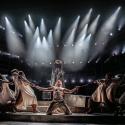
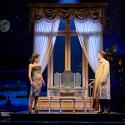
The production is directed by John Tiffany, a creative force behind the West End's Harry Potter and the Cursed Child and, sure enough, inexplicable things happen here, too. Tom Wingfield (Michael Esper) is sitting chatting to us from the family couch when suddenly his sister Laura (Kate O’Flynn) appears in the seat beside him having squirmed through the seams of the upholstery. At mention of their mother, Cherry Jones steps from behind a screen like a magician’s assistant and, more perplexingly, the characters slip into brief shamanic trances. The women flick their wrists over the dining table as if enacting some dark sorcery while Tom, a budding writer, falls backwards from his typewriter, blown by an unseen force.
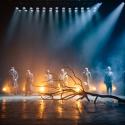
It’s a little outré, but perfectly of a piece with the expressionism in Williams’s writing. Tiffany’s chief strategy is to clear the play of period clutter. There is that typewriter, a phonograph and a single glass animal, but the family sit down to invisible meals, and the poverty of the Wingfield’s apartment in St Louis is suggested solely by an endless fire escape (design: Bob Crowley) that corkscrews skywards at an alarming angle. It’s a symbol of escape to who-knows-where for the Wingfield siblings, trapped not only by their domineering mother but also by self-pity.
Ageing southern belle Amanda Wingfield is traditionally played as a monster matriarch. She is without doubt overweeningly vain, recounting tales of her “17 gentleman callers” while aware that her plain, polio-damaged daughter is likely to be left on the shelf. But the marvellous Cherry Jones (something of a legend on the US stage) tones down the aggressive notes in Amanda’s register to bring more nuance to the character. Tom may rage against his mother’s interference (she even nags him about the way he chews his food), but as the two of them plot to procure a gentleman caller for Laura, he lays his head fondly on her shoulder. It’s complicated, this mother-and-son thing, as Williams well knew. Jones’s distinctive take on Amanda accentuates the positive: this energetic, still-handsome woman has been dealt blow after painful blow, and she’s not taking it lying down. Snobbish and overbearing she may be, but she’s a lioness in defence of her children. She won’t allow the word “cripple” anywhere near her club-footed daughter, and in the 1930s that was something.
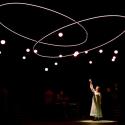
Kate O’Flynn (pictured above) is particularly affecting as the damaged girl, matching her graceless gait with a voice that is equally unfortunate. Michael Esper’s Tom struggles to locate the Mississippi accent, but he catches perfectly the disabling outrage of a young man who believes himself to be a talented writer and is shocked on a daily basis to find himself working in a shoe warehouse.
The pressure on the play’s fourth and last character to put things right for the family is profound, but Tiffany resists it. As Laura’s “gentleman caller” Jim, Brian J. Smith gives a performance that is so close to sincere that we are tempted to believe it. We want to think there is good in the world, that people do have it in them to reach out to social oddities such as Laura, and even to fall in love with them. We hear Jim saying all the right things. She has pretty hair and eyes. She has nice hands. And we see poor Laura begin to emerge from the belief that she is worthless. But is Jim sincere? Or has he been reading Psychology: A Beginners Guide? In making Tom’s ambitious friend a putative pioneer of television, the playwright lays a clue.
All power to a director who preserves such subtle observations, and makes such a virtue of ambiguity. Nico Muhly’s incidental music – mysterious and glimmering – endorses the peculiar spell cast by this fine and authoritative production.
- The Glass Menagerie is at the Duke of York's until 29 April
- More theatre reviews on theartsdesk