Henry V is a play with so many layers, and such ambivalence, that it can suit a multitude of purposes. When Laurence Olivier made his film version in 1944, it was as a propagandist rallying cry, a reminder of what was at stake in a war that was far from won; 60 years later, Nicholas Hytner’s modern-dress production at the National Theatre was a bullish anti-war statement, lent potency by the country’s then current excursion into Iraq.
Dominic Dromgoole’s new production at The Globe, which completes the theatre’s extraordinary Globe to Globe season, highlights another facet of the play, namely Shakespeare’s most positive endorsement of monarchy. Can it be coincidence that in a jubilee year this version is so distinctly upbeat?
Elizabeth can’t be compared to Henry; but her grandsons, not least the boisterous Harry, do sort of fit the bill. And it’s tempting to see Harry’s tousled, confident yet slightly bashful visage in Jamie Parker’s portrayal of the young king, eager to put his hell-raising years behind him, while chastening the French for “not measuring what use we’ve made of them”.
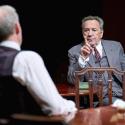
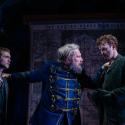
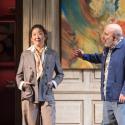
 Parker (pictured right) played Prince Hal in Dromgoole’s 2010 productions of Henry IV Parts 1 & 2. I really do like how’s he’s returned with the character, in a performance that is played with disarming lightness. The performance I saw offered an immediate, improvised hint of what was to come, when the Globe suffered one of those disruptions that its forebear could not. As a helicopter refused to budge overhead, having given Brid Brennan’s Chorus a torrid time, Parker strode on, looked to the skies, then darted a glance – halfway to a wink – to the audience: ice broken, on with the play, the people’s prince into his stride as newly crowned king.
This Henry is an amalgam of flesh and blood, matey monarch, who sheds genuine tears for the fallen and would rather play pranks on his soldiers than savour victory, and coldly pragmatic politician, dispensing corporal punishment to his errant friends before moving swiftly on. The contrast exists in the signature speeches: “once more unto the breach” is brandished with bloodied brow and full voice – so passionate, in fact, that “God for Harry” sticks in Parker’s throat; but St Crispin’s Day is daringly low-key, measured, hands marking out the beats, this time the king playing to the minds of his men, not their hearts.
It’s fitting that the Bardathon’s only English-language production should speak so eloquently and amusingly about being British.As a warrior he is in perpetual motion, constantly passing across the stage, seeking out the battle merely because he is eager to be done with it. War is evoked well enough, as when Henry leads his singing troops through the audience, or when the smell of burning wafts over the yard. The pathos felt when the Boy’s throat is cut is heightened here by the fact that he is played by a young woman (stage debutante Olivia Ross).
Yet the strongest impression is not of battle or bloodshed, but of a diverse nation of aristocrats and rogues, Welsh, Irish and Scots coming together – not against a common enemy, but for a king. It’s fitting that the Bardathon’s only English-language production should speak so eloquently and amusingly about being British. And the humour is maximised well beyond the expected larks of Pistol and co, from the sight of the Archbishop of Canterbury relieving himself centre-stage, to the Dauphin’s sonnet for his horse, the French Princess Katherine’s assault on the English language (Ross again) and Henry’s delightfully awkward courtship of her. Not surprisingly in a production marked by clarity and comedy, Brendan O’Hea’s preposterous but very well-spoken Welshman, Captain Fluellen, steals every scene he’s in.