The Machine by Matt Charman is about the famous chess match between the then world champion Garry Kasparov and the chess computer, Deep Blue, which took place in New York City in 1997. The match captured the imagination of the general public at the time as perhaps no other chess match has before or since. Kasparov's face was hanging in Times Square and the New York Stock Exchange had the match on its screens.
Our play uses this iconic moment to look at the stories of the main protagonists of the match, Kasparov and Deep Blue's inventor Feng-Hsiung Hsu. Both, it would be fair to say, are complex characters. Both had hurdles to leap, professionally and personally, on their way to playing the match and both were hugely affected by the game itself and its aftermath. At what price victory?
Garry found it impossible to concede that he had been beaten by a machine
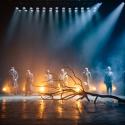
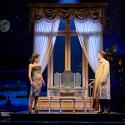
Much as chess itself, on the face of it, may not be the most obviously dramatic of pastimes, it strikes me that any event can be dramatised to a compelling end if the human drama surrounding it can support this. In this case not only is the human emotion surrounding the match utterly compelling and original, but so is the actual match being played in front of your very eyes. Obviously, we take a certain license with the chess itself - you don't see every move of the six games of the match. We use movement, audio-visual technology and a certain expressionist angle to tell the tale of each game. The only game which you see in its entirety is the decider, by which time I hope we've earned the right to show each move and given chess the chance to show that it can have people on the edge of their seats. The feel and atmosphere that our creative team led by director Josie Rourke wanted to create is one of a boxing bout or a basketball match. The stage is completely in the round, and very often the action is being live-filmed and relayed onto huge screens overhead - all of which contribute to the excitement and intensity of the match itself.
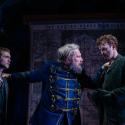
 Garry found it impossible to concede that he had been beaten by a machine, and maintains to this day that at some point or points in the match Deep Blue was being controlled by a human operator. This would have been unseen by the public and contrary to the rules of the match. It's as if, without a human sitting opposite him, he couldn't use his considerable ability to out-psyche an opponent. The computer, naturally, is impervious to glance and nuance, stare and breath. The temptation to anthropomorphise the chess board or the computer monitor is one we've had to ignore. Therefore, as far as our play goes, Hsu and his team are very firmly the opponents in Garry's mind - especially once he is convinced of their duplicity. Garry never gets to see The Machine itself, which was locked away in another room. This to me is utterly crucial for Garry's psychology and journey through the play.
As for playing Garry, the Internet is full of images and videos of interviews. He's fascinating to watch in action, and an incredibly intelligent and articulate man - passionate, principled, persuasive and flawed like anyone else. Physically he wears his emotions very evidently. He's also written many books and I have tried to understand the mind of the man and perhaps adopt something of him physically and vocally. But this is a dramatisation, and therefore I was conscious of playing the Garry that Matt Charman (pictured above) had written, rather than slavishly trying to carve out the Garry of real life. Whether Garry will be in to see it I'm not sure. Perhaps in New York, though I'll be terrified if he does.
- Hadley Fraser plays Garry Kasparov in The Machine at Campfield Market Hall from 10 to 21 July. The world premiere production is part of Manchester International Festival. The production transfers to the Park Avenue Armory, New York from 4 to 18 September