Khaled Hosseini's 2003 bestseller ticks all the boxes as an A-level text. A personal story with epic sweep, it interweaves the bloody recent history of Afghanistan with a gripping family saga. Its treatment of racism and radicalism is timely. Other themes too might have been hand-picked for classroom discussion: bullying, betrayal, bad parenting, family secrets. Its first-person narrative makes it feel real.
The trouble with this stage adaptation newly arrived in the West End is that only a small portion of the audience is using it for exam revision. Those merely hoping for a theatre experience may be left slightly dazed, for the story is so big, so broad, so episodic, that the only way to cover the ground in two and half hours is at a racing gallop. Either that, or the writer needed to scrap the linear narrative and start again. But Matthew Spangler's adaptation doesn’t do anything so radical. It sticks closely to the book, so closely that Amir (Ben Turner), whose confessional story this is, is on stage almost all the time and barely stops talking. Another challenge for Turner is the constant flipping back and forth between his childhood self in 1970s Kabul (cue higher-pitched voice, a lot of scampering) and the fully assimilated, creative-writing graduate in California. It’s a heroic effort, but you wonder if was really necessary.
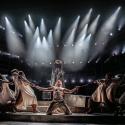
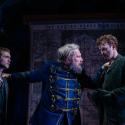
Amir’s story harks back to his childhood friendship with Hassan (Andrei Costin, pictured above with Turner), the illiterate son of the family’s servant, and his failure to save the younger boy from a vicious assault by the local thug who believes the ruling Pashtuns (who are Sunni Muslims) should run the (Shi’a) Hazaras out of Afghanistan. The rape of Hassan is tastefully screened from view by giant fabric kites, and this use of design as a neutralising agent pervades Giles Croft’s production. We never really feel the heat or the dust, the violence of the Russian invasion, or the pain of exile. The prettily stylised city skyline of Barney George’s set stands for both San Francisco and Kabul.
The show brings the plight of refugees into the heart of the West End
Just now and then, the relentless pace takes a breath and the imagination soars. The kite-flying episodes are memorable and the spectators’ excitement infectious, the tension aurally cranked up by hand-held wind machines and an on-stage tabla player, the wonderful Hanif Khan. Couldn't there have been more of that traditional music? In the book, Hassan’s father entrances the two boys by singing to them. This show could have used some singing.
There are strong performances from the multi-tasking cast. Nicholas Karimi is hideously good as the psychopathic bully Assef, whose rigid world view later finds a natural outlet in the Taliban. Emilio Doorgasingh is subtly effective as Amir’s urbane but emotionally absent father. And Andre Costin is touching as the loyal, watchful Hassan, and then as Hassan’s son, rescued from child-abuse hell in an Afghan orphanage to assuage the guilt of his rescuer.
For all its speed-read manner, this adaptation achieves one important thing. It brings the plight of refugees into the heart of the West End, and shows them to be PLUs – people like us who once had nice homes, nice jobs, even nicely tucked-away family secrets, all wrenched from them by war.