The thing about puppets, as those who have handled them know all too well, is that they take over. They have a life of their own. This is all fine and good as long as the puppet-masters don’t get swamped by the magical power of supposedly inanimate objects.
Much of the fun and originality of Tom Morris’s restlessly inventive take on A Midsummer Night’s Dream, made in collaboration with the Handspring Puppet Company - his co-directors for War Horse - derives from the playfulness that toys encourage in us all. But the astounding array of mechanical inventions, from the simple miniature doubles of the four young lovers to the grotesque hand-propelled cycle that carries a bare-arsed Bottom when transformed into an ass, often succumbs to an excess of brilliantly executed effect.
In the play’s opening, the figures that the lovers hold before them like mute ventriloquists’ dummies feel superfluous, and it is difficult not to be distracted by their part-sinister, part-humorous presence. The all-important words slip away barely registered in a fog of over-reaching formal ambition, that is made all the more confusing by the contradictory fizz of possible connotations that such devices evoke: daemons? Doubles? Or the impersonations of an inner or "Second Life"? Their meaning becomes a little clearer, too late, just before the end of the play, when Puck – a perpetually shape-shifting assemblage of woodworking tools, with a blow-torch for a head, and skillfully manipulated by three actors, wheels them away in a beat-up old pushchair. These might well be disposable products of the swift-footed imagination, the fairy force that lightens or darkens our dreams.
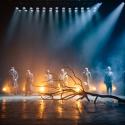
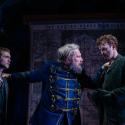
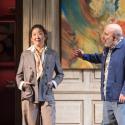
 The young company plays with immense vigour. Akiya Henry (Hermia) as a diminutive volcano of passion, who can switch totally convincingly from fury to softness, steals the show. Her play is more varied and subtle than the audience-winning bravado of deep-voiced Miltos Yerolemou, who plays Egeus and Bottom. All the ensemble move adroitly between characters and realities, Athens and the wood, mortals and spirits. Morris has the cast use planks of wood in all manner of ways: as trees, weapons, walls and metaphors (pictured above). At best this works wonderfully, but at times the Jacques Lecoq-inspired transformation of props feels fussy and gets in the way of the undoubted energy that powers the entire show.
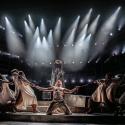
The ambition of this production – not least the way in which Morris and Handspring have been carried away by their own inventiveness - sometimes lets it down. When the puppetry no longer obscures the poetic and philosophical message of the play but helps us understand it, magic happens: whether it be the Dionysiac bawdiness of Titania’s ludicrous frolics with the bare-bottomed ass or the magical moment when the queen of the fairies, played with remarkable assurance by Saskia Portway, is reconciled with Oberon, and they dance gracefully, as the rest of the company weave a star from the planks that have played so many parts, an echo of the ancient figure that English sword-dancers concoct in their revival of pagan rites.
There is an overall coherence in Morris's vision, a sense of earthy mystery and the co-existence of darkness and light, greatly enhanced by a stark yet beautiful set designed by Vicki Mortimer. The production is deeply faithful to the heart of this wondrous work of the imagination.That much, the puppets cannot take away.