

Gender deconstruction, fraught feminism and the perils of hook-up culture: George Bernard Shaw’s comedy of manners, penned in 1893, shows we haven’t come as far as we might think. It’s a point rammed home by Paul Miller’s choice of modern dress, but this otherwise pleasantly conventional production cushions its provocations, with the real challenge coming from a near-three-hour running time.
Leonard Charteris (Rupert Young), the eponymous philanderer and a loose Shavian self-portrait, is caught between the woman he loves, sophisticated widow Grace (Helen Bradbury), and the woman who loves him, tenacious limpet Julia (Dorothea Myer-Bennett, pictured below with Young). He proposes to the former as a means of breaking up with the latter, but his scheme is complicated by the intervention of their respective fathers, Colonel Craven (Michael Lumsden) and theatre critic Cutherbertson (Mark Tandy), as well as the lovelorn Dr Paramore (Christopher Staines).
 Miller last tackled one of Shaw’s Plays Unpleasant in 2014, and though this is another accomplished outing, it’s a far cry from the cutting-edge programming that has revolutionised the Orange Tree during his tenure. Shaw’s excessively wordy piece, packed with sub-Wilde epigrams and effortful satire, is in urgent need of a judicious edit and/or bolder staging. Modern dress just muffles the radical nature of a work which, out of fear of censorship, wasn’t staged until 1905.
However, Miller does communicate the fascinating tensions of this fin-de-siecle moment, with Victorian mores beginning to be eroded by “advanced views”. The play’s younger generation belongs to The Ibsen Club, which – taking A Doll’s House as a call to action – bans all overtly manly men and womanly women (no lipstick feminism allowed). Charteris is a cynical exponent of this philosophy, manipulating it to suit his own interests. If no woman is the property of a man, he can seduce multiple women without feeling he owes them commitment; after all, they’re the ones rejecting marriage. But that leaves girls like Julia, trying to escape the straitjacket of unhappy matrimony, stuck in romantic limbo instead.
Despite Young deploying all of his twinkly-eyed charm, it’s hard to warm to the glib, condescending yet supposedly irresistible Charteris, whom Shaw declines to invest with much inner life. Myer-Bennett seizes control of the play, her fiery Julia both calculating the effect of well-deployed histrionics and genuinely despairing, at one point abandoning all dignity to crawl across a pouffe as she begs for mercy. Bradbury has less to work with, but provides a solid contrast with her Claire Underwood-esque haircut and froideur, and rigorously calls Julia on her use of tears to solicit male indulgence.
 Lumsden and Tandy (pictured above) are entertaining as the baffled old guard, and the former provides the comic highlight when Staines’s wonderfully myopic Dr Paramore realises the liver disease he “discovered” – giving Craven just a year to live – has been disproved by better-funded European rivals who were able to carry out tests on more than just “three dogs and a monkey”. The misdiagnosis, points out the vexed Craven, meant he wasted a year turning vegetarian and going to church. Staines also gives Mark Gatiss’s Shpigelsky a run for his money on the ham-fisted proposal front as he scuttles around nervously on a wheelie medical stool. It’s one of several witty Simon Daw props, along with a suspended, slowly rotating Ibsen bust.
Miller uses both of Shaw’s endings, giving us a bleak postscript that debates Victorian divorce proceedings. Whether marrying for love, money, to satisfy social convention or as a refuge from loneliness, there is no guarantee of happiness, so a painless exit is crucial, argues Shaw. It’s a bracing final message from an often flippant play.
MORE GEORGE BERNARD SHAW ON THEARTSDESK
Mrs Warren's Profession, Comedy Theatre (2010). Felicity Kendal in plodding revival of Shaw's take on prostitution
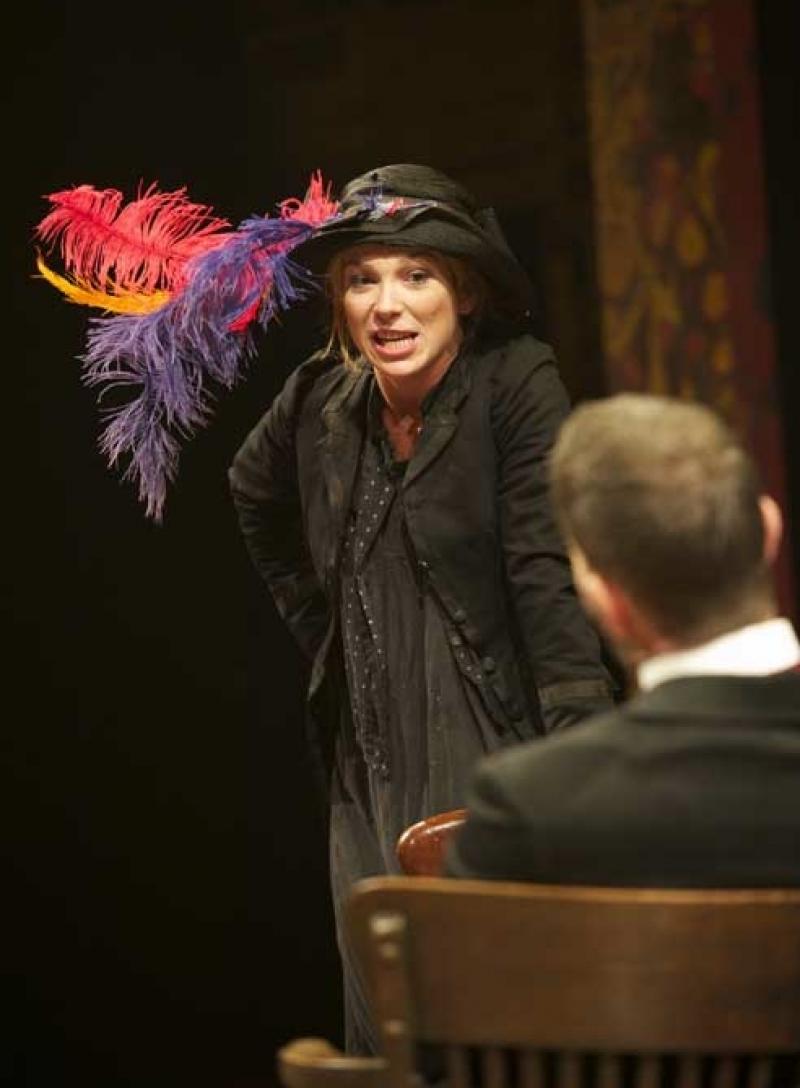 Pygmalion, Chichester Festival Theatre (2010). Rupert Everett's sulky Higgins is outsmarted by Honeysuckle Weeks's Eliza (pictured)
The Doctor's Dilemma, National Theatre (2012). Tragedy is the spoonful of sugar that helps this medical satire go down
Widowers' Houses, Orange Tree Theatre (2014). A timely revival of a timeless satire
Man and Superman, National Theatre (2015). A theatrical trip to Hell with Ralph Fiennes has some heavenly moments
Saint Joan, Donmar Warehouse (2016). Revival of Shaw classic is a tour de force for Gemma Arterton











