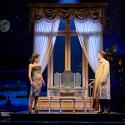
It’s not so much that Pretty Woman: The Musical isn’t much good, which it isn’t. More to the point is that this West End replica of the recent Broadway musical of the 1990 film feels utterly superfluous: a gloss on a popular romcom that doesn’t improve upon or deepen our appreciation of the original in any way. Indeed, at the press preview attended, one could feel the audience all but marking time until the iconic Roy Orbison song of the title gets trotted out in order to bring an expectant crowd to their feet. Nothing else in the preceding two and a half hours comes close to achieving that level of connection.
That’s not to fault a (mostly) game cast who attempt to fulfil their roles within a formulaic piece that might as well have been assembled by the sorts of money-minded apparatchiks held up for scorn within the show itself. Revisiting the eyebrow-raising story of the billionaire Edward and the prostitute, Vivian, whom he hires for a week at the Beverly Wilshire hotel, the director-choreographer Jerry Mitchell struggles to kickstart the material afresh as he managed so well with Kinky Boots and Legally Blonde, two other stage musicals that began as films. The book by JF Lawton and Garry Marshall, the second of whom directed the movie (he died in 2016), tries effortfully to flesh out characters who have always been defined by surface appearance and style first, depth of feeling second. It’s laughable when one or another of the leads makes mention in passing of Shakespeare’s sonnets (um, really?) or of George Bernard Shaw, beyond reminding us how much more playfully and well Shaw told a makeover story of his own in Pygmalion. (A polo gathering at the top of the second act is this musical’s in-your-dreams equivalent to the Ascot sequence in the Pygmalion-inspired My Fair Lady.)
The Bryan Adams-Jim Vallance score mostly belabours the obvious, announcing again and again a prevailing restlessness to both Edward and Vivian, the first of whom sings a repeated paean to “freedom” which in context seems to imply the ability to let Vivian run wild with his credit card: so much for her as an enlightened, independent woman for our time. Vivian sings endlessly of wanting something better – "I'm not this girl," she lets us know early on – which in context results in her emergence as a vapid scrounger. Still, it could have been worse: she might have married Donald Trump.
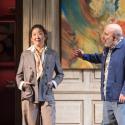
Danny Mac, a pretty man if ever there was one, sings beautifully as Edward and nails the accent, leaving Aimie Atkinson’s charmfree Vivian to take the metallic-sounding high ground favoured by so many musicals these days: one is again reminded of the real joy to be experienced not far away in Sara Bareilles's London stint in her self-composed show Waitress: a star performance possessed of soaring vocals that seem to waft up mysteriously, and beautifully, from the singer rather than being engineered to wow by the busy sound desk. (Rachael Wooding's brassy sidekick is cut from the same cloth as Atkinson, which, to be fair, is all her role requires.) As it happens, the show is pretty well stolen by supporting performer Bob Harms in a vivid range of parts (a cheery hotelier chief among them, pictured above, right), each of which brings a synthetic musical roaring, however briefly, to life. Pretty Woman won't be the last cynical miscalculation to hit the West End, but if it brings Harms to a broader public, well, no harm done there.