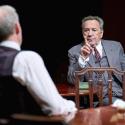
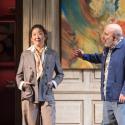
Rhys Ifans enters as a rough sleeper who has wandered in off the street, his sleeping bag over his shoulders, beany hat pulled low over unwashed hair, muttering to himself. For a moment he's hardly noticed by the audience, ignored as such people often are, but then he launches into Tim Price's monologue. He is Danny, an alcoholic. He had been sleeping on the steps of St Paul's for seven years when his routine was disrupted in 2011 by the Occupy Movement's arrival, the establishment of the tent city and their subsequent stand-off with cathedral authorities. It's a neat reversal of the old drama cliche: a whole off-stage cast of newcomers disrupt the life of one on-stage character.
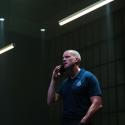
Ifans convincingly inhabits the skin of a self-absorbed loner, angry with "the system", with just about everyone he meets, with himself for messing up his life and losing contact with his son, hitting out verbally with a fury that could at any moment disintegrate into tears. He has been issued with a mobile phone, the symbol of belonging to respectable society. If he can hold on to it and use it sensibly he will have earned a place in a hostel.
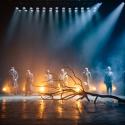
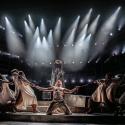
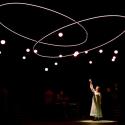
 The stage and set are black, empty. The Shed is a space in which Danny's story can be told, but there is a difficulty here. There is no escaping the fact that we are an audience and Ifans is an actor; however accomplished he is, we are not encountering a real rough sleeper. His approaches to individuals, asking for money or for their phone numbers (to give his mobile the appearance of use) depend on people gamely play-acting, which in turn causes giggles. This is taken to an almost ludicrous degree when Danny leads his gleeful "friends" in an adapted version of "The Twelve Days of Christmas": "On the first day of Christmas, the system gave to me a vote in democaracee". Subsequent days provide two racist cops, three student loans, four bailed banks, six hackers hacking and seven drones a-bombing. But the fifth day is the memorable one, declaring (not for the first time in the evening) that Boris (Johnson) is a cunt. Serious consideration of social injustice has disappeared in favour of puerile chanting. And Ifans's brilliant characterisation in Polly Findlay's lively production has given place to pantomime.
The picture Danny paints of the earnest protesters, with their organised kitchen, committees and library is poignant and funny. Here are people with the highest ideals who are not necessarily any more socially capable than Danny himself. In the end they are simply other human beings, after all, and he can't, of course, fit in. He gives examples of the poor and disabled suffering under Government policies but it is difficult to believe that Danny (as opposed to Price and Ifans) would care much about them. Price (known for other work on controversial topics such as the Bradley Manning case) has said in an interview that he worked closely with Ifans and included his ideas, especially on audience participation.
Danny's tragedy - and when Rhys gives us the straightforward portrait of an individual it is electric - is that he knows survival depends on connection with others but he can't help but be agin everyone and everything. In the end, he attacks the very fabric of the theatre too. The audience, intended to be implicated in society's failings, do not go away chastened, but leap to their feet to acknowledge a stunning performance.