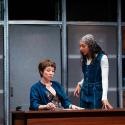
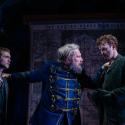
Like many students, I read the Oresteia by Aeschylus as an undergraduate as part of a compulsory Tragedy paper. A while ago I was asked would I do a new version of the Oresteia. I’m not a Greek scholar so I feel I have no authority to offer a "translation". However, I was up for writing a completely new play.
Aeschylus’s Oresteia tells of Agamemnon returning from the Trojan war and being murdered by his wife Clytmnestra because he sacrificed their daughter Iphigenia as part of the campaign. In Aeschylus, Clytemnestra is a wicked man-woman who upstages her husband, takes a lover and is later killed by Orestes, her son. Fiona Shaw pointed out to me that Clytemnestra is the only character in this family whose death isn’t avenged, so I decided to explore why not and to tell the story from her point of view. Imagine you were at home and you heard that, in order to win a war, your husband had allowed your daughter to be killed. My Clytemnestra is completely felled by the experience and has a breakdown. Life becomes possible for her again only once she begins to think that she has a right to avenge her daughter.
Facing the dark side of human nature is invigorating
The Furies are the ancient goddesses who have the power to drive people mad unless they exact revenge for the murder of family members. Her daughter’s Fury torments Clytemnestra. She is the most primitive part of the social brain, the impulse that demands an eye for an eye. My play is about the seduction of Clytemnestra by this unconscious force and I think it shows how language pushes us to act in ways we don’t necessarily intend. We think we’re actors and we’re acted upon. (Pictured below, Gwyneth Lewis. Photo by Sian Dafydd.)
 Writing Clytemnestra took three and a half years (in between a sci-fi novella, The Meat Tree, and book of poems about birds). I was determined not to have togas and set the play in the near future. It’s a scenario that isn’t implausible: oil has run out, food is scarce and wars are being fought. I had feared that thinking about murder, hunger and vendetta would be dispiriting but facing the dark side of human nature is invigorating.
I decided to write the play in poetry, using very plain unflowery language closely related to how people speak. I thought about the play as a trial for ideas which are contentious for us. To what extent would we be right to sacrifice the lives of the few for the good of the many? Are our personal interest and the social good the same thing? I had cause to remember a comment Fiona Shaw made about working with the Greek plays. She said that they resist you for a long time and then they let you in. That has been my experience. Cassandra came to my rescue. The Trojan seer who was cursed never to be believed muscled her magical way into the play and solved many problems along the way. I’m now desperate to write a sequel. I’ll get my money’s worth out of that Tragedy paper after all.
- Clytemnestra at Sherman Cymru, Cardiff from 18 April to 5 May