We’ve already had The Last Five Years in lockdown; now, we get a digital production of American composer Jason Robert Brown’s earliest work. A series of wistful pop/jazz numbers loosely linked thematically, rather than narratively, this 1995 abstract musical features various characters responding to a moment that upends their lives. Formally, it’s another Brown show that suits our current circumstances, since the songs are mainly standalone solos, and the performers’ various homes work fine as background; no need for a helicopter or falling chandelier in this one.
The central idea also speaks to our current "moment" with almost alarming acuity; as the opening number goes, “just when you’re on the verge of success/The sky starts to change and the wind starts to blow... There’s no explaining where you stand”. Here we are in the age of Coronavirus, of course, but also of Black Lives Matter, of Brexit, Trump and Putin’s Russia, of an existential threat to the arts industry, and to our way of life – a forced moment of reflection. What, or who, is really important to us, as individuals and as a society?
Brown’s characters face numerous unexpected challenges, from personal realisations like "The people I love are holding me back", to an unexpected pregnancy, imprisonment, reunion or break-up. Some relish their entry into a new world, others resist it; some lean on their faith, others lose it altogether. Each number (backed here by a seven-piece band) is a textured mini-drama, ripe for thoughtful interpretation – and so catnip to performers as accomplished as the impressive line-up here.
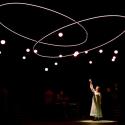
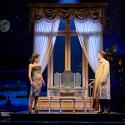
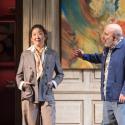
 Rachel Tucker takes an enjoyably big swing in “Just One Step” as the neglected wife threatening to jump from her 57th-storey apartment in order to get her philandering husband’s attention. Tucker gamely clambers over her sofa (standing in for window ledge; pictured above) and captures both the absurdity and poignancy of someone trying to reclaim their status. She also relishes the sultry comedy of another aggrieved spouse, the soused Mrs Claus, in Brown’s take-off of a Brecht and Weill number. It’s perhaps too much of a musical theatre in-joke, but Tucker is a hoot all the same.
She switches tack for the most well-known song of the bunch, a staple of concerts and cabarets: “Stars and the Moon”. A beautiful and quietly agonising encapsulation of "Be careful what you wish for", it sees a woman hungry for material goods land a man who provides them all – only to realise that she’s lost out on real passion, love and adventure. Tucker puts the number over simply, and with absolute conviction. Wonderful, too, is her portrayal of the woman feverishly making flags at home while fearing for her loved ones on the battlefield. I’m sure many can relate to that sense of terrified impotence – especially those whose courageous loved ones are on the NHS frontline.
“The Steam Train” features a very promising turn from 2020 ArtsEd graduate Shem Omari James, while in two numbers centred on fractious unions, Ramin Karimloo makes those relationships feel palpably authentic. In “She Cries”, he piles on layers of clothes almost like armour – but it’s no defence against a manipulative partner. Conversely, “I’d Give It All For You” sees the healthy side of romantic sacrifice, as a couple realise their lives are richer with one another. Again, there’s extra emotional charge here as we all start to reunite with loved ones, and Karimloo is wonderfully matched, vocally and dramatically, by Rachel John.
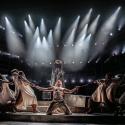
 John’s finest showcase is “Christmas Lullaby”, in which her character reckons with a surprise pregnancy. She draws out the difficult, contradictory emotions of this revelation: how it means that one life is forever changed, in order to bring another life into the world, and the grace of that eventual acceptance. Cedric Neal, too, honours the spirituality of the gospel-esque “Flying Home”. However, it has the slight distraction of Neal’s castmates also placed on screen for their backing vocals (pictured above). That issue crops up a few times in Séimí Campbell’s production; it splits our focus unnecessarily, and rather suggests a musical Zoom meeting.
Another directorial choice from Campbell will likely divide opinion. The opening number is firmly contextualised with a montage of theatres closing, newscasters’ reports competing with the vocals, while second number “On the Deck of a Spanish Sailing Ship, 1492” is backed with images of slave ships, the Windrush, the civil rights movement, and Black Lives Matter, and is followed by a clip of Trump haranguing an Asian reporter about the virus. All narrow the interpretation considerably by literalising the songs’ meaning. However, the device isn’t used consistently throughout, and it’s at odds with Brown’s delicate abstraction.
In any case, Neal’s phenomenal delivery of “On the Deck” and “King of the World” gives these songs huge anthemic power. Surely viewers can themselves draw parallels between travellers risking all on their way to the New World, or an imprisoned man hoping his cause lives on, and protestors today risking all to force change? The final number is again placed in the context of theatreland, but there’s much-needed comfort for everyone, not just arts workers, in lyrics like “Trust me,/We’ll be fine./A new world calls across the ocean!”. We can but hope.
- Songs for a New World is available to watch until 25 July
- Read more theatre reviews on theartsdesk